
Diecast Guides
Common Diecast Collecting Mistakes That Can Affect Model Value
Oct
A scarce-looking diecast model isn’t automatically valuable. Common diecast collecting mistakes include buying before checking authenticity, rarity and condition, overlooking the original packaging, and storing models where sunlight, moisture or temperature changes can damage them. Research and careful handling help you make informed choices and protect the models you already own.
Finding a model that feels like the perfect addition is part of the pleasure of collecting, and it’s natural to focus first on its appearance or price. But what makes a model collectible, and what should you check before buying? This guide explains how to assess authenticity, rarity and condition, then covers practical ways to store and care for your collection. Whether you’re collecting a favourite type of vehicle or choosing a single standout model, these checks can help you buy with confidence and preserve the pieces that matter to you.
Key Takeaways
- Choose a collecting focus that reflects your interests, and weigh a model’s rarity and release details before judging its desirability.
- Inspect authenticity, paintwork, alignment, loose parts and accessories, and consider how the original packaging affects a model’s appeal.
- Store models away from direct sunlight, moisture and extreme temperatures; handle them carefully and inspect them regularly for early signs of damage.
- Before buying, compare the vehicle’s details and condition with its description and photographs so you can make a more informed choice.
1. Collectibility and limited-edition models
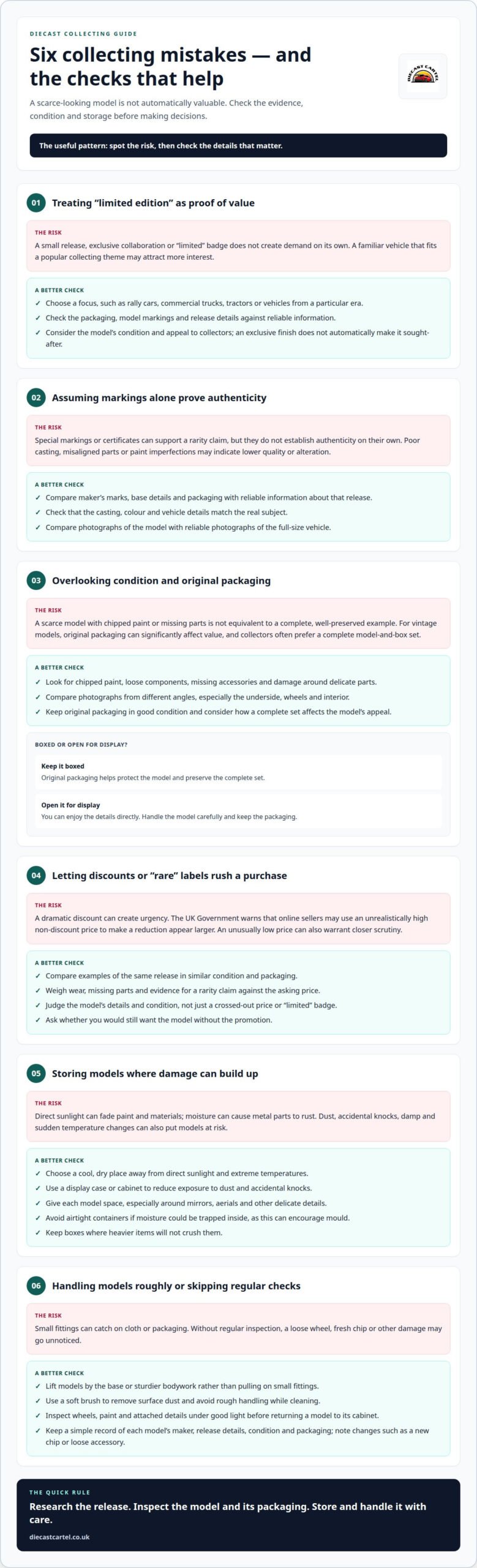
One common diecast collecting mistake is treating a limited-edition label as proof of future value. An exclusive collaboration or small release may attract interest, especially when it features a sought-after vehicle, livery or partnership. But a scarcity claim alone doesn’t create demand. A model with limited availability may draw less attention than a familiar vehicle that fits a popular collecting theme.
Choose a focus before buying every appealing release. You might collect rally cars, commercial trucks, tractors or vehicles from a particular era. A clear theme gives your collection an identity and helps you decide whether a new model belongs. For example, someone collecting British touring cars could prioritise related models rather than buying an unrelated release simply because its packaging says “exclusive”.
Before deciding that a limited edition is a valuable find, look for evidence. Read the packaging and model markings, compare release details with reliable information, and check whether the edition or collaboration is clearly identified. Then assess the model’s condition and appeal to collectors. Quality diecast models can hold or increase in value over time, but demand depends on the individual model. An exclusive finish doesn’t automatically make it sought-after.
Be cautious when a listing uses a dramatic discount to create urgency. According to the UK Government, online sellers may set an unrealistically high non-discount price to make a reduction appear larger. Compare the model’s details and condition, not just a crossed-out price or “limited” badge. Avoiding common diecast collecting mistakes also means asking whether you’d still want the model without the promotion. This can help you buy out of genuine interest, not pressure.
2. Evaluating authenticity, rarity and condition
Start with the model’s identity: compare its maker’s marks, base details and packaging with reliable information about that release. Special markings or certificates can indicate rarity or exclusivity, but they don’t establish authenticity on their own. Check whether the casting, colour and vehicle details accurately match the real subject. Poor casting, misaligned parts or paint imperfections may indicate lower quality or alteration. Rarity can affect value, but condition and collector interest matter too.
Inspect the model closely before buying or reassessing one you own. Look for chipped paint, loose components, missing accessories and damage around delicate parts. Compare photographs from different angles, especially of the underside, wheels and interior. Original boxes or blister packs can provide useful details about age and authenticity. For vintage models, original packaging can significantly affect value, and collectors often prefer a complete model-and-box set.
Is it better to keep diecast models boxed or open them for display? Keeping a model in its original packaging helps protect it and preserve the complete set, which can support its appeal. Opening it lets you enjoy the details directly, but handle it carefully and keep the packaging. Your choice depends on whether display or preservation matters more to you.
For storage, choose a cool, dry place away from direct sunlight and extreme temperatures. Sunlight can fade paint and materials, while moisture can cause metal parts to rust. A display case or cabinet can reduce exposure to dust and accidental knocks. Don’t seal a model in an airtight container if moisture could be trapped inside, as this can encourage mould. Handle models carefully, and clean and inspect them regularly to spot damage early.
If a listing is priced far below comparable second-hand models in similar condition, take a closer look; the UK Government advises caution around unusually low prices. To compare vehicle styles and details, explore diecast collecting.
3. Protecting models from damage during storage
Give each model a stable place instead of stacking loose vehicles together. A display cabinet can keep dust and curious hands away while letting you enjoy the collection. Leave space between pieces, especially around mirrors, aerials and other delicate details. Keep original boxes in good condition and store them where heavier items won’t crush them. Choose a cool, dry location away from direct sunlight, damp and sudden temperature changes. A crowded windowsill, for example, risks knocks and fading.
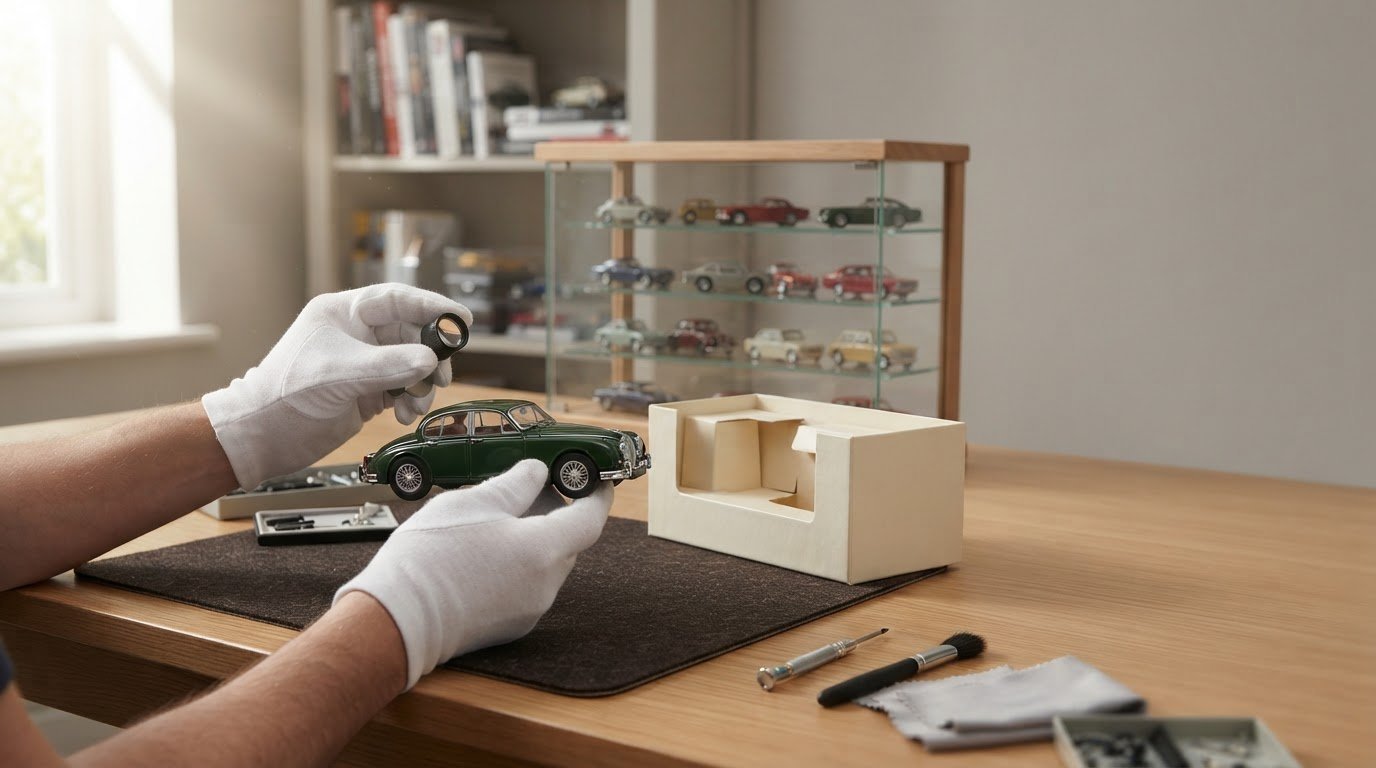
Make cleaning part of a regular inspection routine. Lift each model carefully by its base or sturdier bodywork, rather than pulling on small fittings. Use a soft brush to remove surface dust, then check the wheels, paint and attached details under good light. A loose wheel or fresh chip is easier to notice before the model goes back in its cabinet. Avoid rough handling while cleaning, as delicate mirrors and accessories can catch on cloth or packaging.
Research the maker, release details and real vehicle before buying. Compare the casting, colour and proportions with reliable photographs of the full-size vehicle. Examine close-ups of the base, body panels and paint finish for poor casting, misalignment or uneven details. A model of a familiar lorry, for instance, should have the distinctive cab shape and markings associated with that vehicle. These checks help you distinguish careful detailing from a poor finish.
How can collectors avoid overpaying for rare diecast models? Compare examples of the same release, condition and packaging instead of relying on a “rare” label. Check whether certificates or special markings support the rarity claim, then weigh wear or missing parts against the asking price. A scarce model with chipped paint isn’t equivalent to a complete, well-preserved example.
Keep a simple collection record with each model’s maker, release details, condition and packaging. Update it after inspecting or cleaning the vehicle, noting changes such as a new paint chip or loose accessory. This record helps you compare like with like when researching future purchases and spot changes in condition during storage. Just as collecting specialists such as Renniks have long promoted systematic cataloguing and protective storage across other collecting disciplines, maintaining clear records helps you preserve the history and condition of your items. Reviewing it before buying another example can also prevent duplicate purchases that don’t fit your collecting focus.
4. Authenticating diecast car purchases
Before buying, compare the model’s scale, maker’s marks and release details with reliable references. Check the base, packaging and any certificate or special marking, then compare the vehicle’s shape, colour and trim with photographs of the real car. For example, the scale printed on the box should agree with the model’s proportions. Detailed photographs help you inspect features that a short listing description might miss.
How can you check a diecast model’s scale, brand and authenticity before buying? Read the scale and maker’s name on the packaging and model base, then compare the details with reliable information about that release. Examine clear photographs of the body, underside and packaging for matching markings, accurate casting and consistent details.
Ask for photographs showing the model from several angles, including close-ups of the paintwork, wheels, interior, base and box. Compare the description with the images: a listing that claims a complete model should show its accessories and packaging. Look for chips, loose parts, misalignment or missing components, and check that the seller describes them accurately. Keep a record of the listing and its images with your collection notes.
What are the risks of buying diecast models at UK toy fairs and online marketplaces? A model may have damage, missing parts or packaging that’s less complete than expected, while online photographs can conceal details. At a fair, inspect the item directly. Online, look for detailed photographs and an accurate description from a reputable seller.
For a fresh comparison of model details and finishes, browse diecast models as you refine what belongs in your collection.
Diecast Cartel: 1:24 scale Diecast models and trucks
Diecast Cartel offers 1:24 scale diecast models and trucks for collectors choosing vehicles to suit their collection. If your interest centres on road vehicles or working machinery, explore Diecast Trucks and Tractors, alongside 1:18 Scale Model Cars. For a hands-on addition, the range also includes a 1:24 Remote control Forklift. Use the checks in this guide to decide what fits your theme, then compare each model’s details with the type of vehicle you want to collect. Whether you’re adding a display piece or broadening your collection’s focus, start with the scale and subject that appeal to you. Visit diecastcartel.co.uk to explore the models.
Make your next addition count
A collection can be more than a row of models: it can reflect the vehicles, designs and memories you want to keep close. As it grows, make room for your own idea of success. Perhaps you enjoy finding a particular type of vehicle, creating a visually harmonious display, or choosing models that bring back a favourite memory. That personal purpose can guide future choices without turning collecting into a race for rarity or value.
Avoiding common diecast collecting mistakes is easier when each purchase has a clear place in your collection. Before your next addition, consider what makes it meaningful to you and how you’ll enjoy it over time. A thoughtful choice can bring lasting pleasure, whether it fills a gap or starts a new direction.
Ready to explore your next addition or discuss your collecting interests? Contact Diecast Cartel for collecting help. Keep following your curiosity, and let your collection grow in a way that feels distinctly yours.
Frequently Asked Questions
What are the most common mistakes new diecast collectors make?
New collectors often buy impulsively, overlook their preferred theme or assume every limited release will become valuable. A practical fix is to keep a short wish list of the vehicle, scale and features you want. Before each purchase, compare the model with that list and ask whether you’d still choose it without a rarity claim or discount. This helps keep collecting focused on genuine interest.
How can you spot counterfeit or tampered diecast models?
Compare the model’s maker’s marks, base, packaging and finish with reference photographs of the same release. Look for inconsistent lettering, mismatched parts, fresh paint around joins, glue residue or screw marks that suggest opening or alteration. One unusual detail isn’t proof on its own, but several differences deserve closer scrutiny. Ask for clear images of the underside and any repairs before deciding.
How should diecast cars be stored to prevent dust, sunlight and paint damage?
Choose a display spot away from windows, radiators, exterior doors and areas where items are frequently moved. These locations can expose models to sunlight, temperature changes or accidental knocks. Keep boxes upright and away from heavy objects, and leave room to remove each model without catching neighbouring pieces. Dust the cabinet around the models too, so cleaning doesn’t require unnecessary handling.
Do condition, packaging and provenance affect diecast resale value?
Yes, condition and original packaging can influence a model’s appeal to a future collector, while provenance can help explain its history. Keep purchase records, original paperwork and details about previous ownership together. For example, a dated receipt can support a model’s documented history, but it doesn’t replace checking the vehicle itself. Be transparent about repairs, missing pieces and wear when describing a model.
How can you identify diecast models that are genuinely rare or valuable?
Start with the exact maker, release, colour and markings, then compare them with reliable catalogues or manufacturer information. A rare variation may differ in a small detail, such as its livery or base marking, so broad searches can mislead. Consider condition, completeness and collector interest alongside edition claims. Rarity can support desirability, but it doesn’t establish a model’s worth on its own.
