Diecast Guides
Hobby RC Cars for Adults: Compare Brushless Power and Runtime
Oct
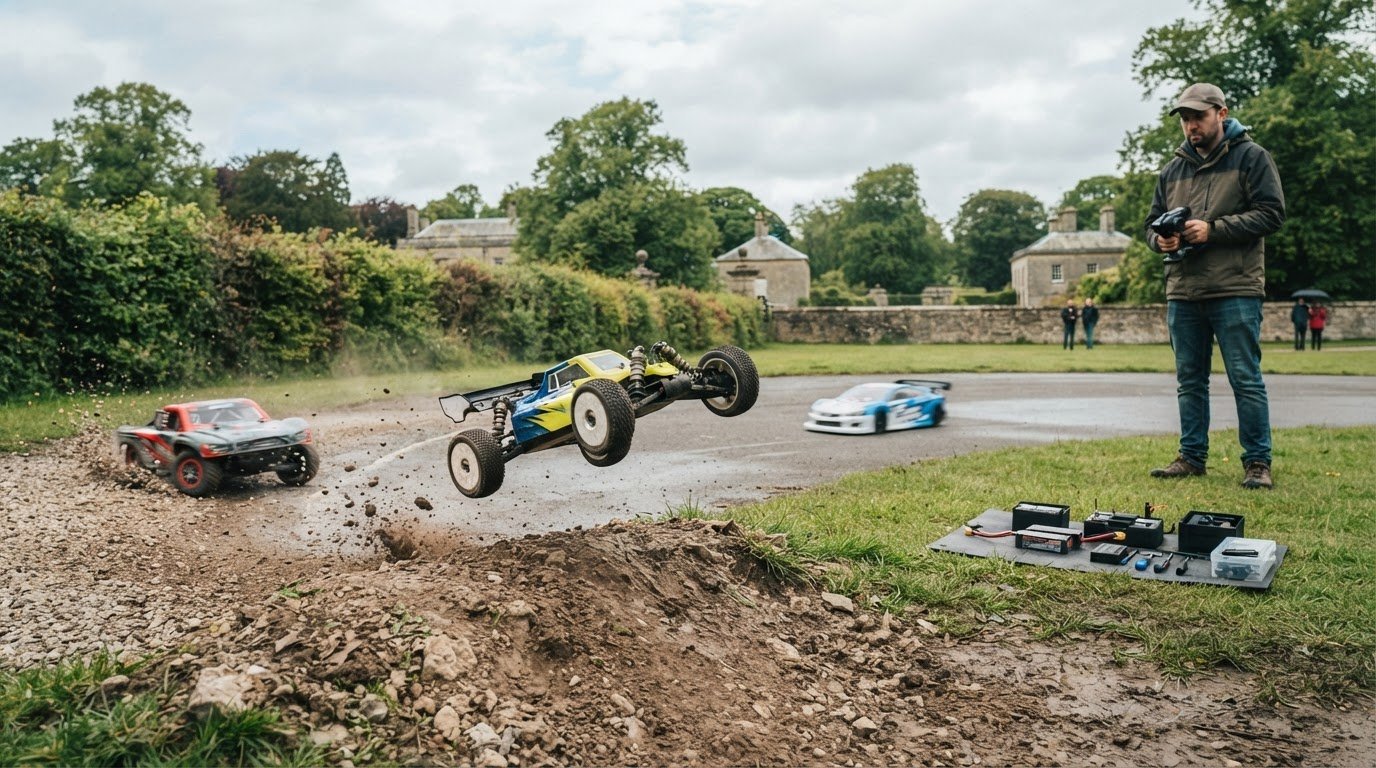
Brushless power is worth it when speed and punch matter more to you than keeping the setup simple. Some 1:8 brushless RC cars are capable of roughly 80-90 km/h, while most ready-to-run models provide around 15 to 30 minutes of driving from one battery. The best hobby RC cars for adults balance that performance with the scale, terrain and runtime that suit your kind of driving.
Top speed is only one part of choosing the best hobby RC cars for adults. The right model should suit where you’ll drive and how you want it to feel, whether you’re crossing smooth ground or tackling rough terrain. Compare brushed and brushless power, speed, scale, dimensions and battery runtime before deciding what matters most: outright pace, manageable size or longer sessions. This guide covers six RC car styles and offers a practical way to narrow down your options.
Key Takeaways
- Compare brushless and brushed power against your priorities: stronger speed and punch, or a simpler setup for more relaxed driving.
- Plan around typical battery breaks: most ready-to-run models offer around 15 to 30 minutes per battery, so a spare can extend a session.
- Match scale to your driving space; 1/16- and 1/18-scale cars are easier to manage indoors, whilst larger models need more room.
- Choose the vehicle style for the surface: ground clearance helps on rough terrain, while touring cars and short course trucks suit smoother ground.
- Use the comparison and decision guide to weigh speed, size, runtime and driving style before choosing your next RC car.
Battery run time and spare batteries
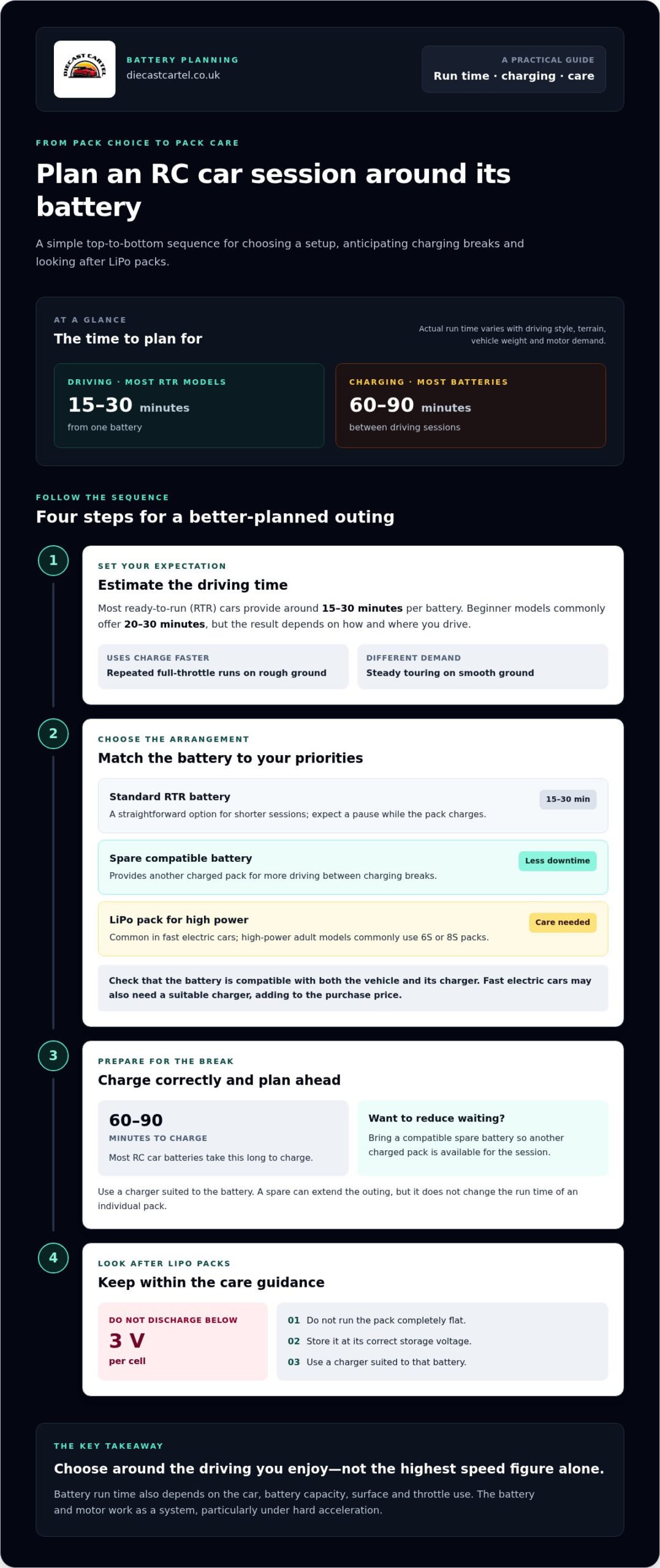
Battery choice shapes each session as much as motor choice. Most ready-to-run (RTR) RC cars deliver around 15 to 30 minutes from one battery. Beginner models commonly provide 20-30 minutes, although driving style, terrain, vehicle weight and motor demand affect the result. Repeated full-throttle runs on a rough course use charge faster than steady touring on smooth ground.
For UK radio equipment, pair the hand-held transmitter with its vehicle’s receiver and follow the operating conditions of your chosen venue. For LiPo battery care, don’t discharge below 3 V per cell; store the pack at its correct storage voltage, and don’t run it completely flat. Insurance arrangements depend on the venue and the terms of the policy covering your activity.
The fastest hobby-grade RC cars can exceed 60 mph, but speed alone won’t tell you how long a run lasts. Most RC car batteries take 60-90 minutes to charge, so plan for charging breaks as well as driving time. A spare compatible battery can extend a session without making you wait for the first pack to recharge.
Fast electric cars often use LiPo batteries, and the battery and suitable charger add to the purchase price. High-power adult models commonly use 6S or 8S packs. Higher power can bring more speed and acceleration, but runtime still depends on the car, battery capacity, surface and throttle use. Brushless motors can draw substantial current under hard acceleration, so the battery and motor work as a system.
Compare the setup before choosing. The table shows what each battery arrangement prioritises. Check that the battery is compatible with both the vehicle and its charger.
| Option | Runtime and charging | Best fit | Trade-off |
|---|---|---|---|
| Standard RTR battery | Typically 15 to 30 minutes per pack; charging takes 60-90 minutes. | Short, straightforward sessions. | Driving pauses while the pack charges. |
| Spare compatible battery | Provides another charged pack for the session. | More driving between charging breaks. | Requires a suitable additional battery. |
| LiPo pack for high power | Common in fast cars; 6S and 8S are typical in high-power models. | Drivers seeking strong performance. | Needs careful charging and storage. |
Make each outing easier to plan with a few simple steps:
- Charge the pack with a charger suited to that battery.
- Bring a compatible spare if you want to reduce downtime.
- For LiPo packs, preserve charge above 3 V per cell and use the correct storage voltage.
For touring on smooth ground, measured throttle use can help stretch a battery session. On a rough course, bumps and frequent acceleration place different demands on the motor and pack. Choose the setup around the driving you actually enjoy, rather than the highest speed figure alone. A 1:16 or 1:24 remote-control car or truck can also suit drivers looking for a smaller-format option, while battery compatibility remains central to the choice.
RC car scale and dimensions
Scale affects a car’s footprint, handling and suitability for indoor driving or open ground. In the UK, use RC vehicles only on land or at venues where it is permitted, and follow the site’s instructions. Clubs set their own track rules.
Choosing the Right Scale
A scale ratio compares the model with its full-size counterpart: a 1:16 car is larger than a 1:18 car. The 1:16 and 1:18 options are easier to manage indoors, whilst 1:6-scale models and larger need substantially more space. Think about where you’ll drive, how much room you have to store the car, and whether its footprint suits your course. A smaller model may fit tighter spaces; a larger one has a more imposing presence.
RC Car Types and Scales
Scale and body style answer different questions. A monster truck or buggy describes the vehicle’s shape and intended character, whilst its scale indicates relative size. The 1:16 and 1:18 scales are popular choices for bashers, crawlers and drifters, giving adults options across distinct driving styles. Choose the type for the ground and handling you enjoy, then use scale to judge whether the model fits your driving space.
Compare the actual model’s length and width before setting up an indoor course. Scale ratios don’t give you the vehicle’s precise dimensions, because full-size cars vary. A 1:18 replica of a large vehicle can occupy more space than a 1:18 model based on a smaller one. Check the available product dimensions against doorways, storage shelves and the turning room you have.
Consider ground clearance as well as footprint. A monster truck or buggy with good clearance is better suited to grass and rough ground than a low-bodied touring car. Touring cars are a more natural fit for smooth surfaces. A compact model may be easier to position, but that doesn’t automatically make it suitable for every surface.
Scale doesn’t determine drivetrain. Models of a similar size can use different drive layouts, and the body style alone won’t show how power reaches the wheels. Compare scale, intended terrain and drivetrain separately. A small buggy may fit indoors, for example, but still be designed for outdoor ground rather than a confined room.
Use this quick selection sequence:
- Measure the space available for driving and storage.
- Match the vehicle type to the ground, such as a buggy for rough terrain.
- Compare the model’s stated dimensions, not scale alone.
- Consider drivetrain separately from body style and size.
For a smaller indoor-friendly option, 1:16 and 1:18 models are easier to manage indoors than larger scales. For open ground, choose a vehicle style that suits the surface first, then select a scale that fits your space. That combination makes the scale choice practical, not just appealing on a shelf.
Are brushless RC cars worth it?
Brushless power suits adults looking for stronger acceleration or higher speed, while brushed setups offer a simpler entry point. Choose according to where you’ll drive, how much tuning you enjoy and the maintenance you’re prepared to do.
Brushless Electric and Petrol Models
Brushless electric models use a rechargeable battery to power the motor; petrol models use a combustion engine. Brushless cars suit drivers who value quick response and tuneable performance, while petrol models offer a different experience centred on operating an engine. Compare the driving surface, desired speed and maintenance involved rather than assuming either power type is always better.
For 2026, the strongest choice for an adult is a model matched to their space and experience. High-power 6S and 8S cars need substantial space, and a park or car park isn’t enough for safe high-speed running.
Budget Brushless Basher Features
A brushless basher is designed for energetic driving over varied ground, not precise laps on a smooth course. Compare its suspension, ground clearance, chassis protection and replacement-part availability. Robust suspension helps manage impacts, while straightforward repairs make regular use more practical. Check the full setup, including battery and charger requirements, before judging value.
After rough runs, inspect the tyres, suspension, drivetrain and fasteners, then clear away dirt before storage. Replace worn or damaged parts to keep the car operating as intended. Replacement costs vary by component and model, so check parts availability for the specific vehicle before buying.
Brushed and Brushless Motors
Brushed motors offer a straightforward starting point; brushless motors typically deliver more speed and efficiency. A brushless conversion typically doubles an RC car’s top speed, so it can change how a familiar model behaves. That extra pace also makes control, suitable tyres and suspension setup more important. Choose brushed for measured driving and easier entry, or brushless for sharper performance and further tuning.
Brushless Speed Cars
Some 1:8 brushless RC cars are capable of roughly 80-90 km/h, and modern hobby-grade cars can exceed 60 mph. Those figures describe serious speed, not a promise of everyday conditions. Tyres, surface, battery and setup all affect performance. A brushless speed car suits open space and controlled runs; it’s a poor match for tight indoor driving or crowded ground.
For a balanced adult setup, weigh speed against control and maintenance. Check the suspension, inspect the drivetrain after driving and use replacement parts that suit the model. If you want high speed, prioritise room to run and a chassis suited to the surface. For casual sessions, a brushed model may offer enough pace without making maximum performance the goal.
How fast do these RC cars go?
Top speed matters, but the chassis must also suit the surface. A racing car designed for smooth tarmac won’t handle rough ground like a durable off-road truck.
Modern hobby-grade RC cars can exceed 60 mph, while some 1:8 brushless models reach roughly 80-90 km/h. Treat these as performance examples, not guarantees for every run: surface, tyres, battery and setup affect how a car drives. For off-road use, ground clearance and suspension matter alongside speed, especially over grass or uneven ground.
Compare popular brands and models by their stated speed, chassis durability and compatible upgrade parts, not just the badge. Check that replacement components and upgrades suit the exact model, then weigh that support against your preferred driving style.
Match the car type to the surface
A monster truck or buggy with good ground clearance suits grass and rough ground. Crawlers prioritise controlled movement over obstacles rather than outright speed. For a smooth course, choose a touring car or short course truck. Drift cars are designed for controlled slides on suitable surfaces, so their appeal is handling, not rough-terrain capability.
Each style delivers a different driving experience, even before you compare motors. A crawler’s measured pace helps with placing the vehicle over obstacles, while a buggy suits quicker runs across uneven ground. Choose for the places you’ll drive most often: speed is less useful if the tyres and ground clearance don’t suit the surface.
On-road racing chassis design
An on-road racing chassis is designed for smooth surfaces, where stable cornering and predictable steering matter. Its low stance keeps it closer to the ground than a monster truck, helping it stay composed on tarmac. The same design is less suited to grass, where bumps can be difficult to manage. Match the chassis to a clean car park or track.
On-road and rally cars
Touring cars suit smooth routes such as driveways and car parks, while rally-style models offer a middle ground for mixed surfaces. A rally-style body doesn’t make every model equally capable off-road: tyres, suspension and ground clearance still shape how it performs. Compare those features if you’ll drive on tarmac with occasional rough patches.
Use this three-step comparison before buying: choose your main surface, pick a vehicle type to suit it, then compare speed and upgrade compatibility. For smooth-ground racing, favour an on-road chassis; for rough terrain, prioritise ground clearance and durable suspension. Drift cars, crawlers and buggies each reward a different style of control.
Adult and advanced RC cars
Adult RC driving isn’t defined by maximum speed. It’s about matching control, terrain and maintenance to your experience. The best hobby RC cars for adults suit your available space and preferred driving style, whether you’re a beginner or an experienced enthusiast.
For grass and rough ground, choose a monster truck or buggy with good ground clearance. For smooth surfaces, a touring car or short course truck is a better fit. When comparing the best hobby RC cars for adults, weigh terrain alongside motor power: a fast car on unsuitable ground can be harder to control and put more strain on its components.
Start at moderate speeds and practise steering and throttle control before using full throttle. Smooth inputs help you learn how the car responds through turns and over changes in ground. An open, suitable space gives you room to build confidence; high-power 6S and 8S cars need substantial space, and a park or car park isn’t enough.
Plan for repairs as part of ownership. High speeds and rough driving can break parts, so factor replacement components into the cost of the car and battery setup. Check parts availability for the exact model, and learn to inspect its suspension, wheels and drivetrain after a session. A damaged component can affect handling even if the car still moves.
Upgrade with a purpose. If steering feels difficult, practise smoother inputs and adjust the setup before adding power. If you regularly drive on rough ground, prioritise suitable ground clearance and suspension. On smooth courses, focus on stable handling. Each change should solve a specific problem rather than add complexity for its own sake.
New drivers can build their skills gradually. Experienced enthusiasts may enjoy the extra involvement of tuning, repairs and performance upgrades. A local RC club can provide a place to meet other enthusiasts, learn from their experience and access a track.
Use this decision guide before choosing:
- Beginner: prioritise manageable speed and practise steering before full throttle.
- Rough-ground driver: compare monster trucks and buggies for ground clearance.
- Smooth-surface driver: consider a touring car or short course truck.
- Hands-on enthusiast: look for a model with suitable replacement parts and room for purposeful upgrades.
The best setup is the one that makes you want to drive, maintain and improve your car. Choose the terrain first, then match speed, control and upgrade potential to your experience. Explore RC options for your next driving session.
Choose a monster truck or buggy for rough ground, or a touring car or short course truck for smooth surfaces. Beginners should prioritise manageable speed and control. Experienced drivers may prefer a model with replacement parts available and scope for purposeful upgrades.
Diecast Cartel: 1:24 scale Diecast models and trucks
Diecast Cartel offers remote-control cars and trucks alongside detailed models for collectors, giving you options for both driving and display. If you’re interested in compact machinery as well as cars, its range includes a 1:24 remote-control forklift, while 1:24 scale diecast models and trucks offer a different way to enjoy vehicle detail away from the course.
Explore Diecast Trucks and Tractors or 1:18 scale model cars to build a collection around the vehicles you enjoy. These are display models, not substitutes for a hobby RC car, so choose according to whether you’re looking for hands-on driving, collecting, or both.
For remote-control options and scale models, visit Diecast Cartel online.
Make your next move in the hobby
Your next RC car can offer more than a new speed target. Consider what will keep you engaged after the first runs: improving your control, experimenting with the setup or adding a carefully chosen model to your display. The best hobby RC cars for adults fit the space, driving style and enjoyment you want from the hobby.
If you’d like your interest to extend beyond driving, Diecast Cartel offers 1:24 scale diecast models and trucks, Diecast Trucks and Tractors, and 1:18 scale model cars. These bring a collecting angle alongside the hands-on appeal of remote-control vehicles, with scale and subject matter helping tie the two interests together.
Ready to explore a model that suits your collection? Contact Diecast Cartel for help, and take the next step in a hobby that’s yours to shape.
Frequently Asked Questions
Electric vs Nitro: Which Should You Choose?
Choose electric for a more straightforward session, or nitro if you want hands-on engine operation. An electric car uses a rechargeable battery; a nitro model uses fuel and needs engine setup and maintenance. Consider where you’ll drive, too: noise, refuelling and preparation time all shape the experience. For a first model, electric is often the simpler place to start.
Just how big are these?
RC cars range from compact models to large machines that need open space. Scale is a ratio, not a precise length: two 1:18 models can have different dimensions if their full-size counterparts differ. A 1:18 or 1:16 car can suit indoor handling better than a 1:6 model, which needs substantially more room. Compare the stated length and width with your storage space before choosing.
Types of RC Cars: Which Is Right for You?
Choose a vehicle style to suit the experience you want. Monster trucks and buggies suit lively runs, while crawlers focus on controlled obstacle driving and touring cars favour smooth surfaces. Drift cars are for practising controlled slides, and rally-style cars offer another option for mixed driving. Picture your usual course, then match the vehicle to the surface and the level of control you prefer.
What are remote control cars?
Remote control cars are miniature vehicles operated from a distance with a cordless handheld transmitter. The transmitter sends commands to a receiver in the car, allowing you to steer and control its motor. Hobby-grade models are designed for repeated driving and come in a range of styles. A forklift model, for example, focuses on moving and positioning rather than speed.
What’s the best RC car for an adult beginner?
A ready-to-run electric model is a practical first choice for an adult beginner. It arrives assembled, so you can focus on learning the controls instead of building the chassis. Before driving, read the model instructions, charge the battery as directed and practise gradual steering and throttle inputs in an open space. A manageable vehicle style helps you build skill before moving on to more demanding performance.
Which RC cars are best for beginners, off-road, on-road, and racing?
For beginners, a ready-to-run electric model keeps setup straightforward. For uneven ground, consider an off-road monster truck or buggy; for smooth surfaces, a touring car is a better fit. Racing calls for a track-designed chassis with predictable steering through corners. Decide whether you value learning, terrain capability or lap performance, as one model won’t excel at every task.
What do hobby-grade RC cars cost in the UK, including batteries, chargers, and essential accessories?
There’s no single total cost for every UK setup: the vehicle, battery type, compatible charger and accessories all affect the outlay. A fast electric model may need a LiPo battery and charger, while a spare battery adds another cost. Check what the package includes, then account for compatible charging equipment and replacement parts. Your complete setup depends on these choices, not just the car.
What is the difference between ready-to-run, kit, brushed, and brushless RC cars?
Ready-to-run and kit describe how a car is supplied; brushed and brushless describe its motor. A ready-to-run car comes assembled, while building a kit typically takes 6-12 hours. Brushed motors offer a straightforward entry, whereas brushless motors suit drivers seeking stronger performance and tuning options. These labels can combine: a model can be ready-to-run and brushless, so compare build format and motor separately.
