
Diecast Guides
Diecast Models for Small Apartment Displays

Oct
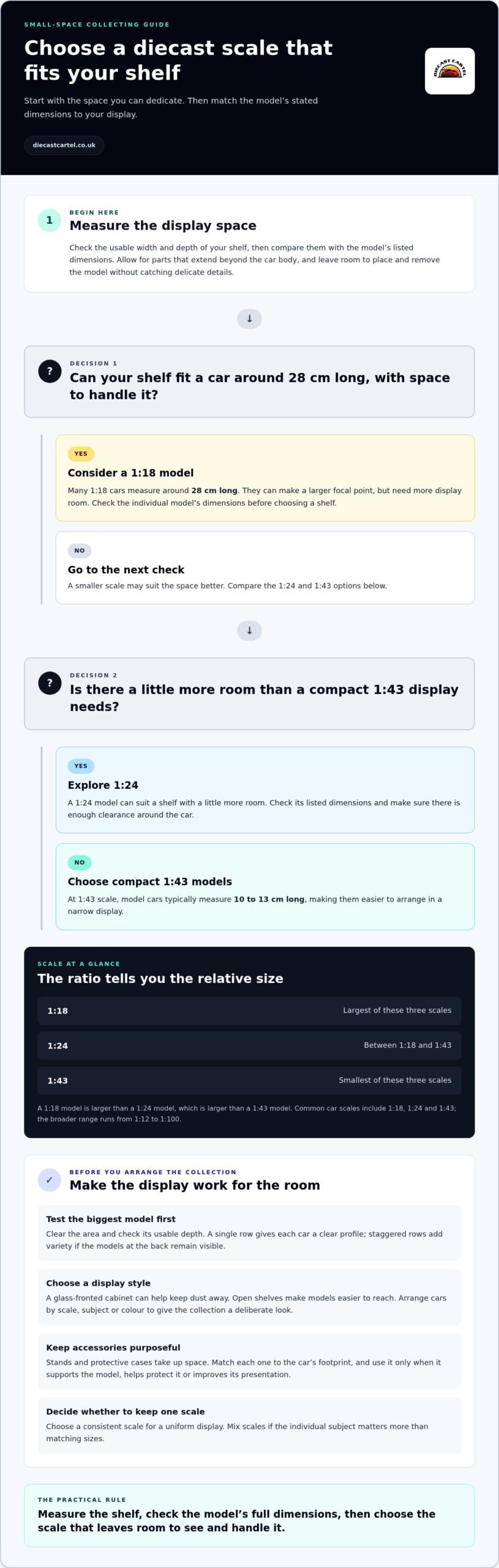
The best diecast models for small apartments are usually smaller-scale cars, with 1:43 models typically measuring 10 to 13 cm long. A 1:24 model can suit a shelf with a little more room, while many 1:18 cars are around 28 cm long and need a larger display space. Choose the scale around the space you can dedicate, not just the model that catches your eye.
It’s a familiar collector’s balancing act: you want each model to stand out without taking over the surfaces you need for everyday life. With a considered display and the right scale, even a compact collection can feel curated rather than crowded.
This guide explains how scale affects the space a model needs and how to compare display options, accessories, price and finish. You’ll also find practical ways to organise and care for your collection, so each new addition has a place.
Key Takeaways
- Choose a scale to suit your available shelf space and the level of detail you want to enjoy.
- Plan your display around the room, using shelves or a cabinet to keep models organised and easier to dust.
- Consider how accessories and moving parts affect the space, care and handling your collection needs.
- Set a collecting budget and weigh each model’s finish, quality and appeal before adding it to your display.
- Explore 1:24 models, trucks and tractors, or 1:18 scale cars to find pieces that fit your collecting interests.
Model scales including 1:43, 1:24 and 1:18
Scale shows how large a model is relative to its full-size subject. For a compact display, check the model’s stated dimensions against your shelf, including any parts that extend beyond the body.
Comparing Diecast Model Scales
At 1:43 scale, model cars are typically 10 to 13 cm long, making them easier to arrange in a narrow display. Larger models can take up more room, so check each car’s dimensions before choosing a display space. Many 1:18 cars measure around 28 cm long, so allow for their full length when planning a shelf.
The ratio shows how much smaller the model is than its full-size counterpart: 1:18 is larger than 1:24, which is larger than 1:43. The best diecast models for small apartments depend on the space available and the detail you want to see. Measure the display area, then compare that space with each model’s listed dimensions.
Common diecast car scales include 1:18, 1:24 and 1:43, though the broader range runs from 1:12 to 1:100. That variety lets collectors focus on fewer, larger centrepieces or arrange more compact scale models together. Keep a consistent scale if a uniform display matters; mix scales if the individual subject matters more.
Brands Offering Smaller-scale Models
Brand names can help you find a particular subject, but the scale and dimensions matter more when space is limited. Norev and Minichamps are manufacturers collectors may encounter; compare the measurements of each release rather than assuming every model from one brand will fit alike.
Norev was founded in Villeurbanne, near Lyon, in 1946. Minichamps’ parent company, Paul’s Model Art, was founded in Aachen in 1990. These details identify established names, but they don’t determine a model’s size. Use the packaging or product description to confirm whether a car is 1:43, 1:24 or 1:18.
For smaller-scale models, begin with the subject you want, then narrow your search by scale. A 1:43 car measuring 10 to 13 cm can suit a tighter shelf; a 1:18 car around 28 cm makes a stronger focal point but needs more room. Checking the measurement of each release helps avoid an attractive model overwhelming your display.
Scale also shapes how a collection reads. Several compact cars can sit together as a varied line-up, whilst a single larger model can draw attention to one favourite subject. Before buying, sketch the shelf layout or mark out the model’s footprint on paper. That simple step makes comparing 1:43, 1:24 and 1:18 choices more practical.
Displaying a diecast collection
A compact display works best when every model has a clear place and is easy to see. Choose one shelf, cabinet or ledge, then arrange models by scale, subject or colour. This gives your collection a deliberate look without spreading it across every surface. Glass-fronted cabinets and well-lit shelves can show off models while helping keep dust away.
Before arranging cars, clear the display area and measure its usable depth. Leave room to place and remove each model without catching mirrors or other delicate parts. A single row gives every car a clear profile; staggered rows add variety if models at the back remain visible. Test the layout with your largest model first.
Lighting affects how a model’s paintwork and shape appear. Use an existing light source or suitable display lighting to highlight a favourite miniature. Avoid placing models in direct sunlight for extended periods. The aim is to enjoy their colour and detail without making the display compete with the rest of the room.
Display cases give a collection a defined home, while open shelves make models easier to reach. A glass-fronted cabinet can help keep dust away; a simple shelf may suit collectors who like to rearrange their display. Stands can set a feature car apart, but keep the model stable and leave it enough room.
For a balanced arrangement, group cars by a visual link such as body colour, era or vehicle type. Contrasting colours can help each miniature stand out, while similar subjects create a unified look. Choose display accessories with a purpose: a stand should support the model or improve its presentation without taking up more room than the car.
Dust models gently with a soft brush or microfibre cloth. Avoid harsh chemicals, which may affect finishes and delicate details. Handle a model by its base or sturdier parts to reduce the risk of damage. Take extra care when lifting a car with fine mirrors or trim from a shelf or case.
When a model leaves the display, place it in its original box or a padded container to help prevent damage. Keep the packaging together with the model, rather than stacking loose items on top. If you’re planning the next addition, browse a range of collectible models with your display space and preferred subjects in mind.
Die-cast cars and accessories
Material and finish affect how a die-cast car looks and fits into a collection. These models are usually made from metal, commonly zinc alloy, also known as Zamak. Inspect the paint, trim and alignment of body panels. A neat finish can make one car feel like a considered display piece, even in a small collection.
Moving parts can add interest. Some models have working hoods, doors and steering wheels, allowing collectors to inspect details beyond the exterior. In a compact home, consider whether you’ll display the car closed or handle its features regularly. If opening doors would mean moving nearby models, leave enough clearance in your layout.
Accessories can improve presentation and care, but they also occupy space. A display base can keep a model in position, while a protective case can help shield it from dust. Match each accessory to the car’s footprint and the shelf you’ve set aside. Choose extras for a clear purpose, not simply because they accompany a release.
When handling a model, lift it by its base or sturdier parts, not delicate mirrors, trim or other small components. Remove dust with a soft brush or microfibre cloth, and avoid harsh chemicals. Keep a storage box or padded container ready for models leaving the display, and retain the original packaging where practical.
Some models are described as limited editions, and rarity can influence value over time. Future value is never certain, so choose a car first for its subject, finish and personal meaning. A favourite touring car or classic saloon can earn its place through the story it brings to your collection, not just its edition label.
Authenticity is another consideration. When assessing whether a replica represents its named vehicle, look for models officially licensed by reputable producers. Licensing can help establish that connection; badges, proportions and finish also affect a model’s appeal. Compare the description with the car you want to collect before setting aside shelf space.
Before choosing another car or an accessory, make a short checklist: the model’s subject, finish, footprint and how you’ll protect it. This helps each addition suit your collection rather than become clutter. For example, one detailed model with a suitable base may make a stronger focal point than several pieces competing for attention.
In a small apartment, the best accessory earns the space it takes up. A stand can present a car clearly, a case can help protect it, and a storage container can keep it safe off display. Consider each item alongside the model, so the car remains the focus and the collection stays manageable.
Factors to consider before buying
Start with two practical limits: your collecting budget and the space available for display. Decide how much you’re comfortable spending, then consider whether you want one standout replica or several models around a shared theme. A classic 1960s Mustang, for example, might appeal more than adding another car simply to increase the collection.
Think about the subject and what it means to you. A favourite car, racing memory or distinctive body shape can give a model a lasting place in your home. If you’re choosing between two releases, compare which better suits your interests rather than relying on an exclusive label alone.
Inspect photographs and descriptions for details that matter to you: paint finish, visible trim, wheel design and the replica’s proportions. For a vehicle with a recognisable profile, such as a classic Mustang, accurate shaping may matter more than opening parts. Checking these features helps you decide whether the model suits your collection.
Licensing can also guide a purchase. Formal arrangements between model manufacturers and car brands became standard across the industry after the 1980s; models were often made without licensing agreements during the 1950s and 1960s. Look for officially licensed models from reputable producers when authenticity matters to you, and consider how closely the replica represents the named vehicle.
Rarity may catch your eye, but limited editions and other rare models can change in value over time. Scarcity is a consideration, not a reliable reason to buy. Choose a model for its subject and finish, and treat any future value as secondary to the pleasure of displaying it.
Check how a model will fit your existing display before deciding. Consider its footprint, the space needed to lift it safely and whether you might knock nearby pieces while handling it. A model with working doors, for example, needs room for them to open. These practical details can matter more than a striking photograph.
Follow a simple buying sequence: set your budget, choose a subject, compare the replica’s details, then assess how it will fit your display. If a model fails one of those tests, pause before buying. This keeps an apartment collection focused, makes each addition intentional and helps prevent an appealing release from becoming an awkward fit.
Consider care and storage alongside the model. A delicate finish may need gentle dusting, while original packaging can help protect a car when it leaves the display. Before buying, decide where the model will go and how you’ll handle it. That way, your choice reflects both your taste and the realities of your home.
Budget-friendly and premium models
A collecting budget can guide your choices, but it needn’t decide what deserves a place on your shelf. Compare each model’s finish, features and appeal with the space it needs.
Budget-friendly Model Options
For a budget-conscious collection, focus on the subject and finish rather than extras. A neatly painted vehicle with a familiar shape may bring more enjoyment than features you won’t use. Compare descriptions and photographs, paying attention to body proportions, wheels and visible trim before deciding.
A smaller display can make selective buying easier. Choose a model that fills a gap, such as a favourite car or a contrasting colour. Set a personal spending limit before browsing, then compare each option with your budget and display plan.
Premium Model Options
Premium models may appeal through intricate detailing, moving parts or a particularly meaningful vehicle. Decide which features matter to you: opening doors, a detailed cabin or a faithful exterior can each shape the experience. More features don’t automatically make a model right for your collection.
Consider the footprint as well as the finish. A larger replica may make a stronger display feature, but it could occupy space that would otherwise hold several smaller cars. In an apartment, one premium centrepiece can suit a focused collection if it fits your shelf and is easy to handle.
Price alone doesn’t explain quality. Look closely at the finish, how neatly details sit against the body and whether the model represents a vehicle you genuinely want to collect. An official licence from a reputable producer can also help you assess the replica’s connection to its named vehicle.
Limited editions and rare models may attract attention, but rarity can influence value over time without making future value certain. Treat an exclusive label as one detail, not the whole reason to buy. A model you enjoy displaying may be more satisfying than one chosen only for its scarcity.
Before choosing, compare options in the same scale. A 1:24 model and a 1:18 model take different amounts of shelf space, while their details may suit different display priorities. Write down the vehicle, features and finish you want, then check each candidate against that list.
Passion often starts with one memorable vehicle, not a large collection. If a model fits your interests, budget and display, it can make a meaningful addition. To explore options for your collection, browse diecast models and compare the styles that catch your eye.
Diecast Cartel: 1:24 scale Diecast models and trucks
Diecast Cartel offers 1:24 scale diecast models and trucks for collectors planning a display around this scale. Its range also includes diecast trucks and tractors, alongside 1:18 scale model cars for those who prefer larger pieces.
For a small apartment, use the scale and model type to guide your choice: compare the space available with the vehicle’s dimensions before selecting a display spot. If you enjoy interactive models as well as static collectibles, the 1:24 remote control forklift offers a different way to engage with miniature vehicles, though it suits play as well as display.
Browse the Diecast Cartel website to explore models for your collection.
Make room for your next favourite
A small display can still feel personal. Let each addition reflect what you love about collecting, whether that’s a distinctive vehicle, a memorable shape or a new theme for your shelf. The best diecast models for small apartments suit both your space and the collection you want to build.
When you’re ready to choose a piece, Diecast Cartel offers 1:24 scale diecast models and trucks, diecast trucks and tractors, and 1:18 scale model cars. Explore the range with your display in mind, and consider which subject you’ll most enjoy seeing at home.
Contact Diecast Cartel to take the next step in building a collection that feels distinctly yours.
Frequently Asked Questions
What diecast model scales are best for small apartments?
For a compact display, 1:43 models are a practical starting point; 1:24 offers a middle ground, whilst 1:18 suits a larger shelf. Choose by measuring the space you can spare and deciding whether you prefer several smaller cars or one prominent model. If you’re building a themed collection, sticking to one scale can also help the models sit together neatly.
What are the dimensions of 1:64, 1:43 and 1:18 diecast models?
Dimensions vary with the size of the real vehicle. A 1:43 car is typically 10 to 13 cm long, while a 1:18 car is around 28 cm. There isn’t one fixed length for every 1:64 model: divide the full-size vehicle’s length by 64 to estimate its model length. Check the individual model’s dimensions before planning a shelf layout.
How can diecast models be protected from dust and sunlight in a small flat?
Use a glass-fronted cabinet or place models on an interior shelf away from direct sunlight. Dust exposed models gently with a soft brush or microfibre cloth, and avoid harsh chemicals. In a sunny room, curtains can reduce direct light on the display. Keep cleaning materials nearby to make gentle dusting part of your routine.
Are there lightweight or stackable storage options for diecast collections?
Individual boxes or padded containers can protect models when they’re off display. In a small flat, choose boxes that fit an available cupboard or wardrobe, and use dividers to stop models shifting against one another. Stack containers securely without placing weight on the models. Keep frequently displayed cars accessible, so retrieving one won’t disturb the rest.
What should collectors check before buying diecast models, including scale, materials and moving parts?
Check the scale and stated dimensions, allowing for details such as mirrors that may extend beyond the body. Die-cast models are usually metal, commonly zinc alloy. If a model has moving parts, such as doors or a bonnet, consider whether you’ll use them and have room to open them. Also inspect photographs for paint finish, trim and other details that matter to you.
Which compact diecast models have the best detail and build quality?
The article doesn’t identify specific compact models as having the best detail or build quality. Compare each model’s paint, trim, body-panel alignment and finish, and check its listed scale and dimensions.
