
Diecast Guides
Diecast model cars with opening parts and their price factors
Nov
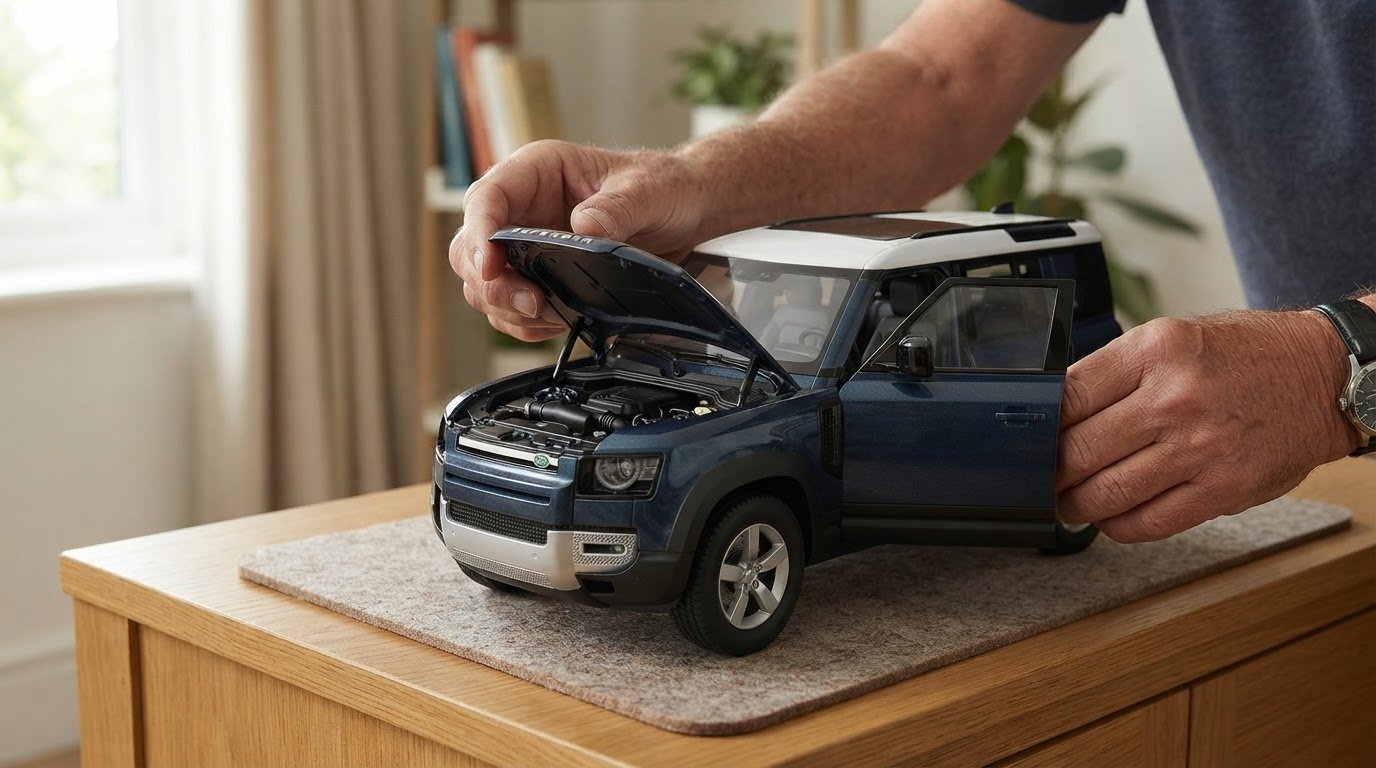
Opening parts are a feature, not a guarantee: diecast model cars with opening parts are available in popular 1:18 and 1:24 scales, but the features vary by model and price point. Many have opening doors, bonnets or boots. The product description and images can show you which parts move, so you know what to expect before choosing a model.
That small detail can change how a model feels in your collection. A door that swings open or a bonnet that reveals the engine bay adds an interactive element, while crisp paintwork, trim and interior details bring the miniature to life. It’s natural to want both, but which matters most to you?
This guide explains which opening features to look for, how scale and moving parts can influence price, and which details deserve a closer look. You’ll also find practical ways to weigh those features against the model’s overall finish, helping you choose a piece that suits your display and collecting style.
Key Takeaways
- Use scale to balance shelf space with the size of the model and its visible details.
- Compare which parts open and how they’re finished; moving features can influence a model’s price.
- Look closely at paintwork, trim and interior details to judge the overall finish, not just the opening parts.
- For children, consider the model’s intended use and age guidance rather than assuming a collector model is designed for play.
Do diecast models have opening features, like doors or bonnets?
Yes. Diecast model cars with opening parts can feature doors, bonnets or boots. The exact moving parts vary by model. Some open only at the doors; others reveal more of the interior or engine bay. Consider each model’s scale, moving features and detailing individually, rather than assuming every car offers the same features.
Scale describes how a model’s size relates to its full-size counterpart. A 1:18 model represents a car reduced to one eighteenth of its original dimensions. A 1:24 model is smaller, at one twenty-fourth of the original size. That ratio affects the model’s physical presence, but it doesn’t by itself tell you which parts open. Two cars at the same scale can have different features.
Popular diecast car scales include 1:18 and 1:24. Smaller 1:64 models take up less shelf space than 1:18 models, which can help when display room is limited. However, scale alone doesn’t establish whether doors or bonnets open. Look for those features in the individual model’s description and images, rather than using its size as a shortcut.
There are smaller examples, too. The imtfzct Camry XSE is a 1:36-scale die-cast model with opening doors. It shows that opening parts aren’t limited to 1:18 or 1:24 cars. Scales such as 1:72 and 1:76 are popular for aircraft and military vehicles, though those examples concern different vehicle types.
To compare models, start with the scale, then identify each moving part. Check whether the description specifies doors, a bonnet or a boot, and use the product images to see how those features are presented. A photograph showing an open door, for example, gives a clearer view of the cabin than a closed exterior shot. Consider the model’s scale and finish, too, to judge how it will fit your display.
Opening features and model price points
Opening parts can influence a model’s appeal and price. Compare the moving features with the finish, scale and visible detail before deciding what matters most.
Opening Feature Options
Opening features can include doors, bonnets and boots. Some models have one type of moving part, while others combine several. The more parts that open, the more areas you can view, such as the cabin or engine bay. Product descriptions and images help identify the features of each model.
Look beyond the number of features. Check how the doors sit against the body when closed, whether the paint finish looks consistent around the edges, and how clearly the interior is shown. For a car with an opening bonnet, images of the engine area can help you assess the extra detail. These checks make comparisons more useful than simply counting openings.
Model Price Points
Prices vary by model and price point, and opening features are one factor to weigh. Scale, finish and the amount of visible detail also shape a model’s appeal. A car with several moving parts may offer more to explore, but the number of openings alone doesn’t tell you whether its overall presentation suits your collection.
Compare like with like: start with models at the same scale, then note their opening parts and visible details. For example, compare two cars with opening doors by looking at interior detail and panel alignment as well as how the doors move. Product descriptions and images can show the differences. This helps you assess what a price difference reflects without treating one feature as the whole story.
Set your priorities before choosing. If display presence matters most, give greater weight to scale and exterior finish. If you enjoy examining a model closely, opening parts and interior detail may matter more. Comparing these features helps you choose a model that matches your collecting interests, rather than focusing on movement alone.
Model car features and detailing
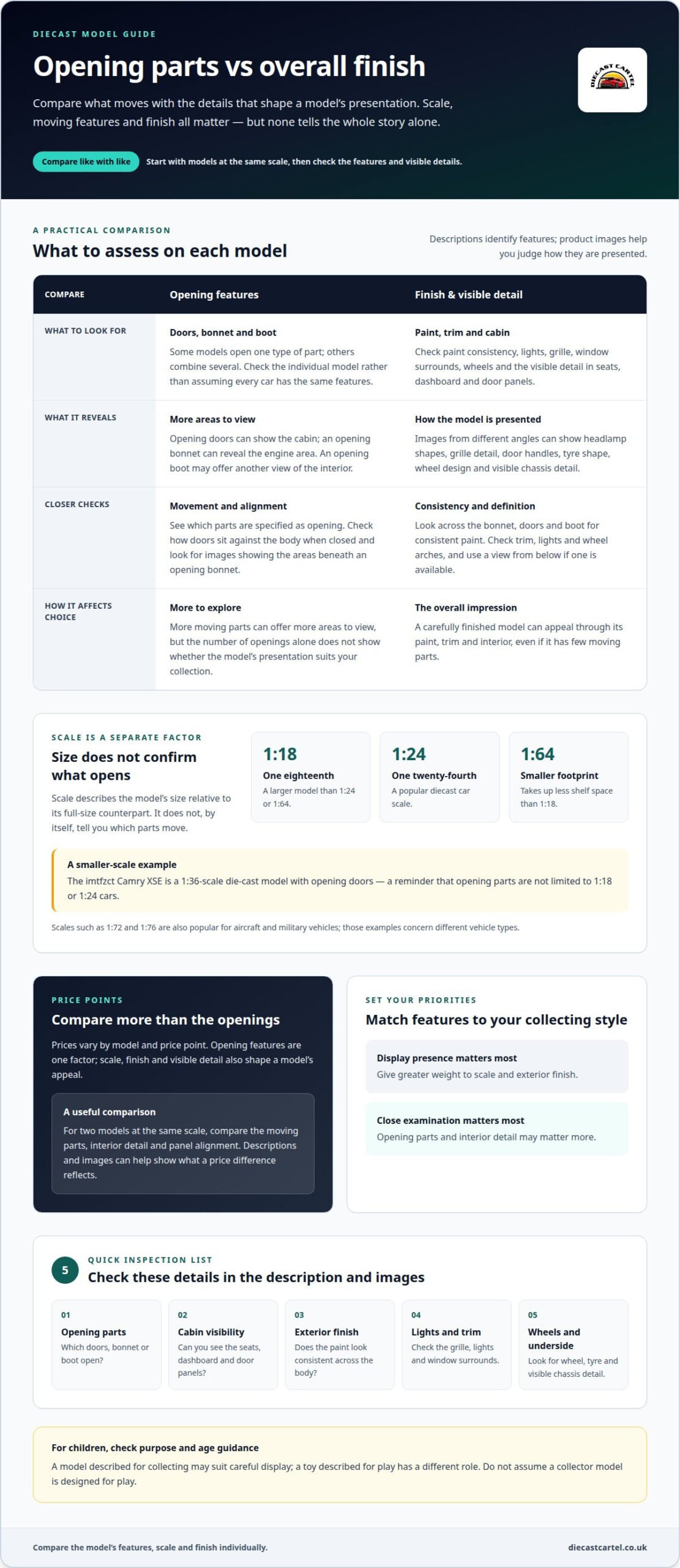
Opening parts add interest, but the surrounding finish shapes the model’s overall impression. Read product descriptions alongside images: descriptions identify which features open, while images reveal visible details. For example, a model with opening doors can show its cabin, but the dashboard, seats and door panels deserve attention, too. These details help you assess more than movement alone.
Start with the exterior. Look at the paint colour across the bonnet, doors and boot, then check how the trim and lights are represented. A clear image of the front can show headlamp shapes and grille detail; a side view can reveal window surrounds and door handles. These checks help you assess the model’s presentation from several angles.
Next, examine the parts that move. If the bonnet opens, look for an image of the area beneath it. If the doors open, check whether the cabin, including the seats and dashboard, is visible. An opening boot may offer another view of the interior. Product descriptions and images indicate which features are included, so compare them rather than assuming every model has the same layout.
Wheels and the underside can add useful context, too. Check whether product images show the tyre shape, wheel design and visible chassis detail. In a side view, compare the wheels with the bodywork and look for clearly defined arches. A view from below may reveal more than a straight-on display image. Use these details to decide which features matter to your collection.
For a practical comparison, make a short checklist: opening parts, cabin visibility, exterior finish, lights and wheels. Then compare each point with the model’s description and images. This keeps your attention on visible features rather than assumptions about scale or price. A carefully finished model can appeal through its paint, trim and interior, even if it has few moving parts. The right balance depends on what you most enjoy displaying and examining.
Are diecast model cars with opening parts suitable for children?
Start with the model’s stated purpose and age guidance. A diecast car described for collecting may suit careful display, while a toy described for play has a different role. Opening doors or a bonnet add moving elements, but those features alone don’t show how a particular model is intended to be used. Read the product description and packaging together before choosing a gift.
Think about how the child will handle the model. A collector may enjoy opening a door to see the cabin, then returning the car to a shelf. A child who wants to roll vehicles across the floor may prefer a model described for play. Match the intended activity to the product information, rather than assuming every diecast car is designed for the same use.
Use these steps to make a practical choice:
- Read the age guidance printed on the packaging or product description.
- Look for wording that describes collecting, display or play.
- Note which parts open, such as doors, a bonnet or a boot.
- Consider whether the child wants to handle the model or display it.
For example, a model with opening doors invites a closer look inside. That can appeal to a child interested in car interiors, while a display-focused collector may value the same feature as part of a detailed miniature. The model’s description helps clarify its intended role. Keep the child’s interests in mind, too: a favourite vehicle can make a more engaging present than an unfamiliar design.
If you’re choosing for a young collector, use the stated guidance and intended use as your decision points. Then compare the model’s features with the recipient’s interests, such as opening parts or a particular vehicle type. To explore options in a defined scale, browse 1:24 diecast models, and choose according to the product details and the child’s preferred way to enjoy it.
Diecast Cartel: 1:24 scale Diecast models and trucks
Diecast Cartel offers 1:24 scale diecast models and trucks, alongside 1:18 scale model cars. If you’re choosing a model for a collection, start with the scale and vehicle type that suit your display. Then use each product’s description and images to see its particular details and features.
The range also includes diecast trucks and tractors, giving collectors different vehicle styles to explore. Prefer something interactive? A 1:24 remote control forklift is another option, although it serves a different purpose from a display model. Matching the choice to how you want to enjoy it can help narrow your options.
For help choosing among these model categories, contact Diecast Cartel.
Choose a model that fits your collection
Let your next addition reflect the kind of collecting you enjoy. Perhaps you like arranging a consistent display, or perhaps each new model tells a different motoring story. Decide what role the next piece should play, then give that preference more weight than a feature list alone.
When choosing diecast model cars with opening parts, consider which details you’ll enjoy revisiting after the excitement of a new arrival. A model can become a favourite because it connects with a memory, a vehicle you admire or a theme you’re building. There’s no single right way to collect. Your choices shape a display with its own character, one considered addition at a time.
If you’d like support choosing a model for your collection, contact Diecast Cartel for help choosing. Enjoy finding the piece that feels right for your next chapter as a collector.
Frequently Asked Questions
What counts as a diecast model car with opening parts?
A diecast model car with opening parts has one or more sections designed to open, rather than fixed bodywork throughout. The moving section might reveal an area beneath it or inside the car. This differs from a moulded feature that only looks like a gap or panel line. Look for a stated moving feature in the product description, rather than relying on appearance alone.
Which diecast model cars have opening doors, bonnet and boot?
It depends on the individual model: one may have opening doors, while another includes a bonnet, boot or combination of features. Don’t assume a car has all three just because one part opens. Use the product description and images to identify each moving section. If a particular view matters to you, such as access to the cabin, prioritise models that show that feature clearly.
What scales are available for diecast cars with opening parts?
Available diecast car scales include 1:18 and 1:24, as well as smaller 1:64 models. Opening features can vary at each scale, so treat size and functionality as separate choices. For a coordinated display, choosing models in the same scale can create a consistent look. If you prefer a varied collection, different scales let each vehicle stand out on its own.
How much do diecast model cars with opening parts cost in the UK?
There isn’t one standard UK price: prices vary by car and its features. Opening parts, scale and the level of visible detail can all affect the price. To compare options, match models by scale first, then consider their moving parts and finish. This makes it easier to judge which details matter most to you without relying on movement alone.
What are the best diecast model cars with opening parts for collectors?
There is no single best choice for every collector. Compare the opening parts, scale, paintwork, trim and interior details, then choose the balance that suits your collection.
How should I care for and display diecast model cars with opening parts?
Choose a scale that fits your display space: smaller 1:64 models take up less shelf space than 1:18 models. Check product descriptions and images to see which parts open and how the model is finished; the material gives no specific care instructions.
