Diecast Guides
High speed remote control cars for adults: speeds and setup
Nov
A high speed remote control car for adults isn’t defined by one top-speed figure. RC cars can range from 10 mph to over 50 mph, depending on the model and setup, so the right choice is about more than chasing the biggest number. Brushless power can push performance further, but speed is only part of the driving experience.
If you’re looking for a high speed remote control car for adults, consider where you’ll drive and what kind of handling you enjoy, not just top speed. This guide explains what to check when choosing an RC model, how electric and nitro power differ, and why the vehicle’s design should suit your driving surface. A good match can make each run more enjoyable and the model more rewarding to own.
Key Takeaways
- Adult RC car speeds vary widely, so look beyond the headline figure and consider the model’s setup and intended use.
- Ready-to-run doesn’t always mean ready for a full session; learn which battery and charging essentials to plan for.
- Compare brushless cars and trucks by the performance and driving style you want, not just their advertised top speed.
- Find out which wear parts and simple maintenance habits help keep a fast RC vehicle running smoothly.
How fast do adult RC cars actually go?
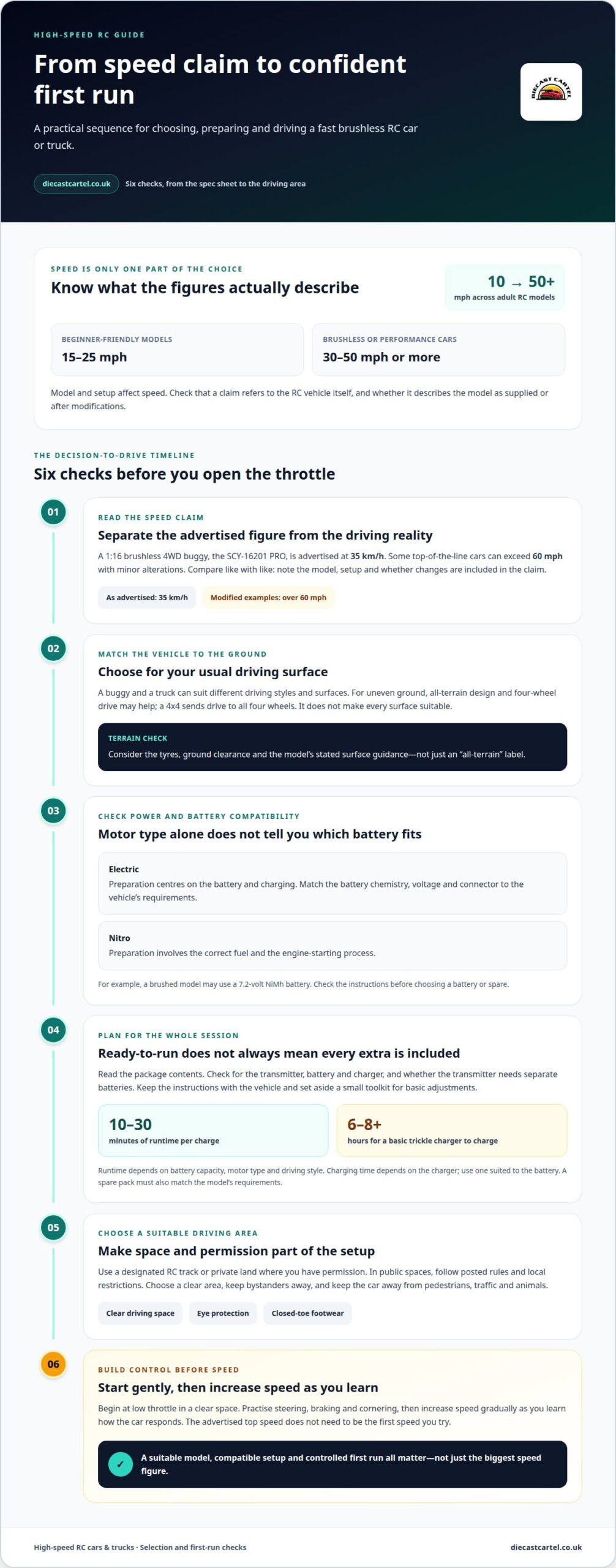
Adult RC cars range from 10 mph to over 50 mph, depending on the model and setup. Beginner-friendly options often reach 15-25 mph, whilst faster models can demand more space and confident control. A 1:18 model advertising more than 25 km/h, a 1:16 off-road car at 40 km/h, and a 1:18 truck at 60 km/h show how varied advertised speeds can be. Check whether a figure describes the model’s speed, rather than the full-size vehicle it resembles.
Scale alone doesn’t tell you how fast a car will go. RC vehicles range from 1/8 to 1/64 scale, and motor, gearing, battery and surface all affect performance. Before buying a spare battery, match its chemistry, voltage and connector to the vehicle’s requirements. A brushed model may use a 7.2-volt NiMh battery, so a different battery type or voltage isn’t automatically compatible.
Brushless motors are associated with higher performance: brushless or performance cars can reach 30-50 mph or more. Their battery still needs to match the model’s requirements; motor type alone doesn’t tell you which battery to use. Check the vehicle’s instructions for the supported battery specification, then choose a compatible spare. Keeping a charged spare ready can reduce interruptions between runs.
Expect around 10-30 minutes of runtime per charge, depending on battery capacity, motor type and driving style. A basic trickle charger supplied with a cheaper model can take 6-8 hours or more to charge its battery. Allow charging time between sessions, and use a charger suited to the battery rather than assuming every charger works with every pack.
Fast cars can collide with people or objects, so choose a clear space and keep bystanders away from the driving area. Wear eye protection and closed-toe footwear, especially when running a car at speed on open ground.
Ready-to-run models and required extras
A ready-to-run model can simplify your first setup, but the label doesn’t guarantee that every extra is included. In the UK, compare electric and nitro power, then match the vehicle to the surface where you plan to drive.
Before choosing, read the package contents and identify what you’ll need for the first run. Check whether the transmitter, battery and charger are included, and whether the transmitter needs separate batteries. Follow the manual’s guidance on compatible battery type and voltage. A spare pack can extend a session, but it must meet the model’s requirements.
Set aside a small toolkit for basic adjustments, and keep the instructions with the vehicle. If a model needs assembly or extra equipment, factor that into your first-day setup. This matters when choosing a fast car: a ready-to-run label shouldn’t replace checking which components are supplied.
Electric and nitro power
Electric models use a battery and motor, while nitro models use fuel and a combustion engine. This changes the preparation: an electric setup centres on battery compatibility and charging, while nitro needs the correct fuel and engine-starting process. Compare the power type with the routine you want between runs, not just the advertised speed.
For a first vehicle, check the maker’s instructions for what’s needed to operate it. An electric ready-to-run car may still need a compatible battery or charger; a nitro model may require fuel and starting equipment. These differences affect what you carry and how you prepare for a session.
All-terrain and four-wheel drive
All-terrain design and four-wheel drive suit drivers who want to venture beyond smooth surfaces. A 4×4 sends drive to all four wheels, which can help the vehicle keep moving across uneven ground. It doesn’t make every surface suitable, so consider where you’ll drive and whether the tyres and ground clearance suit that terrain.
A rough path places different demands on a vehicle than a flat, smooth area. Match the model’s intended use to your usual driving spot, then check the instructions for surface guidance. A suitable setup fits your terrain, rather than simply carrying an all-terrain label.
High-speed brushless RC cars and trucks
Brushless RC cars and trucks can reach 30-50 mph or more, depending on model and setup. For a high speed remote control car for adults, that performance can make acceleration and precise throttle control part of the appeal. A high top speed also calls for space and careful driving. Compare the vehicle’s scale, intended surface and handling, not just its headline figure.
The SCY-16201 PRO 1:16 brushless 4WD buggy is advertised at 35 km/h, a reminder that individual models vary. Check whether a speed claim describes the vehicle as supplied or includes changes. Some top-of-the-line cars can exceed 60 mph with minor alterations. If you’re considering a high speed remote control car for adults, distinguish the standard setup from modified performance before comparing models.
Brushless power doesn’t make every car or truck alike. A buggy’s design and intended use differ from a truck’s, so consider your preferred surface and driving style. Before running a brushless model, read its instructions for the supported battery and setup. The motor type alone doesn’t identify a compatible battery pack.
Are there UK rules or age restrictions for high-speed RC cars? Age guidance depends on the model, so follow the manufacturer’s stated minimum age and supervise younger drivers. Keep the vehicle away from pedestrians, traffic and animals.
Where can you legally drive a high-speed RC car in the UK? Use a designated RC track or private land where you have permission. In public spaces, follow posted rules and local restrictions rather than assuming every open area is suitable.
For a controlled first run, start at low throttle and practise steering in a clear space. Increase speed gradually as you learn how the car responds. This lets you get used to braking and cornering before approaching the advertised top speed, whether you’re driving a 1:16 buggy or a larger truck.
What replacement parts and maintenance do high-speed RC cars need?
Fast runs put repeated stress on tyres, suspension, steering and drivetrain components. After driving, switch off the car and transmitter, then inspect the wheels for loose nuts, damaged tyres or trapped grit. Check suspension arms and body mounts for cracks, particularly after a collision. Small faults are easier to spot before the next run.
Use this practical post-run check:
- Tyres: look for splits, loose edges and uneven wear that could affect grip.
- Wheels: check that each wheel turns freely and its nut remains secure.
- Suspension: inspect arms and shock mounts for damage or looseness.
- Drivetrain: clear away dirt around moving parts and listen for unusual grinding.
- Body and steering: check mounting points and make sure steering responds smoothly.
Follow the model’s manual for cleaning and lubrication. Avoid applying oil or grease indiscriminately, as different components need different care. If a wheel binds or the steering pulls after a bump, stop and inspect the vehicle before driving again. Replace damaged parts with components designed for that model. Fit and compatibility matter more than appearance alone.
Include battery care in your routine. Disconnect the pack after a session and follow its instructions for charging, storage and handling. Use a compatible charger, and check the battery casing and connector for visible damage before use. Rechargeable replacement batteries for remote-control toys can help keep a session going, provided the battery meets the vehicle’s requirements.
Keep a small parts record with the vehicle’s model details, replaced components and any recurring issue. That makes it easier to identify what needs attention after a rough run. For a compatible replacement power source, browse rechargeable batteries for remote-control toys and match the battery to your model.
Diecast Cartel
Diecast Cartel is a natural next step if you’re exploring RC vehicles alongside the wider model hobby. Browse remote control cars and trucks, as well as diecast models for collectors who enjoy comparing vehicles by scale and detail.
Whether you’re comparing RC styles or adding another model to your collection, browsing the available categories can help you find a direction that suits your interests. The range also includes 1:22 scale remote control construction vehicles and a 1:24 remote control forklift, offering a different kind of hands-on driving experience from a car or truck.
For collectors, 1:18 scale model cars, 1:24 scale diecast models and trucks, and diecast trucks and tractors bring together display appeal and vehicle variety. If you’d like help exploring the range, contact Diecast Cartel.
Make your next run your own
Choosing a high speed remote control car for adults is the start of a hobby you can shape over time. You might enjoy the precision of a clean corner, the challenge of learning a new surface, or the satisfaction of keeping a vehicle in good condition. Let that preference guide what you explore next, rather than treating top speed as the only measure of enjoyment.
As you gain experience, note how your setup behaves in different conditions. Considered changes can help you understand how your choices affect the car’s response. Keep learning enjoyable, look after your vehicle, and make room for the driving style that keeps you keen to head out again.
Ready to explore RC cars and find a model that suits your interests? Contact Diecast Cartel about RC cars, and take your next step into the hobby with confidence.
Frequently Asked Questions
How long do the batteries last?
Expect roughly 10-30 minutes of driving per charge, with battery capacity, motor type and driving style affecting the result. Repeated full-throttle acceleration can use a pack differently from steadier driving, so treat runtime as a guide rather than a fixed session length. For a practical first outing, plan a shorter run, then note how your own car’s battery performs.
What is a Remote Control Car?
A remote control car is a small vehicle operated wirelessly with a handheld transmitter. Steering and throttle controls send commands to a receiver inside the car, allowing you to guide its direction and speed. Models vary in scale, shape and intended use, from road-focused cars to off-road buggies and trucks. The transmitter and vehicle must be compatible for control to work.
What top speeds do high-speed RC cars reach in mph?
High-speed RC cars can reach 30-50 mph or more, while some models exceed 60 mph after minor alterations. These are not universal speeds: the model and its setup affect the result. Check whether an advertised figure describes the vehicle as supplied or a modified setup, and consider whether you have enough clear space to control it safely at speed.
How do electric brushless RC cars compare with brushed and nitro models?
Brushless electric cars can deliver higher performance, with speeds of 30-50 mph or more for performance models. Brushed electric cars use a different motor design and may be a simpler choice for moderate driving. Nitro models use a combustion engine rather than an electric motor, bringing a different preparation routine. Compare the driving experience and upkeep you prefer, not speed alone.
What battery life and charging time can you expect from fast RC cars?
Battery runtime is typically 10-30 minutes per charge, whilst a basic trickle charger supplied with a cheaper model can take 6-8 hours or more. That gap makes charging time important when planning back-to-back sessions. Follow the vehicle’s battery and charger instructions, and check compatibility before using another pack or charger. Battery capacity, motor type and driving style influence runtime.
What are the fastest remote control cars for adults available in the UK?
Some of the retailer’s sport models can exceed 70 mph. Top-of-the-line RC cars can exceed 60 mph with minor alterations, while brushless or performance models can reach 30-50 mph or more.
