Diecast Guides
Diecast or Plastic Model Kits: Which Is Easier to Start
Nov
The easiest model to start with may be the one you don’t have to build. For beginners, the diecast vs plastic model kits choice usually comes down to whether you want a finished replica to display or a hands-on project to assemble and paint. Ready-made diecast models are the simpler route to enjoying a model straight away; a plastic kit offers more involvement and room to personalise the result.
Both options have their appeal, and choosing one doesn’t make you any less of a collector. It comes down to what you want from the hobby: a detailed model to admire, or the satisfaction of building one yourself.
This guide compares the two for beginners, explains where customisation fits in, and clarifies what plastic-kit scales mean. You’ll also see how ready-made models differ from kits, helping you choose a first project or display piece that suits you.
Key Takeaways
- Choose a ready-made model for an immediate display piece; pick a kit if you want to enjoy the build as part of the hobby.
- Decide how much personal input you want: kits invite hands-on finishing, while ready-made models offer a finished look from the start.
- Use the scale to judge a kit’s size against its level of detail and the space you have available to display it.
- Explore Diecast Cartel’s diecast cars, trucks and tractors when a finished model suits your collection.
Which is better for beginners: diecast or plastic models?
If you’re a beginner looking for a finished replica, diecast is the easier starting point: it arrives assembled and ready to display. Plastic kits suit people who want to enjoy the build itself, from fitting parts to choosing a finish.
Diecast Subjects and Collector Detail
Diecast models are pre-assembled collectibles, often finished with detailed paintwork and intricate features. Popular subjects include classic cars, tanks, civilian vehicles and famous fighters, while some models have opening doors or bonnets and detailed interiors. A 1:18 scale car can include working parts, giving collectors detail to enjoy without first assembling the model.
Plastic kits cover a broad range of subjects, including niche variants that may be harder to find as diecast models. Choose based on the subject you want to display, not just the material.
Collector Value and Investment Potential
A collectible’s appeal and its investment potential are different things. A striking finish or intricate detail can make a model satisfying to own, but doesn’t determine its future resale value. Collector interest, the model’s condition and how well it suits a particular collection all influence its appeal.
Neither an assembled diecast model nor a carefully finished kit guarantees a financial return. Choose a subject you’ll enjoy keeping rather than treating a model as a certain investment.
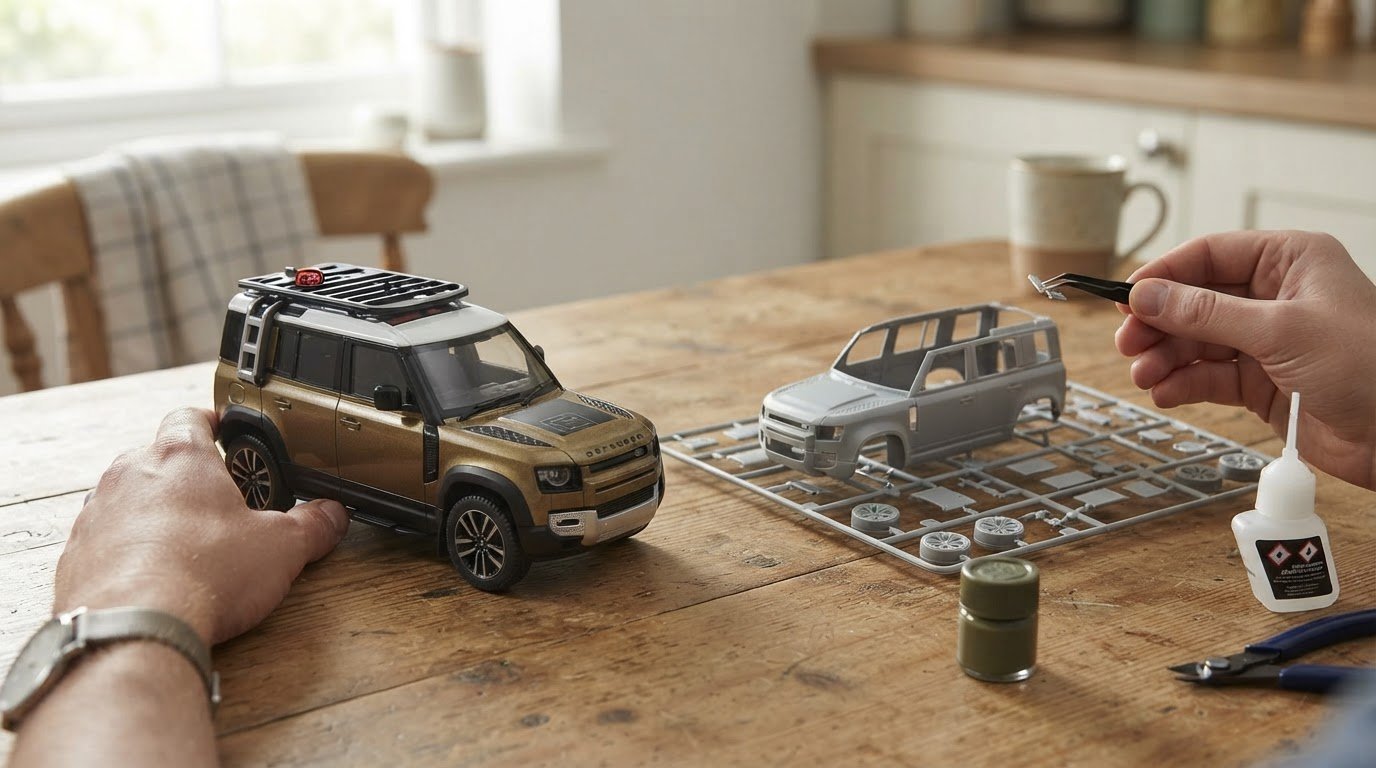
Combining both approaches adds variety to the hobby. Display a ready-made diecast car alongside a plastic kit you assembled and painted: one gives you an immediate finished piece, while the other reflects your own work. You can also collect around a shared subject, such as classic cars, while enjoying different levels of hands-on involvement.
| Option | Starting effort | Customisation | Display |
|---|---|---|---|
| Diecast | Ready-made | Limited | Ready straight away |
| Plastic kit | Assembly and painting | Hands-on finish | After building |
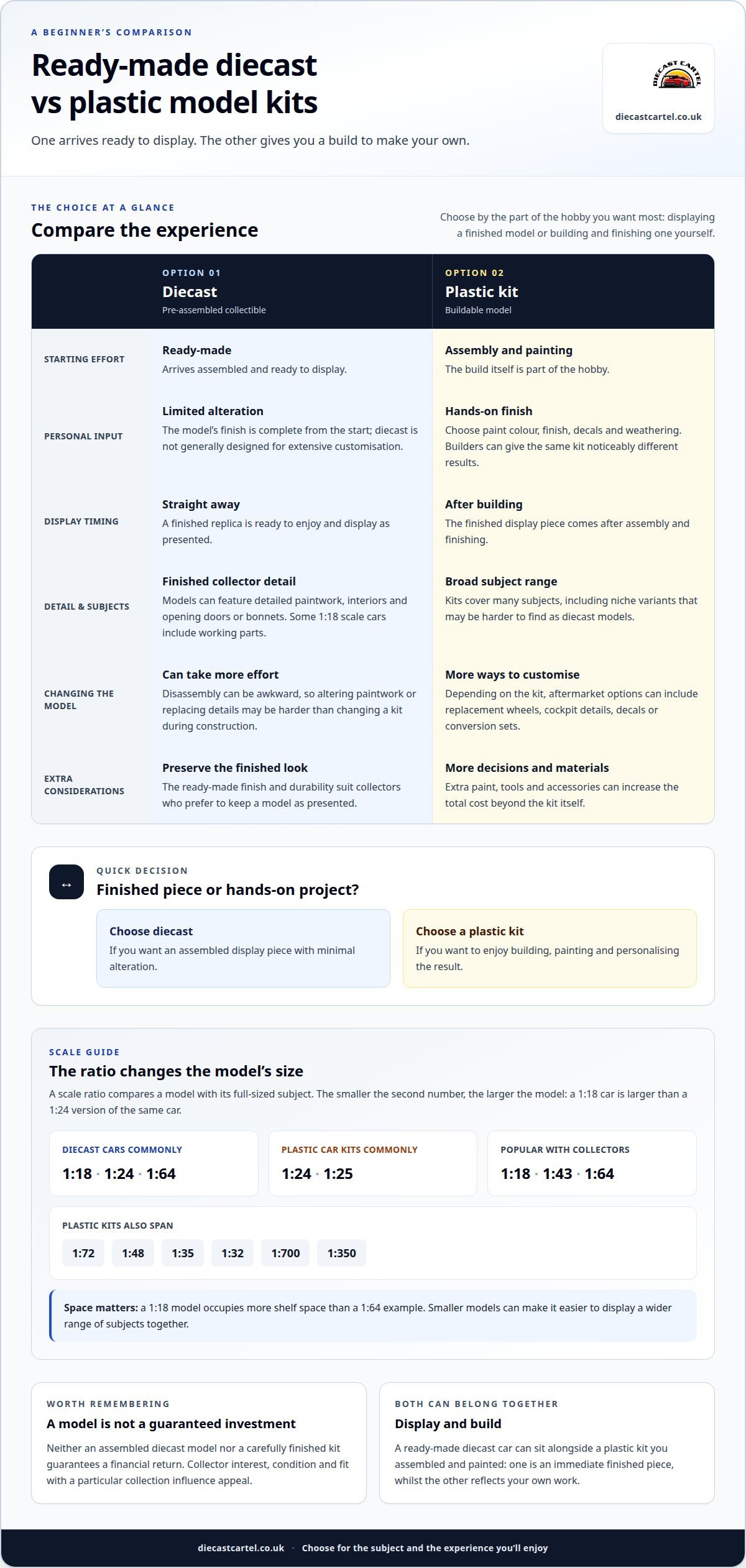
Choose diecast for an assembled display piece; choose a kit if you enjoy the building and customisation.
Customisation options
Customisation is central to building plastic kits. You can choose the paint colour, finish, decals and weathering, so two builders can turn the same vehicle kit into noticeably different models. That creative control appeals to hobbyists who enjoy making a classic car, aircraft or tank feel personal.
A practical approach is to plan the finish before assembly. Choose the colour scheme and decals first, then decide whether the model will look clean or weathered. This helps you organise painting and assembly around the parts that need each treatment. For a beginner, changing one feature, such as the body colour, can be a manageable first experiment.
Aftermarket parts widen the possibilities. Depending on the kit and subject, builders can add components such as replacement wheels, cockpit details, decals or conversion sets. These additions can change the model’s appearance or represent a different variant. They also mean more decisions, and extra paint, tools and accessories can increase the total cost beyond the kit itself.
Diecast models offer a different balance. They arrive with their finish complete and are not generally designed for extensive customisation. Disassembly can be awkward, so altering paintwork or replacing details may take more effort than changing a plastic kit during construction. Their ready-made finish and durability suit collectors who prefer preserving a model as presented.
Ultimately, the choice is between personal input and a finished result. Plastic offers a wide range of creative choices, but each change asks for time, materials and care. Diecast suits someone who values its existing finish and wants minimal alteration. For a different kind of interaction with vehicles, explore remote control construction vehicles, where operating the model, rather than repainting it, is part of the appeal.
Common plastic modelling scales
Diecast cars commonly come in 1:18, 1:24 and 1:64 scales; plastic car kits commonly use 1:24 and 1:25. Plastic kits also span 1:72, 1:48, 1:35, 1:32, 1:700 and 1:350. So the answer depends on the subject and format you’re considering.
A scale ratio compares a model with its full-sized subject. At 1:24, each model measurement represents twenty-four times that measurement on the real vehicle. A 1:18 scale model is larger than a 1:24 version of the same car. The denominator matters: a smaller second number means a larger model.
For collectors, 1:18, 1:43 and 1:64 are popular scales. The 1:43 scale appeals to hobbyists seeking a balance between display size and detail. A 1:18 model occupies more shelf space than a 1:64 example, whilst smaller models can make it easier to display a wider range of subjects together.
Plastic kit scales reflect the subjects available. Car kits commonly feature 1:24 and 1:25 options, while the wider kit range includes scales such as 1:700 and 1:350. These differing ratios let hobbyists choose a scale model that suits the subject, display space and preferred level of detail. Materials don’t define the scale, and decals change the finish, not the model’s proportions.
For a collection built around classic cars, matching scales can create a consistent display. A 1:24 plastic car kit and a 1:24 diecast car use the same scale ratio, so they represent their full-sized subjects proportionally. Before choosing, decide what subject you want, compare the available scales, then consider where the finished model will sit.
Scale is only one part of the choice. A larger model can make details easier to appreciate, while a smaller one may fit more comfortably alongside other pieces. Choose a scale that works for your subject and display plans, then check the kit’s stated scale before buying, especially if you’re adding it to an established collection.
Differences between ready-made diecast models and buildable plastic kits
Which offers better detail and realism: diecast or plastic model kits? Both can look convincing, but diecast models arrive painted and finished, while kits let builders shape the final appearance through assembly and painting.
The difference starts with how each model is made. Diecast models are formed by cooling molten metal in a mould; plastic kits arrive as separate parts on sprues. A kit usually needs assembly, cleanup, paint and decals before it’s ready to display. This gives you creative control, but adds several stages between opening the box and finishing the model.
| Criteria | Ready-made diecast | Buildable plastic kit |
|---|---|---|
| Starting point | Assembled and painted | Parts that need assembly |
| Finish | Factory-applied paint and detail | Builder chooses paint and decals |
| Handling | Often feels substantial because of its weight | Lighter, and easier for its builder to repair |
| Best fit | Convenience and immediate display | Hands-on building and personal choices |
For detail and realism, neither option wins in every case. Diecast models can have intricate details and realistic paint finishes; some include opening parts and detailed interiors. Kits let builders control colour, decals and weathering, so the final result reflects their preferences. The appeal depends on whether you value a consistent finished look or the character of a model you completed yourself.
Scale affects the comparison, too. A larger model can show details clearly, but the kit’s assembly and finish still shape the result. Plastic models are lighter than diecast and can be easier to repair because the builder understands how they’re assembled. Both can have small protruding parts that break, so handle them carefully.
Ultimately, choose diecast for convenience and an immediate display piece; choose a kit for the satisfaction of building and finishing it. To explore finished replicas, browse ready-made diecast models.
Diecast Cartel: 1:24 scale Diecast models and trucks
Diecast Cartel is a natural next step if you’ve decided a finished model suits your collection better than a buildable kit. Its range includes 1:24 scale diecast models and trucks, alongside 1:18 scale model cars and diecast trucks and tractors.
These ready-made options suit collectors who want to choose a subject and add it to their display without assembling or painting a kit. If you’re drawn to movement as well as collecting, the 1:24 remote control forklift offers a different way to enjoy model vehicles.
Use your preferred subject and scale to guide your choice, whether you’re adding a car, truck, tractor or working vehicle to your hobby. For help taking the next step, contact Diecast Cartel.
Choose a first model that feels like yours
Let your first choice reflect the part of the hobby you’re most excited to make time for. The diecast vs plastic model kits decision isn’t a test of skill or commitment; it’s a way to shape how you enjoy your next model. Consider whether you’re looking forward to choosing a finished piece or spending time making a model your own.
Your preferences can shift as your collection grows. A first model can introduce you to a subject, scale or style you hadn’t considered before. Give yourself room to follow that curiosity instead of feeling you must settle on one approach for good. The most rewarding next step is one that keeps your interest alive after the initial excitement.
If you’d like to explore a suitable diecast model for your collection, speak with Diecast Cartel about your next model. Enjoy the discovery, and make the hobby your own.
Frequently Asked Questions
What scale should I choose for my collection?
Choose a scale that suits both your display space and the subjects you want to collect. If you’re building a row of cars, matching scales help them sit consistently together; a smaller scale can leave room for more models. Before adding a piece, compare its stated scale with the models on your shelf and the space available.
Are diecast models worth the investment?
A model can be worthwhile as a collectible if you value its subject, finish and enjoyment in your collection. For example, a model of a favourite vehicle can have personal appeal without a financial motive. Treat resale as a separate consideration and choose a model you’ll appreciate owning, rather than relying on it to grow in value.
Cost Comparison: Which Is More Affordable?
Neither type is automatically more affordable overall. The total cost of a plastic kit can include the kit, paint, tools and optional accessories; your choices determine how much you add. A finished diecast model doesn’t require modelling supplies to complete it. Compare the full kit setup you want with the ready-made model, not just the initial purchase.
What Are Diecast Cars?
Diecast cars are scale replicas made by forming metal in a mould, then finishing the model to represent a real vehicle. They’re generally sold assembled, with the body shape, paint and details already in place. For instance, a collector can add a replica of a classic car directly to a display without first assembling its body from separate parts.
What Are Model Car Kits?
Model car kits are buildable replicas supplied as separate components, often attached to frames called sprues. The builder removes and prepares the parts, assembles the car, then applies paint and decals. A kit suits you if you want the process to be part of the hobby and choosing the finish matters as much as the completed model.
What is the difference between diecast models and plastic model kits?
The main difference is the experience: diecast gives you a completed model, while a plastic kit asks you to create the finished piece through building and painting. Consider a ready-made model for someone who wants to display a vehicle straight away, or a kit for someone who enjoys a hands-on project. Available time and interest in model-making can guide the choice.
