
Diecast Guides
Advanced Diecast Collecting Tips: Curate, Preserve and Grow Your Collection
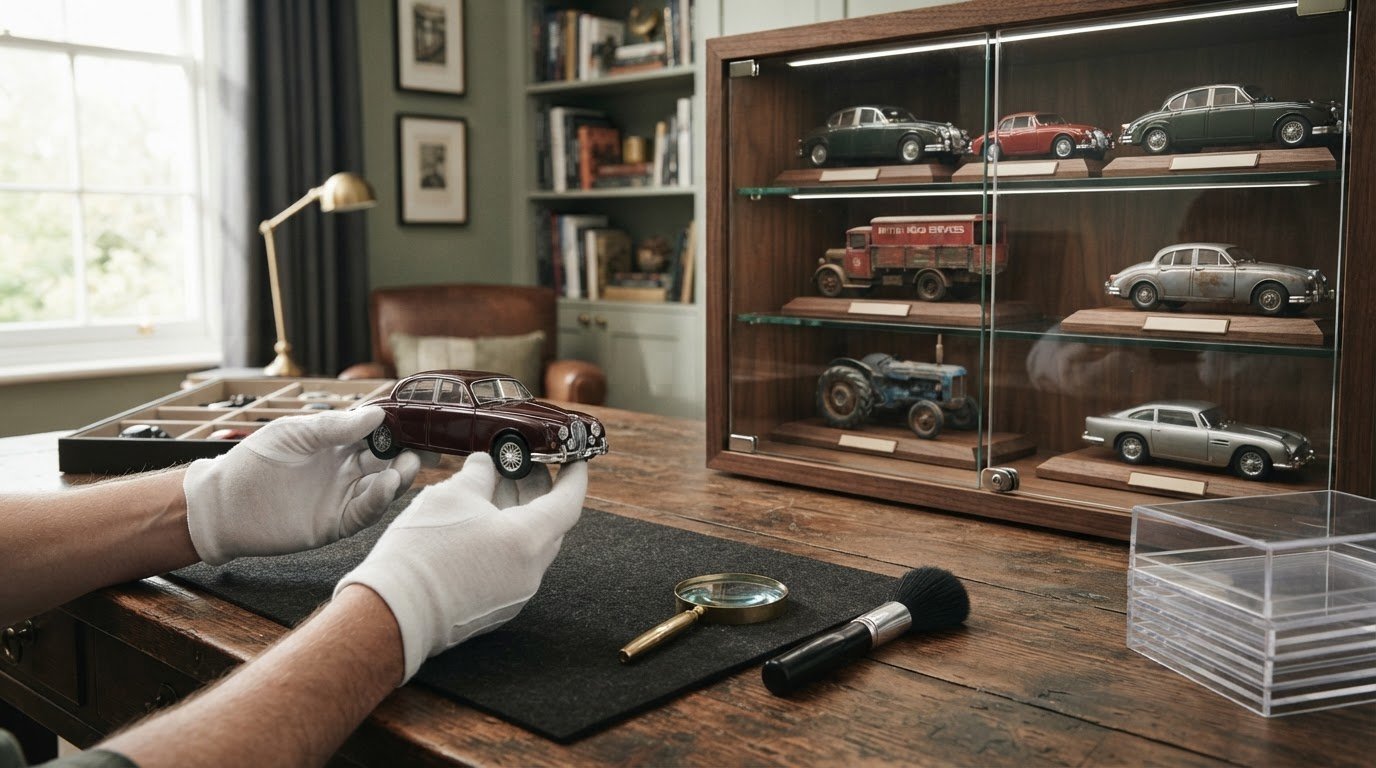
Oct
What if a smaller, more thoughtfully chosen collection brought you more pleasure than a shelf packed with impulse buys? Every model has a story, but without a clear direction, it’s easy to lose track of what you own, what condition it’s in and why you bought it. These advanced diecast collecting tips can help you make each addition feel intentional.
As your collection grows, details matter. A careless clean, a poor storage spot or misplaced packaging can affect a model’s condition. When records are scattered, it’s also harder to remember the story behind each piece. You don’t need to collect in just one way, but a personal point of view can make the hobby more rewarding.
In this guide, you’ll learn how to shape a theme around your interests, assess and document condition, handle and store models with care, and weigh up future acquisitions before you buy. Whether your focus is 1:18 scale cars, 1:24 models, trucks or tractors, the aim is the same: a collection that feels distinctly yours and is a pleasure to preserve and grow.
Key Takeaways
- Use a flexible theme to give your collection a personal point of view, from vehicle type or era to scale or personal connection.
- Apply a consistent inspection checklist to assess paint, alignment, glazing, wheels, trim and base details before adding a model.
- Handle models securely and distinguish dusting from cleaning or polishing to help avoid preventable damage.
- Record key details and take consistent photos to make it easier to follow your collection’s condition over time.
- Put these advanced diecast collecting tips into practice by reviewing your theme, wish list and display space before deciding what to add next.
Advanced diecast collecting tips: build a collection with purpose
There’s a satisfying thrill in spotting a model you love and bringing it home. Over time, though, a shelf of individual favourites can start to feel less like a collection and more like a set of unrelated purchases. You don’t need strict rules to give it direction. Look for the details that connect the models you already treasure, then use that personal thread to guide future choices.
A useful theme might centre on a subject, era, vehicle type, scale, manufacturer or personal connection. You might be drawn to working vehicles, a particular period of motoring, or cars that remind you of family road trips. Keep the theme broad enough to leave room for discovery, then narrow it to a manageable focus for your next few additions. For instance, “vehicles I remember from childhood” could lead to a short-term interest in a certain era or type of vehicle.
Purposeful curation means choosing models that reinforce your own story, not simply adding more to the shelf. Think of your theme as a compass, not a fence. An unexpected model can still belong if it genuinely excites you or adds a meaningful contrast. Flexibility keeps collecting personal and enjoyable rather than turning it into a checklist.
If you’re curious about how diecast models are made and how the hobby developed, the Die-cast toy overview offers useful background. That context may help you decide which details, subjects or vehicle types you most enjoy collecting.
How do you choose a collecting theme without boxing yourself in?
Start with the models you already return to. What do they share: a vehicle type, scale, era, maker, design detail or memory? Write down the pattern, then separate your broad interest from a practical short-term focus. You might enjoy cars and trucks generally, whilst choosing to concentrate on 1:18 scale cars for now. Record why each model matters to you as well as its specifications. Those personal notes help keep the theme your own.
Set collecting goals that make each addition count
Keep a short wish list and give each entry a few priorities, such as subject, scale and the condition you’re happy to accept. Before buying, ask yourself: does this model fit the collection’s direction, fill a gap, or offer a personal connection worth making an exception for? If you’re still building your foundations, this guide to starting a die-cast collection can help you think through your first choices. A clear purpose makes the right addition easier to recognise, and a tempting distraction easier to pass up.
Assess diecast model condition, detail and authenticity before adding it
A model can look striking at first glance, yet small details may affect how well it suits your collection. Inspect it under consistent, good lighting and note what you can actually observe. These advanced diecast collecting tips aren’t about expecting every model to be flawless. They’re about understanding its condition before deciding whether it’s the right addition for you.
What should collectors inspect on a diecast model?
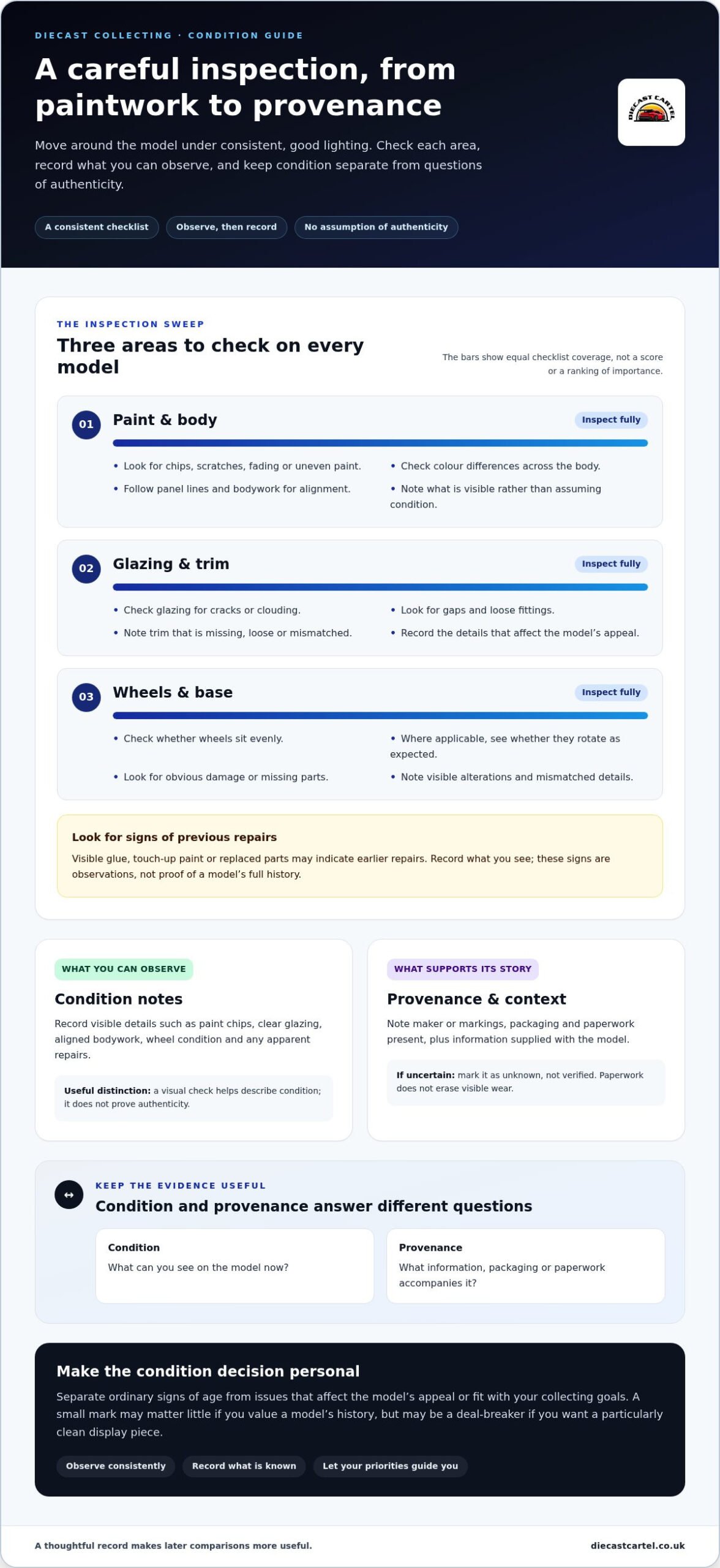
Move around the model rather than judging it from one angle. Check the paint for chips, scratches, fading or uneven areas. Look along the panel lines and bodywork for alignment, and inspect the glazing for cracks, clouding or loose fittings. Check whether the wheels sit evenly, rotate as expected where applicable, and show obvious damage. Finally, look over the trim and base for missing, loose or mismatched details. Signs of glue, touch-up paint or replaced parts may indicate previous repairs.
Use the same checklist each time so your observations are easier to compare:
- Paint and body: note chips, scratches, colour differences and panel alignment.
- Glazing and trim: look for cracks, clouding, gaps or loose pieces.
- Wheels and base: check for damage, uneven positioning, missing parts or visible alterations.
Separate ordinary signs of age from issues that affect the model’s appeal or fit with your collecting goals. A small mark may matter little to someone who values a model’s history, but be a deal-breaker for a collector seeking a particularly clean display piece. Visual checks help you record condition; they don’t prove authenticity.
How do packaging and provenance affect a model’s story?
Original packaging, paperwork and accessories can add context, help identify how a model was presented, and make its history easier to follow. Keep any receipts or seller descriptions with your collection record where available. Their absence doesn’t automatically make a model unsuitable. Packaging preferences differ, so let your own priorities guide what matters.
Keep condition observations separate from questions about authenticity or provenance. A model may appear well cared for without a documented history; paperwork doesn’t erase visible wear. Record what you see and what you know, rather than treating one as proof of the other.
Condition observations: paint chips, clear glazing, aligned bodywork, wheel condition and any visible repairs.
Authenticity or provenance notes: maker or markings, packaging and paperwork present, and information supplied with the model. Mark anything uncertain as unknown, not verified.
This distinction makes comparisons more useful when you’re considering a purchase or reviewing your collection later. If you’re exploring possible additions, browse the diecast cars, trucks and tractors for subjects and scales that may suit your collecting interests.
Preserve diecast models with careful handling and storage
Good preservation doesn’t mean constantly cleaning or fussing over every model. A steady routine can help prevent avoidable knocks, dust build-up and environmental wear whilst keeping the pleasure of handling your collection. One of the most useful advanced diecast collecting tips is to make care deliberate, gentle and consistent.
Use the least intervention needed to keep a model clean and stable. Dusting, cleaning and polishing aren’t interchangeable tasks. Dusting removes loose particles from a model’s surface. Cleaning addresses marks or grime and may require more contact. Polishing is a further intervention that can affect a finish, so don’t assume it’s suitable for every model. If you’re unsure how a surface will respond, leave it alone rather than risk changing the paint or trim.
How can collectors handle models without causing avoidable damage?
Make handling a simple sequence: prepare a clean, clear surface; lift and support the model securely; inspect it as needed; then return it carefully to its display or storage place. Clean, dry hands and a stable work area reduce the chance of slipping or transferring dirt. Keep the model away from the edge of the surface, and avoid lifting it by delicate mirrors, aerials, spoilers or trim. Support a sturdier part of the body instead.
Small accessories can be easy to misplace or knock. Keep them together in a suitable container or beside the model in a secure spot, rather than loose on a busy work surface. Before putting everything away, check that no parts have been left where they could fall or get caught. A calm routine is especially helpful when you’re handling several models in one session.
Which storage conditions help protect diecast models?
Choose a dry, stable location away from prolonged direct sunlight. Strong sunlight may fade finishes over time, whilst dampness and changing conditions can create avoidable risks for models and packaging. Avoid placing a display beside a heat source, somewhere prone to condensation, or in a spot where it may be repeatedly moved or knocked. There’s no need to chase a precise temperature figure. Prioritise a consistent environment and keep models away from extremes.
Display and storage choices depend on your available space and what matters most to you. An enclosed cabinet can reduce dust, whilst a shelf may make it easier to enjoy the models up close. Whichever you choose, make sure the surface is stable and leave enough room to lift a model without catching nearby pieces. Keep boxes and paperwork dry if you’re retaining them.
For routine dusting, use a clean, soft material and work gently, taking extra care around small fittings. Don’t use household cleaners, abrasive cloths or restoration methods simply because they’re to hand. If an approach is appropriate, use it cautiously on an inconspicuous area first, and stop if the finish appears to change. Often, leaving a mark untouched is safer than trying to make it disappear. Careful habits protect the model while keeping your collection something to enjoy, not just preserve.
Keep a diecast collection organised with useful records
A catalogue doesn’t need to become a second hobby. A few consistent notes can help you remember what you own, how each model joined your collection and what you noticed about its condition. This is one of the most practical advanced diecast collecting tips: choose a record-keeping system you’ll actually update.
Start with details you’re likely to revisit: maker, model description, scale, subject, acquisition date, condition notes, packaging and source information where available. Keep confirmed facts separate from impressions. For example, record “box included” as an observation, but mark a model’s history as unknown if you don’t have supporting information. A seller description or receipt can provide useful context, so save it with the model’s entry where possible.
What details belong in a diecast collection catalogue?
Use the same labels each time so entries are easy to sort and compare. Note visible condition separately from personal comments, and don’t fill gaps with guesses. A concise record might include the model’s maker and subject, scale, date acquired, packaging status, observed wear and any paperwork kept with it. Add a source detail only when you know it, such as a receipt or seller description.
Pick a format that suits your habits. A spreadsheet is easy to sort by scale, subject or acquisition date, with space for structured notes. A notebook feels straightforward and personal, though searching and comparing entries can take longer. A digital photo folder makes images simple to organise, but works best with clear filenames and written notes. You can combine formats, but avoid recording the same information in several places without a reason.
Consistent photos add another useful layer. Take them from similar angles and in similar lighting, then label each image with the model description and date. Later, compare photographs and dated notes to spot changes in condition. Images document appearance over time; they don’t establish authenticity or prove a model’s provenance.
How can records help collectors refine their next additions?
Review your catalogue now and then. It may reveal repeated subjects, gaps in a theme or a shift in what catches your eye. Photos and dated condition notes can also help you notice changes that are easy to miss day to day. If 1:24 scale trucks are becoming a focus, the 1:24 scale diecast truck collector’s guide offers relevant scale context as you consider what fits your interests.
Keep the system proportionate. If you only refer to scale, subject and condition, those may be the fields worth maintaining first. Add detail when it becomes genuinely useful, not because a catalogue feels incomplete without it. To explore possible subjects for your records and wish list, browse diecast cars, trucks and tractors.
Grow your diecast collection thoughtfully and enjoy the hobby
Advanced collecting isn’t measured by how often you buy, how rare your models are or how quickly your shelves fill up. It’s about enjoying your choices and building a collection that still feels meaningful years from now. Sometimes the best next step is to wait, revisit what you already own or share the pleasure of the hobby with other collectors.
Before adding something new, work through a simple review:
- Revisit your theme. Does the model connect with the subjects, vehicles or personal stories that make your collection yours?
- Check your wish list. Is this an addition you’ve wanted, or a passing temptation?
- Assess your space. Can you display or store it without overcrowding the models you value?
- Decide deliberately. Consider how it will contribute to the collection, then choose without rushing.
This pause doesn’t have to drain the excitement from collecting. Save an appealing model to your wish list, then compare it with what you already own and the goals you’ve set. If it still feels like a good fit later, the decision can be more satisfying because you’ve chosen it for a reason, not just because it caught your eye in the moment.
How can collectors avoid impulse buying without losing the excitement?
Keep your wish list short enough to be useful, and note why each model interests you. Perhaps it would add a new vehicle type, suit your preferred scale or connect with a subject already on your shelves. Before committing, picture where it would sit and what it would add to the collection. “I like it” can be a good enough reason, as long as it reflects your priorities and you’re happy with the choice.
There’s no requirement to buy constantly or pursue expensive, rare models to be an advanced collector. A collection can grow through careful selection, changing interests and the enjoyment of looking after what’s already there. Collectors bring different tastes and approaches to the hobby. A conversation with fellow enthusiasts can introduce fresh ideas or useful knowledge, even if their collections follow a different path from yours. Share what you’ve learnt, stay curious and let others enjoy collecting their own way.
Make your next addition fit your collection
Use your theme and available display space to guide your browsing. Diecast cars in 1:18 or 1:24 scale, alongside trucks and tractors, can each inspire a different direction. You might be drawn to a particular vehicle type or want to explore a new scale. Browse with your own collection in mind, and let a model earn its place through the enjoyment or meaning it brings.
Ready to explore ideas for your next considered addition? Explore diecast models for your collection.
Choose your next step with confidence
Your collection doesn’t need a dramatic overhaul to feel more intentional. Choose one small action for this week: make a note about a model you treasure, clear a little display space or add a thoughtful candidate to your wish list. The most useful advanced diecast collecting tips are the ones that help you enjoy the hobby in a way that suits you. Your collection can keep evolving as your interests change.
When you’re ready for fresh inspiration, browse Diecast Cartel’s 1:18 and 1:24 scale diecast models, including cars, trucks and tractors. Keep your collecting interests in mind as you look for a model that might feel at home in your collection.
Explore diecast models for your collection, and enjoy choosing pieces that make your shelves feel a little more like your own story.
Frequently Asked Questions
How do you become an advanced diecast collector?
You become an advanced diecast collector by making deliberate choices and building knowledge alongside your collection. Start by comparing models within a category you enjoy, noting differences in scale, finish and presentation. Keep learning from collector discussions and reference material, and treat mistakes as useful experience rather than a reason to lose confidence. These advanced diecast collecting tips can help you develop your own approach, but there’s no single level you must reach.
What should you look for when assessing a diecast model’s condition?
Look closely at the finish, body shape, glazing, wheels, trim and underside, then consider whether any flaws matter to your intended display. Compare similar models where possible, as this may help you spot an unusual detail or repair. Ask whether an issue is purely cosmetic or affects a feature you value, such as a clean paint finish or intact accessories. A written note of any uncertainty is more useful than a confident guess.
Can diecast models be damaged by sunlight?
Yes, prolonged direct sunlight can fade a model’s finish and may affect some materials over time. A display that seems shaded in the morning could receive strong sun later, so observe the room at different times of day before choosing a permanent spot. If sunlight reaches the display, move the models away from the window rather than relying on occasional rotation. This also helps protect packaging and printed details from prolonged exposure.
How do you keep a diecast collection organised?
Choose a simple catalogue format and give each model a consistent entry so you can find it again. A useful extra is to assign a short reference code, then use it on both the record and photo filenames. This helps if you have similar models or store some pieces separately from their packaging. Review the catalogue when your interests shift, and remove fields you never use so the system stays manageable.
Should you keep the original packaging for diecast models?
Keep the packaging if it matters to how you enjoy or store the model, or if you want its accompanying information close at hand. Before deciding, consider whether you have a dry place to keep it without crushing or bending the box. If you don’t retain packaging, make a note of that in your catalogue so you remember what came with the model. Your preference can vary across the collection.
What is the best way to clean a diecast model?
The best approach is the gentlest one that removes the particular dirt or dust without disturbing delicate parts. For a dusty model, begin with a light touch and avoid forcing dust into gaps or moving fittings. Don’t immerse a model or apply liquid around openings, joints or areas where parts are attached. If grime won’t lift easily, stop rather than scrub. Preserving the original finish is often preferable to chasing a spotless appearance.
How can you avoid impulse buying when collecting diecast models?
Give yourself a little space between spotting a model and deciding to buy it. Save it to a wish list, then revisit it alongside the models you already own and the direction you want your collection to take. Consider whether it adds something new or simply duplicates a piece you enjoy. If it still appeals after that pause and fits your priorities, choosing it can feel more rewarding than acting on the initial rush.
