
Uncategorized
1:18 vs 1:24 Diecast Models: UK Collector’s Guide
Jul
Could the smaller, more affordable model actually be the crown jewel of your display? When comparing 1:18 vs 1:24 scale diecast models, many UK collectors assume that bigger always means better. But as any enthusiast with a growing fleet knows, the “best” scale depends entirely on the story you want your shelves to tell. We have all felt that pang of worry when a new 1:18 arrival looks spectacular but leaves no room for anything else, or the concern that mixing scales will make a carefully curated shelf look messy. It is a common struggle; balancing the desire for incredible engine detail with the reality of typical British living spaces and the significant price jump often seen in larger scales.
In this guide, we will help you settle the debate by breaking down the critical differences in physical dimensions, price points, and specific vehicle variety. You will discover why the 1:18 scale is often the ultimate choice for a high-impact centrepiece, whilst 1:24 offers the perfect “working world” for those who love trucks, tractors, and expansive collections. We will provide a clear framework to help you choose the right scale for your home, ensuring every new acquisition brings pure joy rather than a storage headache.
Key Takeaways
- Understand the physical footprint of each scale, comparing the substantial 25-30cm length of 1:18 models against the space-saving 18-20cm of 1:24 versions.
- Discover why the 1:18 scale is the gold standard for mechanical realism, featuring intricate interiors and opening parts that make for stunning display centrepieces.
- Learn why 1:18 vs 1:24 scale diecast models differ in variety, with 1:24 dominating the world of commercial lorries, tractors, and even remote-control variants.
- Evaluate how to maximise your display area in typical UK homes by choosing the scale that offers the best balance of detail and shelf efficiency.
- Get a clear framework for choosing your perfect scale based on whether you prioritise individual craftsmanship or building a diverse, cohesive fleet.
Understanding Scale: What 1:18 and 1:24 Really Mean for Collectors
Have you ever looked at your display shelf and wondered why some cars seem to demand more attention than others? It often comes down to the mathematical ratio sitting beneath the chassis. When comparing 1:18 vs 1:24 scale diecast models, we are looking at the relationship between the miniature and its full-sized counterpart. A 1:18 model is exactly 1/18th the size of the real vehicle. Meanwhile, a 1:24 model is shrunk down 24 times. While these numbers seem close on paper, the physical reality in your hand is vastly different. It is the difference between a model that sits comfortably in your palm and one that requires two hands to move safely.
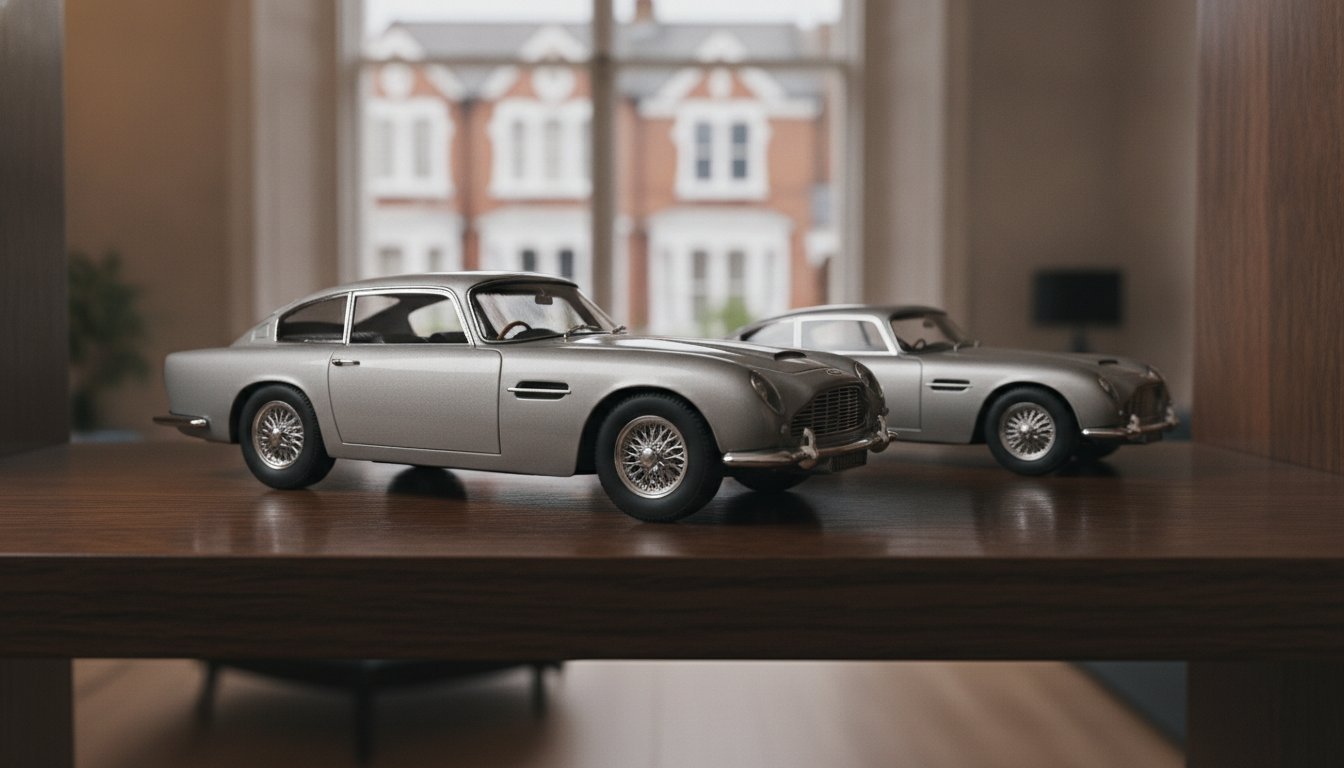
In practical terms, a 1:18 scale car typically measures between 25 and 30cm in length. This is a substantial piece of engineering. Contrast this with a 1:24 scale model, which usually sits around the 18 to 20cm mark. The “presence” factor is where the real magic happens. Because volume and weight increase significantly with scale, a 1:18 model feels much heavier and more imposing than its smaller sibling. Do you prefer a single, heavy masterpiece or a diverse fleet that fills a whole shelf? This is the core question when weighing up 1:18 vs 1:24 scale diecast models. These two scales have become industry leaders because they offer the perfect canvas for high-quality diecast work, allowing for functional parts that actually move and feel realistic.
The 1:18 Scale: Large, Heavy, and Commandingly Detailed
Think of a 1:18 model as the heavyweight champion of your collection. Because it is 18 times smaller than the actual car, it requires a footprint roughly equivalent to a standard UK shoebox. This is the gold standard for enthusiasts who want to see every intricate detail. You’ll find opening bonnets with realistic hinges, boots that reveal spare tyres, and doors that click shut with satisfying precision. It’s a commitment to space, but the reward is a model that feels like a true piece of automotive art. It’s the scale of choice for those who value mechanical realism above all else.
The 1:24 Scale: The Versatile Mid-Range Favourite
If 1:18 is the showpiece, 1:24 scale is the versatile workhorse. It is a classic ratio that bridges the gap between smaller toy-like models and high-end collectibles. This scale is the sweet spot for those of us with limited shelf space; you can often fit two 1:24 models in the same area as a single 1:18. It is particularly popular for commercial vehicles, trucks, and tractors. Because the original vehicles are so large, a 1:24 miniature feels substantial and heavy without becoming unmanageable on a standard bookshelf. It allows you to build a cohesive fleet of diverse vehicles without needing to renovate your spare room.
The 1:18 Scale Experience: Why Detail-Oriented Enthusiasts Choose Large Models
Unboxing a 1:18 model feels like a special event. The sheer weight of the metal chassis combined with the intricate assembly of hundreds of individual parts creates a sense of pride that smaller models often struggle to replicate. When you delve into the 1:18 vs 1:24 scale diecast models debate, the larger scale is almost always the winner for those who crave microscopic accuracy. It isn’t just about the external silhouette; it’s about what lies beneath. You can lift the bonnet to inspect a fully wired engine bay, or open the boot to find a correctly textured spare wheel. These realistic hinges and functional components turn a static object into a mechanical marvel.
The interior craftsmanship is where 1:18 models truly shine. Manufacturers often go the extra mile by including flocked carpets that feel soft to the touch and fabric seatbelts with tiny metal buckles. If you peer through the window, you’ll often find dashboard gauges that are actually legible, alongside accurately painted switches and gear shifters. This level of fidelity is precisely why many enthusiasts choose the larger option when comparing 1:18 vs 1:24 scale diecast models for their ultimate dream car. It feels less like a toy and more like a faithful recreation of automotive history.
Because of this immense detail, a single 1:18 model serves as a far more effective “showstopper” than a cluster of smaller vehicles. It commands the space on a desk or mantelpiece, drawing the eye to its paint depth and realistic stance. Beyond the aesthetic joy, there is a practical side to this scale. Premium brands in the 1:18 category often hold their value exceptionally well amongst serious hobbyists. Keeping an eye on publications like Diecast Collector magazine can help you spot which limited editions are becoming highly sought after. If you are ready to find your next showstopper, exploring a curated range of 1:18 Scale Model Cars is the perfect way to elevate your display.
Premium Features to Look For in 1:18 Models
When shopping for high-end 1:18 pieces, look for independent suspension that actually compresses and steering that moves the front wheels. The paint finish should be flawless, with metallic flakes scaled down to look realistic rather than oversized. You’ll also need to decide between traditional diecast metal and modern resin models; resin often allows for sharper body lines but usually lacks the opening features of metal. Opening parts are the primary allure for 1:18 collectors because they allow for a deep, tactile exploration of the vehicle’s internal engineering.
Caring for Your Large Scale Showpieces
With great detail comes a bit of extra responsibility. Those intricate engine bays and interior crevices are magnets for dust, which can be difficult to remove once it settles. Keeping your models in a glass cabinet is the best defence, but occasional maintenance is still required. It’s vital to learn how to clean diecast model cars properly to avoid snapping off delicate aerials or wing mirrors. Always handle these models by the chassis rather than the roof or pillars to ensure the delicate trim remains intact for years to come.
The 1:24 Scale Advantage: Balance, Variety, and the World of Diecast Trucks
While 1:18 models are the undisputed kings of microscopic detail, 1:24 is arguably the most practical choice for the dedicated UK enthusiast. Most of us don’t have the luxury of a dedicated museum room. We’re often working with alcoves, bookshelves, or a single glass cabinet in the lounge. This is where the 1:24 scale truly shines. It offers a “sweet spot” that balances physical presence with shelf efficiency. If you’re following a comprehensive guide to collecting diecast cars, you’ll know that diversity is key to a vibrant display. Choosing 1:24 allows you to build a massive, cohesive fleet. In the same footprint required for just four 1:18 units, you can comfortably display a dozen 1:24 models. It’s the difference between a small handful of cars and a complete, bustling automotive world.
When we look at 1:18 vs 1:24 scale diecast models, the variety of vehicle types available in the smaller scale is staggering. While 1:18 focuses heavily on supercars and classics, 1:24 is the undisputed home of the commercial world. It’s the scale where you can find everything from vintage delivery vans to modern long-haul lorries. This variety allows you to branch out beyond standard passenger cars and explore the machines that keep the world moving. It’s a fantastic way to add character and unique silhouettes to your collection without needing to renovate your home for more space.
Lorries, Tractors, and Commercial Vehicles in 1:24
The commercial sector is where this scale really flexes its muscles. For UK collectors, there is an incredible variety of lorries and heavy machinery that simply isn’t available in larger scales. Have you ever tried to fit a 1:18 scale articulated lorry on a standard shelf? It’s nearly impossible. In 1:24, however, these giants of the road become manageable yet still feel impressively rugged. Our Ultimate Guide for 1:24 Scale Diecast Trucks explores this in detail, highlighting how tractors and lorries maintain a high level of detail in this scale. From the tread on the tyres to the logos on the cab, the realism is superb. It’s a tactile, heavy scale that feels just right for agricultural and industrial machines.
From Static to Motion: RC Construction in 1:24
One of the most exciting developments in this scale is the bridge between static display and active hobbyism. Many 1:24 scale diecast collectors are now expanding into remote control (RC) construction vehicles. Imagine having a static 1:24 truck parked next to a fully functional 1:24 scale forklift or a 1:22 scale excavator. It adds a whole new layer of interaction to your hobby. If you do make the jump to these active models, remember that charging RC batteries safely is essential to keep your fleet in top condition. These RC variants offer incredible realism for adult hobbyists who want to see their collection actually move and perform tasks.
Space, Budget, and Display: Practical Factors for UK Collectors
Collecting in the UK often feels like a clever game of Tetris. Our homes, with their charming alcoves and narrow hallways, present a unique challenge when deciding between 1:18 vs 1:24 scale diecast models. Whilst a 1:18 model looks magnificent, it takes up a significant amount of room. If you’re building a collection in a typical British semi-detached, you’ve likely already realised that shelf space is your most precious currency. Mixing these scales on the same shelf can sometimes look a bit disjointed; many enthusiasts prefer to dedicate specific zones to each. This keeps the visual flow consistent and prevents your display from feeling cluttered.
Sourcing these models in the UK also brings up the matter of shipping. A 1:18 box is surprisingly large and heavy. This can sometimes lead to higher delivery costs or the need for someone to be home to sign for a bulky parcel. 1:24 models come in much more compact packaging, making them easier to receive through standard parcel services or click-and-collect points. It’s a small detail, but it makes the logistics of growing your collection much smoother over time.
Calculating Your Shelf Capacity
How many models can you actually fit? Let’s take the classic 80cm IKEA Billy shelf as our benchmark. For 1:18 cars, you are realistically looking at three, perhaps four if they are smaller classics. In contrast, you can comfortably line up five or six 1:24 models. If your passion lies with trucks or tractors, you’ll need to account for the extra height. These commercial giants often require more vertical clearance than a sleek supercar. Using tiered acrylic risers is a brilliant way to maximise visibility in deeper cabinets, allowing you to see the models at the back without them being hidden by the front row.
Budgeting for Your Hobby
Your budget is the other major factor in the 1:18 vs 1:24 scale diecast models debate. 1:18 models are a significant investment, often positioned as the “Luxury Gift” or a quarterly treat. Because 1:24 models sit at a more accessible mid-range point, they allow for that “new arrival” excitement more frequently. It’s a great scale for those who enjoy the hunt for new additions every month. If you are looking for inspiration for a fellow enthusiast, checking out some diecast truck gift ideas can help you see how much detail you can get for your pound in the 1:24 category. Ready to start your next fleet? You can browse our latest 1:24 scale arrivals to see what fits your space.
The Verdict: Which Scale Should You Choose for Your Collection?
So, where does your passion lie? Deciding between 1:18 vs 1:24 scale diecast models doesn’t have to be a binary choice, but understanding your priorities makes the journey much more rewarding. Every collector’s path is unique; what works for a supercar enthusiast might not suit someone building a miniature haulage yard. Your choice ultimately comes down to the space you have available and the specific types of vehicles that get your heart racing.
Choose the 1:18 scale if you are looking for that one perfect showpiece. It’s the ideal “Luxury Gift” for a milestone birthday or a treat for yourself when you want to celebrate a specific car you’ve always admired. If you have the shelf room and you live for the tactile joy of opening every door and bonnet to see the wiring underneath, this is your scale. It is about quality over quantity; a few well-placed 1:18 models can transform a room’s aesthetic.
On the other hand, the 1:24 scale is your best friend if you want to build a bustling “Collector’s Fleet”. It is the undisputed home of trucks, tractors, and heavy machinery. If your heart beats for modern lorries or vintage agricultural machines, 1:24 offers a variety that the larger scale simply cannot match. It also opens the door to active hobbyism, allowing you to mix static models with functional RC construction vehicles for a truly interactive display. This scale lets you tell a broader story, showing how different vehicles work together in a miniature world.
Can’t decide? Many of us take a hybrid approach. You might reserve your 1:18 slots for your all-time favourite supercars, whilst using 1:24 to populate a massive commercial yard of lorries and vans. By organising your shelves by vehicle type or era, you can mix scales in the same room without the collection ever looking messy. It is your journey, so don’t be afraid to set your own rules.
Starting Your Journey with Diecast Cartel
As a UK-based specialist, we understand exactly what it’s like to balance a love for detail with the reality of a British living room. We’ve curated a range that celebrates the best of both worlds. Whether you are hunting for a premium 1:18 car to sit on your desk or a rugged 1:24 truck to start your fleet, we’re here to help you find that next perfect addition. Our collection even bridges the gap into active hobbyism with high-quality RC variants and construction machinery designed for adult enthusiasts.
Final Pro-Tip for New Collectors
If you’re just starting out, try to stick to one scale for your first five models. This creates an immediate sense of cohesion and helps you learn the nuances of that specific ratio before you branch out. Don’t forget to join the wider UK diecast community; sharing display ideas with fellow enthusiasts is one of the best ways to keep the passion alive. When you’re ready to add to your shelf, we invite you to explore the Diecast Cartel shop for your next acquisition.
Start Building Your Dream Display Today
Choosing between 1:18 vs 1:24 scale diecast models is more than just a measurement; it’s about defining the spirit of your collection. You now know that 1:18 offers that unrivalled mechanical detail for a stunning centrepiece, whilst 1:24 provides the perfect balance for building a diverse fleet of trucks and tractors without overwhelming your living space. Whether you’re drawn to the heavy, tactile presence of a premium car or the rugged charm of a commercial workhorse, the right choice is the one that makes you smile every time you glance at your shelf.
As a UK-based specialist retailer led by passionate hobbyists, we’re here to support every step of your journey. We pride ourselves on our wide range of 1:24 trucks and tractors, alongside a curated selection of 1:18 classics that are sure to become the pride of your display. Don’t let space or budget hold back your passion; there’s always room for one more carefully chosen piece. Browse our curated collection of 1:18 and 1:24 scale models at Diecast Cartel and find your next favourite acquisition. Happy collecting!
Frequently Asked Questions
Is 1:18 bigger than 1:24 scale?
Yes, 1:18 is significantly larger than 1:24. A 1:18 model is 1/18th the size of the real vehicle, while 1:24 is 1/24th. In practical terms, this means 1:18 cars are usually around 25 to 30cm long, whereas 1:24 models sit between 18 and 20cm. It’s a noticeable difference in weight and presence on your shelf that every collector should consider before buying.
Which scale has more detail, 1:18 or 1:24?
Generally, 1:18 scale models offer a higher level of intricate detail. The larger surface area allows manufacturers to include complex engine wiring, fabric seatbelts, and flocked carpets. While 1:24 models are still very impressive, they often focus on exterior accuracy and robust build quality rather than the microscopic mechanical realism found in their larger counterparts. It’s the go-to choice for those who want to see every nut and bolt.
Can I display 1:18 and 1:24 models together?
You certainly can, though many collectors prefer to group them by scale to keep the display looking tidy. Mixing 1:18 vs 1:24 scale diecast models on the same shelf can make the smaller ones look a bit out of place due to the size gap. A common strategy is to use different shelves for each scale or separate them into themed zones to ensure your collection looks professional.
Why are 1:18 scale diecast models so much more expensive?
The higher cost of 1:18 models is driven by the complexity of their assembly and the sheer volume of materials used. These models often consist of hundreds of individual parts, including functional suspension and steering. The precision required for opening parts and the licensing fees for high-end supercars also contribute to the premium price point. It’s an investment in craftsmanship that you can truly feel when you hold the model.
Which scale is better for diecast trucks and tractors?
1:24 is widely considered the superior scale for trucks, lorries, and agricultural machinery. Because the real-life vehicles are so massive, a 1:18 version would be far too bulky for most home displays. The 1:24 scale keeps these giants manageable whilst still allowing for incredible ruggedness and fine details like tyre treads and cab interiors. It’s the perfect way to build a diverse fleet within the world of 1:18 vs 1:24 scale diecast models.
What are the best brands for 1:18 and 1:24 scale models in the UK?
For premium 1:18 cars, brands like AUTOart, GT Spirit, and Norev are highly regarded amongst UK enthusiasts. If you’re looking for 1:24 scale models, Bburago, Welly, and Maisto offer fantastic variety. For those specialising in commercial vehicles, brands like Italeri and Emek are popular choices that capture the industrial feel of trucks and tractors perfectly. Each brand brings its own unique strengths to your display cabinet.
Do 1:24 scale models have opening parts like 1:18 models?
Many 1:24 models do feature opening doors and bonnets, though they are usually less complex than 1:18 versions. You’ll often find functional doors and occasionally a lifting cab on trucks. However, they might lack the realistic hinges or opening boots found on larger 1:18 models. They strike a great balance between playability and display quality, making them a favourite for those who like to handle their models.
How much shelf space do I need for a 1:18 scale model car?
You should allow for a footprint of roughly 30cm in length and 15cm in width for each 1:18 model car. This is roughly the size of a standard UK shoebox. Don’t forget to leave extra room if you want to display the model with its doors or bonnet open, as this significantly increases the space required. Proper planning ensures your showpieces have the breathing room they deserve to look their best.
