
Diecast Guides
1:22 Scale Remote Control Construction Vehicles: The Collector Guide

Sep
What if the most rewarding plant machinery in your collection isn’t meant to stay static at all? Many collectors assume that working models are either fragile plastic toys or oversized giants that demand an entire workshop. In reality, 1:22 scale remote control construction vehicles occupy a remarkable middle ground, blending authentic earth-moving action with the refined display presence modellers cherish.
If you’ve ever hesitated over potential scale clashes alongside existing 1:24 diecast dioramas, or worried about finicky multi-channel radio operation and battery run times, your hesitation makes complete sense. We all want dependable mechanical integrity without sacrificing visual harmony on the shelf.
You’ll discover why this scale provides an ideal balance of functional realism, display appeal, and working precision. We’ll examine how hydraulic-style arms, buckets, and tracks perform, how to integrate working plant alongside static models, and how to source reliable machinery supported by dedicated UK specialists.
Key Takeaways
- Discover how 1:22 scale remote control construction vehicles deliver working hydraulic-style articulation while maintaining a practical tabletop footprint.
- Master multi-channel 2.4 GHz radio operation to control tracks, booms, and buckets simultaneously without signal interference.
- Learn how this versatile scale integrates seamlessly alongside popular 1:24 static diecast trucks and diorama scenes.
- Implement essential operating techniques and compliant battery care routines to protect precision drive gearboxes and extend run times.
- Explore how sourcing from an independent UK specialist ensures mechanical reliability, compatible power accessories, and dedicated hobbyist support.
What Defines 1:22 Scale Remote Control Construction Vehicles?
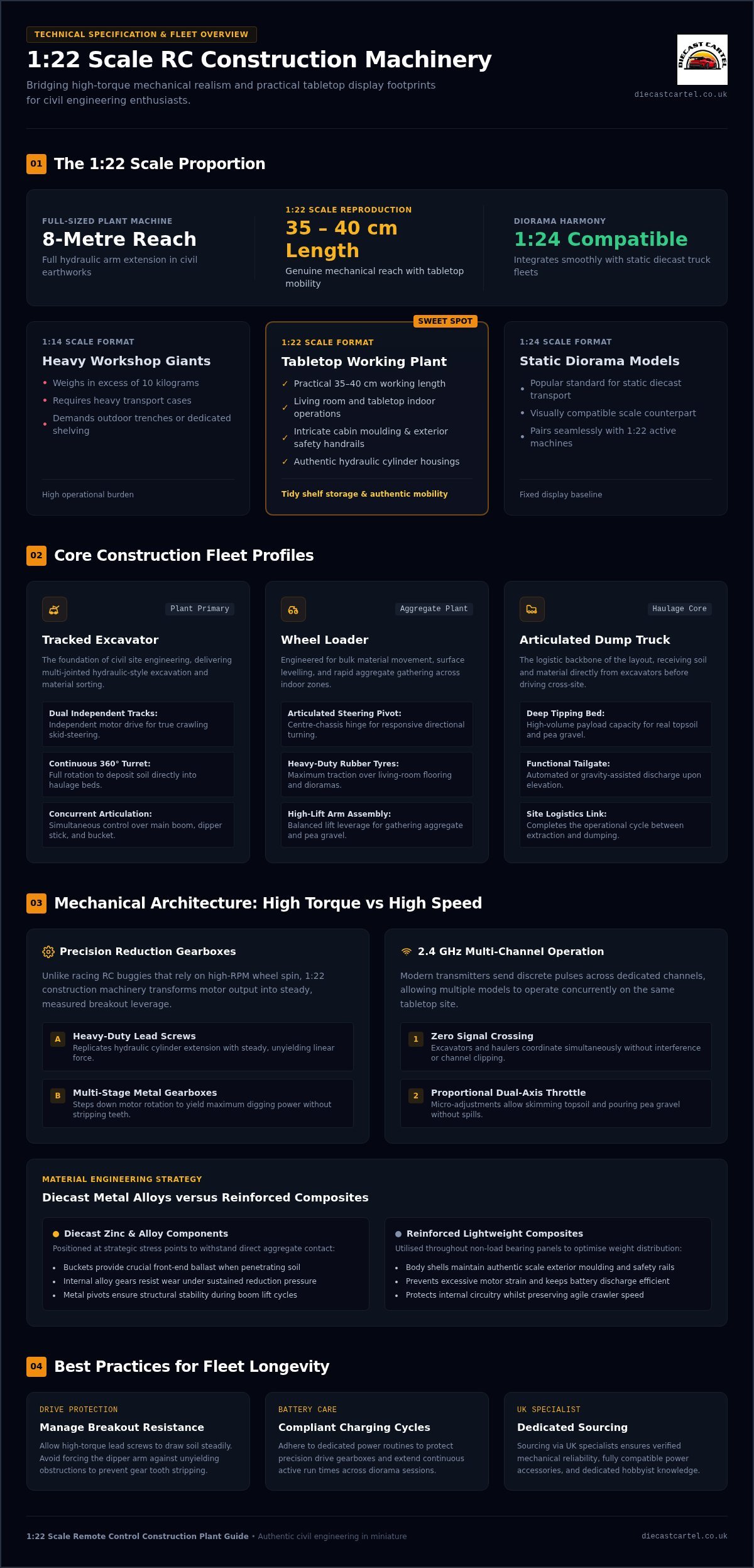
Every full-sized hydraulic excavator, articulated hauler, and front loader represents a triumph of industrial engineering. A 1:22 scale reproduction translates those immense real-world dimensions down to one twenty-second of their original size. In practical terms, an excavator with an eight-metre reach shrinks to a model roughly 35 to 40 centimetres long. This proportion delivers genuine mechanical articulation without commanding the massive footprint of workshop-bound alternatives.
Unlike high-speed buggies designed for racing across open fields, 1:22 scale remote control construction vehicles prioritise high-torque reduction gearing. Precision motors provide steady, measured motion. You gain realistic crawling power, working tread tracks, rotating operator cabs, and articulated arms that replicate civil engineering projects. It is an engaging bridge between static display collecting and tactile, working machinery.
The Sweet Spot of Scale: Practical Footprint Meets True Detail
Storage space matters to every modeller. Massive 1:14 models often weigh over ten kilograms and demand dedicated shelving, heavy transport cases, and large outdoor trenches. Conversely, 1:22 scale models strike a practical balance. They preserve intricate cabin moulding, exterior safety handrails, and authentic hydraulic cylinder housings. Yet, they remain light enough for spontaneous living room operations, diorama displays, and tidy shelf storage.
Core Machine Profiles: Excavators, Loaders, and Dumpers
Modern worksite layouts rely on team cooperation, and scale modelling captures that exact dynamic. The working construction fleet generally revolves around three distinct machine profiles:
- Tracked Excavators: Equipped with dual independent motor tracks and continuous 360-degree turret rotation. Operators use multi-channel radio control systems to articulate the boom, dipper arm, and bucket concurrently.
- Wheel Loaders: Built on heavy-duty rubber tyres with articulated steering pivots. These machines feature high-lift arm assemblies suited for gathering aggregate or clearing indoor sorting zones.
- Articulated Dump Trucks: Engineered with deep tipping beds and functional tailgates. They form the haulage backbone of any layout, accepting soil directly from excavators before driving it across the room.
Watching these machines interact creates an absorbing miniature civil engineering site. Each unit brings specialised mechanics to the table, turning simple collector displays into active worksite dioramas.
Mechanical Realism: How Modern 1:22 RC Construction Machinery Operates
Operating a working scale excavator reveals an impressive layer of internal engineering beneath the yellow paint. Rather than relying on simple on-off switches, 1:22 scale remote control construction vehicles use multi-channel 2.4 GHz radio technology. This allows multiple machines to work concurrently on the same indoor site without radio interference or signal crossing, providing a masterclass in miniature logistics.
Curious about how radio-controlled toys work behind the scenes? Modern transmitters send discrete pulses across dedicated channels. Internal circuit boards then translate those commands into high-torque mechanical motion. Instead of high-speed drives, heavy-duty lead screws and multi-stage metal gearboxes step down rotation speed. The result is pure digging leverage.
Independent Articulation and Multi-Channel Control
Precision handling defines the operator experience. Separate dual-axis transmitter sticks command the main boom elevation, dipper stick reach, and bucket curling independently. Proportional throttle control gives you genuine micro-adjustments, letting you gently skim topsoil or deposit pea gravel into a hauler bed without spilling. If you enjoy extreme digging power, exploring heavy-duty RC construction vehicles with metal parts offers a clear look at top-tier drive trains.
Diecast Metal Components versus Reinforced Composites
Achieving proper balance requires thoughtful material engineering. High-stress points demand resilient metals, whilst body panels benefit from lightweight composites. Manufacturers distribute materials strategically:
- Diecast zinc and alloy buckets: Provide crucial front-end ballast and wear resistance when scooping genuine soil.
- Internal alloy spur gears: Prevent stripped teeth under heavy mechanical load.
- High-density ABS composite shells: Faithfully capture complex cabin contours, air intake grilles, and exhaust stacks without adding dead weight.
Working Lights, Scale Decals, and Authentic Sound Systems
True immersion lives in the sensory details. Modern scale machinery incorporates roof-mounted amber LED beacons, functional cab-mounted work lamps, and reversing indicators that replicate full-sized British plant equipment. Micro-speaker sound units run throttle-matched acoustic profiles. You’ll hear realistic diesel compression rumbles at idle, hydraulic pressure hiss during arm extensions, and warning reverse beepers during transit. Cab interiors feature individual seat mouldings, miniature steering consoles, and authentic livery decals.
If you’re eager to build a dedicated machinery bay with genuine operational refinement, you can browse carefully inspected options at diecastcartel.co.uk to expand your fleet.
1:22 Scale versus 1:14 and 1:24: Choosing the Right Worksite Ratio
Choosing a scale is about your living space and display ambitions as much as mechanical specs. While large 1:14 machines represent impressive flagships, they quickly overwhelm an average domestic room. Selecting 1:22 scale remote control construction vehicles provides an ideal compromise between commanding physical presence and everyday convenience.
Scale Dimensions and Operating Space Comparison
Evaluating physical footprints clarifies where each ratio performs at its best:
- 1:14 Scale: Heavyweight machinery often stretching 60 centimetres or more. These models deliver unmatched digging mass, but they demand dedicated workshops, expansive garden plots, and serious boot space for club meets.
- 1:22 Scale: Practical middleweights typically measuring 30 to 40 centimetres. They offer ample clearance for loose indoor materials, dry patio paving, or aggregate trays, while remaining effortless to pack into a single carry box.
- 1:24 Scale: Compact machinery and commercial road hauliers. Extremely popular for static diecast modelling, though functional RC variants in this bracket can sometimes lack the ground clearance needed for outdoor surfaces.
Harmonising 1:22 Machinery with 1:24 Diecast Collections
Collectors frequently wonder whether pairing 1:22 plant machinery with 1:24 dioramas creates an awkward clash. In practice, the two proportions blend seamlessly. Heavy civil engineering equipment naturally towers over highway vehicles in real life. A quarry digger sitting next to a highway tractor unit looks balanced, rugged, and authentic.
Positioning 1:22 scale remote control construction vehicles alongside static 1:24 scale diecast trucks creates realistic depth across a scene. Staging an excavator dipper reaching over the drop-sides of a 1:24 tipper lorry creates dynamic interaction. The subtle difference in scale helps establish natural visual perspective, turning static shelf collections into compelling, operational industrial yards.
Essential Operation Techniques and Battery Care for UK Enthusiasts
Operating precision models requires a slightly different mindset than driving fast RC cars. Because 1:22 scale remote control construction vehicles channel significant torque through multi-stage gearboxes, proper site preparation prevents unnecessary mechanical wear. Before powering on, calibrate your transmitter steering and drive trims. Ensuring both tracks pull evenly keeps your machine travelling straight without putting uneven strain on individual motor circuits.
Setting Up an Indoor or Garden Worksite
Substrate choice makes or breaks the scale experience. Indoor trenchers thrive in deep plastic sorting trays filled with smooth pea gravel, dried decorative aquarium soil, or wooden pellets. These materials mimic real aggregate without generating abrasive dust that could infiltrate pinion assemblies. Outdoors, always steer clear of wet, sticky British clay or soaked topsoil. Fine sludge works its way past rubber seals and bogs down drive cogs. Instead, build tidy gravel ramps and raised loading zones where you can practise steady, progressive arm control.
Battery Management and Charging Protocols
Construction plant models place unique demands on power cells. Rather than rapid discharge bursts, running multiple arm actuators, track motors, and sound units demands steady, sustained voltage across extended digging sessions. Protecting cell life requires disciplined charging habits:
- Avoid deep discharges: Stop operating as soon as bucket curling slows down or warning beacons dim, avoiding cell degradation.
- Follow dedicated safety procedures: Consult our detailed guide on how to charge RC car batteries safely to master balanced charging techniques and current fire-safe storage standards.
- Maintain storage charge: If your plant machinery will spend months on display shelves, store lithium cells at around 50 percent capacity rather than empty or fully charged.
- Post-dig maintenance: Use a soft nylon paintbrush to dust out track sprockets, pivot pins, and suspension bogeys after every garden session.
Ready to keep your working machinery running smoothly without unexpected pitstops? You can order matching rechargeable batteries for remote control toys at Diecast Cartel to ensure your miniature plant fleet stays fully powered on site.
Curating Your Working Construction Fleet with Diecast Cartel
Assembling an authentic miniature yard brings the satisfaction of watching distinct plant assets operate as a cohesive logistics chain. Rather than scattering random models across a carpet, a thoughtful collector selects machines that complement one another in scale, function, and aesthetic finish. Independent online specialists bridge the gap between fragile impulse toys and serious scale modelling by vetting vehicles specifically for mechanical stamina, diecast reinforcement, and proportional fidelity.
Diecast Cartel approaches the hobby from the perspective of dedicated collectors. As a national online specialist, the business curates tested 1:22 scale remote control construction vehicles, ensuring British modellers acquire models that deliver working realism right out of the box.
Staging a Cohesive Miniature Construction Yard
Creating an interactive layout works best when you develop operational roles step by step:
- The Primary Digger: Anchor your site with a multi-channel tracked excavator. This acts as the heavy earth-mover that breaks ground and loads materials.
- Yard Logistics: Bring in auxiliary material-handling support, such as a 1:24 remote control forklift. It gives you the operational finesse to shift miniature pallets, pipes, and depot supplies around the perimeter.
- Haulage Links: Pair your working machinery alongside static diecast trucks and tractors, creating realistic staging bays where earthmovers can deposit aggregate for transport.
Specialist National Support and Dedicated Hobbyist Advice
Sourcing your fleet through a dedicated UK supplier eliminates the guesswork often found on generic retail marketplaces. When you invest in working machinery, having access to compatible accessories matters just as much as the vehicle itself. Diecast Cartel supplies matching rechargeable batteries for remote control toys nationally, making it easy to keep your entire site running smoothly without worrying about incompatible connectors or mismatched voltages.
Every piece in the curated catalogue reflects a genuine passion for fine scale modelling and reliable mechanical engineering. Whether you are adding your first working digger or expanding a diorama fleet, dedicated online customer support ensures British collectors receive knowledgeable guidance tailored specifically to the craft. Discover the full lineup of 1:22 scale remote control construction vehicles and companion equipment to transform your display into an active civil engineering site.
Bring Authentic Earth-Moving Action to Your Display
Adding functional machinery to your layout unlocks an entirely new dimension of the hobby. By choosing 1:22 scale remote control construction vehicles, you gain realistic hydraulic-style articulation, robust diecast reinforcement, and tabletop-friendly proportions that sit naturally alongside 1:24 static haulers. Paired with reliable multi-channel radio control and proper battery habits, these machines bring dynamic life to your display without demanding vast workshop space.
Ready to command your own miniature civil works? As an independent UK online specialist, Diecast Cartel makes building a working fleet straightforward. Every model is vetted for mechanical stamina, backed by UK-wide delivery, dedicated enthusiast support, and matching rechargeable batteries. Explore our curated range of remote control construction vehicles today, and experience the tactile satisfaction of putting scale engineering into motion.
Frequently Asked Questions
Can 1:22 scale remote control construction vehicles dig real earth outside?
Yes, provided the earth is loose and dry. While heavy-duty alloy buckets easily slice through fine loam, dry garden soil, and smooth gravel, they aren’t intended for hard-packed turf or wet clay. Dense clay places undue stress on motor drives and internal gearboxes. For outdoor digging, pre-turning the soil with a garden trowel ensures smooth operation and protects the drive train.
What is the main difference between hobby-grade 1:22 machinery and toy excavators?
Internal mechanical architecture marks the genuine divide. Basic toy diggers use simple non-proportional switches, loud plastic cogs, and fragile plastic booms that snap under resistance. In contrast, hobby-grade 1:22 models feature multi-stage metal reduction gearboxes, independent track drives, threaded lead screws, and proportional multi-channel control. This allows fluid, realistic articulation and measured low-speed torque rather than jerky, uncontrolled movements.
How long do rechargeable battery packs typically last during active operation?
Expect roughly 20 to 45 minutes of continuous digging time per pack. Real-world run times depend heavily on how hard the machine works. Constantly tracking across thick carpets or scooping heavy aggregate draws more current than gentle boom elevation. Keeping a spare, fully charged battery pack ready allows you to swap cells swiftly and continue your site operations without interruption.
Can I display 1:22 scale construction machinery alongside 1:24 diecast trucks?
Yes, they look natural and visually convincing side by side. Full-scale plant machinery like commercial excavators and front loaders is naturally much taller and bulkier than standard highway haulage lorries. The slight ratio difference between 1:22 and 1:24 actually enhances forced perspective, making your digging machinery appear appropriately robust against static low-loaders and tipper cabs.
Are replacement tracks and mechanical parts easy to maintain on these models?
General maintenance is straightforward and rarely requires specialist tools. Rubber tracks can be removed by loosening the main tensioner pins, allowing you to clear out accumulated grit or fit replacements. Cleaning pivot joints with a soft brush and applying dry lubricant to metal lead screws keeps the boom moving smoothly without attracting abrasive dust.
Is 1:22 scale remote control construction equipment suitable for indoor use?
It’s ideally sized for indoor environments. Unlike massive 1:14 models that weigh ten kilograms and require ample floor space, 1:22 scale remote control construction vehicles operate comfortably across tables, custom plywood sorting boxes, or rugs. Rubber tracks protect timber flooring from scratches while providing enough grip to climb mild inclines and small indoor stockpiles.
What radio frequency do these models use to prevent signal interference?
Modern models operate on the 2.4 GHz frequency spectrum. This digital protocol automatically binds the transmitter to your vehicle’s internal receiver using unique frequency-hopping channels. You can run multiple excavators, dumpers, and companion handling vehicles simultaneously on the same worksite without crossed signals, glitching, or physical frequency crystals.
