
Diecast Guides
Authentic Die-cast Models: 2026 Collector’s Guide

Sep
Have you ever reached for a new addition to your display, expecting the cool, heavy weight of precision-engineered metal, only to be met with the hollow click of lightweight plastic? It’s a disappointing moment that every dedicated enthusiast has faced at least once. As the global scale model market continues to expand towards a projected valuation of over $6.13 billion by 2035, the challenge of identifying truly authentic diecast model replicas becomes more complex for newcomers and seasoned curators alike.
We understand that a collection is more than just a hobby; it’s a personal journey and a significant investment in craftsmanship. You deserve to feel confident that every 1:18 or 1:24 scale piece you acquire meets the high standards of realism you expect. This guide promises to equip you with the expertise needed to distinguish collector-grade gems from mass-market toys, ensuring your shelves are filled with models that boast genuine weight and laser-accurate detail.
We will break down the nuances of scale selection for your display, reveal which brands are leading the way in 2026, and provide a methodical approach to preserving your replicas for decades to come. Whether you’re just starting out or looking to refine a lifelong collection, let’s explore the art of the authentic together.
Key Takeaways
- Learn why the tactile weight and “cold feel” of zinc alloy are essential indicators of quality when hunting for authentic diecast model replicas.
- Discover how to verify official manufacturer licensing and spot the high-fidelity interior details that distinguish professional models from mass-produced toys.
- Determine whether the “King of Detail” 1:18 scale or the versatile 1:24 scale best suits your collection’s focus and available display space.
- Master essential preservation techniques, such as using white cotton gloves and UV-filtered cases, to maintain the long-term value of your investment.
- Explore the exciting rise of functional authenticity and how high-quality remote control construction vehicles bring realism to life through movement.
Defining the Authentic Diecast Model Replica
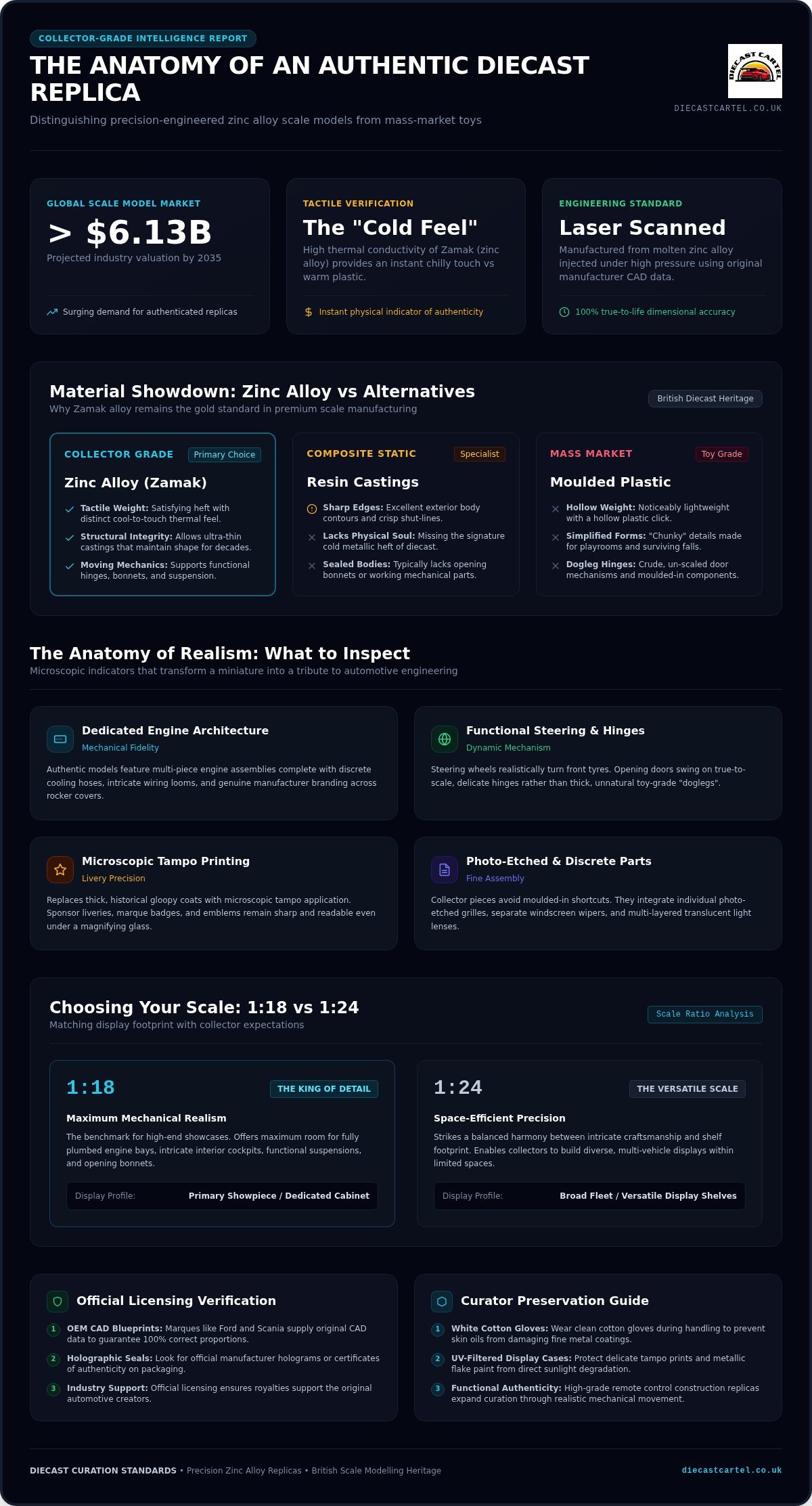
What truly makes a model “authentic”? It starts with the engineering. True authentic diecast model replicas are born from a specific manufacturing feat where molten zinc alloy is injected into steel moulds under immense pressure. This isn’t just about creating a shape; it’s about capturing every recessed bolt, crisp panel line, and subtle curve of the original vehicle. When you hold a high-quality model, you’re feeling the result of thousands of hours of CAD design and precision tooling.
We’ve all felt that immediate connection when picking up a premium piece. It’s that signature “cold feel” of the metal against your palm. Because zinc alloy has high thermal conductivity, it feels chilly to the touch, unlike its plastic or resin counterparts. This weight and temperature are the first tactile signals that you’re holding a collector-grade item rather than a hollow toy. Whilst resin models are prized for their sharp exterior edges, they often lack this physical “soul” and the functional moving parts that diecast enthusiasts adore.
The History of Diecast Manufacturing
The UK has a prestigious heritage as a global centre for the diecast hobby. From the post-war success of brands like Dinky and Corgi to the high-fidelity replicas of today, the British market has always demanded quality. We’ve moved far beyond the simple cast-iron toys of the early 20th century. Modern manufacturing now utilizes laser-scanning technology to ensure every 1:18 or 1:24 scale replica is a perfect mirror of the real machine. Paint finishes have also seen a revolution. We no longer see the thick, gloopy coats of the past. Instead, manufacturers use microscopic tampo printing to apply razor-sharp liveries and sponsor logos that remain legible even under a magnifying glass.
Why Zinc Alloy is the Gold Standard
Collectors often ask why we still prefer metal in an age of advanced composites. The answer lies in durability and detail. Zinc alloy, often known as Zamak, allows for incredibly thin castings that don’t lose their shape over time. Diecast is a non-ferrous alloy process used for dimensional accuracy. This stability is why your favourite truck or car can feature functional door hinges, opening bonnets, and intricate suspension components that actually work. That satisfying heft isn’t just for show; it’s a mark of structural integrity. It ensures that your investment remains a centerpiece of your collection for decades. This commitment to material quality is what helps define modern die-cast scale model standards and separates professional replicas from the generic aisles of a toy shop.
The distinction between toy-grade and collector-grade precision is clear. A toy is built for the playroom, with simplified shapes and “chunky” details designed to survive a fall. Authentic diecast model replicas, however, are built for the curator. They feature separate parts for windscreen wipers, photo-etched grilles, and realistic light lenses. It’s this uncompromising dedication to realism that transforms a simple miniature into a genuine work of automotive art.
The Anatomy of Realism: What to Look For
When you transition from a casual collector to a serious curator, your eye begins to hunt for the microscopic details that define authentic diecast model replicas. It isn’t just about the general shape; it’s about the precision of the shut-lines and the way the light catches the metallic flake in the paint. High-end replicas offer a level of engineering and detailing in scale models that mimics the real-world manufacturing process.
Look for operational features that go beyond simple rolling wheels. Does the steering wheel turn the front tyres? Do the doors open on realistic hinges rather than thick, toy-like “doglegs”? A true collector-grade model features a fully detailed engine bay. You should see separate components for wiring, cooling hoses, and even the correct manufacturer branding on the rocker covers. These elements transform a static object into a mechanical tribute.
The Importance of Official Licensing
Exterior Finishes and Decals
The finish of a model is its most striking attribute. Premium makers use authentic factory paint codes to ensure the colour matches the real vehicle exactly. Look closely at the badges and liveries. Are they thick stickers that might peel, or are they high-quality tampo prints and water-slide decals that sit flush with the clear coat? High-fidelity replicas often include:
- Photo-etched parts: Look for real metal mesh in the grilles instead of solid moulded plastic.
- Interior fidelity: High-end models feature flocked “carpeting,” fabric seatbelts with metal buckles, and legible dials on the dashboard.
- Functional suspension: Gently press the model to see if it has independent spring movement that mimics the real vehicle’s behaviour.
It’s these tiny touches that create a sense of pride every time you glance at your display, confirming you’ve invested in true authentic diecast model replicas. If you’re ready to find your next centrepiece, you might want to explore our curated range of 1:18 and 1:24 scale models to see these details in person. Every piece we stock is chosen for its commitment to this level of craftsmanship.
Choosing Your Scale: 1:18 vs 1:24 Ratios
Deciding on a scale is often the most critical choice for any enthusiast. It dictates not just how much space you’ll need, but also the level of mechanical intimacy you can expect from your authentic diecast model replicas. In the UK, the market is primarily split between the large, imposing 1:18 scale and the more versatile 1:24 scale. While smaller ratios like 1:64 exist for mass-market volume, serious curators usually focus on these larger sizes to ensure they are getting a true replica rather than a toy.
Each scale offers a different experience. A 1:18 model feels like a substantial piece of engineering in your hands, whilst a 1:24 collection allows for a much broader variety of vehicles in a limited space. Your choice should reflect your personal goals. Do you want a single, breathtaking “hero” piece, or a diverse fleet of machinery that tells a story?
The Appeal of 1:18 Scale Cars
Often crowned the “King of Detail,” the 1:18 scale is the gold standard for centerpiece display pieces. At roughly 24 to 30 cm in length, these models offer enough real estate for manufacturers to include intricate engine bolts, flocked interiors, and fully functional steering linkages. If your passion lies in high-performance machinery or vintage muscle, you’ll find that 1:18 Scale Classic American Cars provide an unmatched level of fidelity. Every hinge and wire is visible, making them the perfect choice for those who want to study the mechanical artistry of a vehicle up close.
The Dominance of 1:24 Scale for Trucks and Lorries
Whilst cars thrive in 1:18, the 1:24 ratio has become the definitive industry standard for commercial vehicle replicas and tractors. This scale offers a brilliant balance. It’s large enough to preserve the imposing presence of a Scania or Volvo tractor unit, yet compact enough to allow for a diverse fleet on a standard display shelf. For those focused on heavy haulage, 1:24 Scale Diecast Trucks are the ideal choice. They provide roughly 40% more shelf density than their 1:18 counterparts, which is vital when you’re building a comprehensive transport or agricultural collection.
Planning your display requires more than just measuring shelf height. You need to consider air circulation and the long-term protection of the metal itself. Following museum-grade preservation guidelines for metal collections is essential to prevent alloy corrosion or “zinc pest” over time. A standard glass cabinet can comfortably house three to four 1:18 models per shelf, whereas you might fit five or six 1:24 scale pieces. Which scale speaks to your interests? Whether you prefer the massive detail of a single car or the satisfying rows of authentic diecast model replicas in a truck fleet, choosing the right scale is the first step in a rewarding journey.
Curating and Maintaining Your Collection
Acquiring authentic diecast model replicas is an exhilarating experience, but the true journey of a curator lies in preservation. Your collection represents a significant investment of both passion and resources. Protecting that investment requires a methodical approach to handling and display. Have you considered how the environment in your room might be affecting your models right now? Tiny factors like the oils on your skin or the humidity in the air can have a lasting impact on the lustre and structural integrity of the metal.
When handling your models, white cotton gloves are your best friend. The natural acids and oils in human skin can react with clear coats over time, leading to unsightly fingerprints or even paint rash. For cleaning, avoid domestic aerosol sprays at all costs. Instead, use ultra-soft optical brushes or clean makeup brushes to gently whisk away dust from intricate grilles and mirrors. For those hard-to-reach engine bays, a quick blast of compressed air is often the safest way to maintain that factory-fresh look without risking damage to delicate parts.
Display Ideas for Modern Homes
How you choose to showcase your fleet says a lot about your personal style. Whilst traditional glass-fronted cabinets remain the gold standard for dust protection, many modern collectors are opting for minimalist floating shelves to create a striking gallery feel. Organising your display by theme, such as grouping by manufacturer or era, creates a cohesive narrative for anyone viewing your collection. If you are just beginning this journey, our guide on How to Start a Die-cast Collection offers excellent advice on planning your first display space.
Long-Term Preservation Techniques
Environmental control is the secret to a multi-decade collection. Ideally, keep your display area between 18°C and 22°C with a relative humidity between 40% and 55%. Extreme fluctuations can cause the metal to expand and contract, leading to micro-fractures known as metal fatigue or the dreaded zinc pest. Always keep your models away from direct sunlight; UV rays are notorious for fading vibrant paintwork and making decals brittle. If you need to store items away, always wrap them in acid-free tissue paper to prevent chemical reactions with the paint. Keeping the original packaging is also vital, as it protects the model during moves and significantly bolsters future resale value.
Ready to upgrade your display with a new centrepiece? You can browse our latest arrivals of precision models to find a piece that truly deserves a spot in your curated collection.
Beyond Static Models: RC Replicas and Hobby Tech
Is realism only skin deep? For many of us, the joy of collecting authentic diecast model replicas comes from the mechanical story they tell. In 2026, we are seeing a fascinating surge in “functional authenticity,” where the hobby moves from the display cabinet to the desktop. This transition isn’t about toys; it’s about high-fidelity machinery that captures the spirit of the construction site or the warehouse floor. At Diecast Cartel, we curate both static and functional pieces because we believe the thrill of a new acquisition is amplified when that model can actually perform its real-world duties.
RC Construction Realism
Adult hobbyists are increasingly drawn to 1:22 scale excavators and 1:24 forklifts that mirror the engineering of their full-sized counterparts. These aren’t lightweight plastic playthings. Many of these models integrate heavy-duty metal parts into the booms, buckets, and chassis to provide the necessary weight for realistic digging and lifting. If you want to see how this technology has evolved to meet collector standards, our guide on Heavy Duty RC Construction Vehicles UK explores the best options for the current year. This allows you to enjoy the tactile heft of a traditional model whilst exploring the nuances of hydraulic-style movement.
The Enthusiast’s Toolkit
Our passion for precision often extends to the garage. If you appreciate the engine bay detail on a 1:18 car, you likely take pride in maintaining your full-sized vehicle too. This shared interest in automotive health is why we include professional-grade tools like OBD scanners in our curated range. Understanding the Benefits of Owning an OBD2 Scanner can save you significant time and money when diagnosing your daily driver. It’s all part of the same journey; whether you’re dusting authentic diecast model replicas or clearing a fault code on your car, the goal is always preservation and performance. We aren’t just selling models; we’re supporting a lifestyle that celebrates the machine in all its forms.
Building Your Legacy in Scale
Building your collection is a rewarding journey that celebrates the intersection of history and engineering. By prioritising official licensing, the tactile heft of zinc alloy, and the specific nuances of 1:18 and 1:24 scales, you ensure your display remains a source of pride for years to come. Every addition is an investment in craftsmanship. It requires thoughtful curation and careful preservation to maintain its lustre and value over the long term.
As a specialist UK retailer, we’re dedicated to helping you find those standout pieces. We focus on a carefully selected range of high-realism RC vehicles alongside our expertise in 1:24 trucks and 1:18 cars. If you’re just starting out, our enthusiast-led blog provides free advice to help you identify truly authentic diecast model replicas amongst the crowd. We’re more than just a shop; we’re fellow collectors who share your passion for every minute detail.
Are you ready to discover your next centrepiece? Browse our curated range of authentic diecast models at Diecast Cartel and find the quality your collection deserves. We look forward to being part of your collecting story!
Frequently Asked Questions
What is the most popular scale for diecast model car collectors in the UK?
The 1:18 scale is currently the most popular choice for UK car collectors who prioritise high-fidelity display and mechanical detail. It accounts for nearly half of enthusiast preferences because its size allows for functional steering and opening features. However, the 1:24 scale remains the definitive standard for those focused on commercial vehicles and trucks. Both scales allow for the precision expected in authentic diecast model replicas, providing a substantial presence that smaller scales cannot match.
Are authentic diecast model replicas a good financial investment?
Authentic diecast model replicas can be excellent investments, particularly when manufacturers limit production runs to a few hundred units. Over 65% of makers now focus on numbered editions, which naturally drives secondary market value as models become retired. To protect your investment’s future worth, you should always maintain the original packaging and store the model in a climate-controlled environment. This prevents paint degradation and ensures the item remains in “mint” condition for future curators.
How can I tell if a diecast model is made of high-quality metal or plastic?
The easiest way to distinguish quality is through the weight and the signature “cold feel” of the bodywork. High-quality replicas are primarily cast from Zamak, a zinc alloy that feels significantly heavier and colder than plastic alternatives. You should also inspect the “shut-lines” around the doors and bonnet. On premium metal models, these gaps are razor-thin and consistent, whereas plastic-heavy models often have chunky, simplified details that lack the sharp edges found in professional metal castings.
What is “zinc pest” and how can I prevent it in my collection?
Zinc pest is a form of intergranular corrosion that causes the alloy to crack, swell, or eventually crumble into dust. It’s often triggered by impurities in the metal, but you can prevent it through strict environmental control. Maintain your display area between 18°C and 22°C with relative humidity kept between 40% and 55%. Avoiding extreme temperature cycles and damp conditions is the best way to ensure your collection remains structurally sound for many decades to come.
Why do some diecast models have opening parts whilst others are “sealed”?
Opening parts allow you to explore engine bays and interiors, which is a hallmark of traditional diecast craftsmanship. However, some high-end manufacturers use “sealed” bodies, often made of resin, to achieve more complex aerodynamic shapes or tighter panel tolerances that moving parts might compromise. Whilst diecast enthusiasts usually prefer functional features, sealed models are popular for modern supercars where the external silhouette is the primary focus. Your choice depends on whether you value interaction or exterior perfection.
Should I keep the original box for my diecast model replicas?
You should absolutely keep the original box and any accompanying certificates of authenticity. The packaging is designed to protect delicate mirrors, wipers, and aerials during transit or storage, which is vital for long-term preservation. From a collector’s perspective, a model with its original, undamaged box can command a significantly higher price on the secondary market. It proves the item has been cared for properly and remains a complete, professional-grade set for the next owner.
Is 1:24 or 1:18 scale better for a truck and tractor collection?
For a truck and tractor collection in the UK, the 1:24 scale is widely considered the superior choice. It has become the industry standard for commercial replicas, offering a perfect balance between impressive physical size and efficient shelf density. Whilst 1:18 cars are magnificent “hero” pieces, a fleet of 1:24 lorries allows you to display more variety without overwhelming your display space. This scale preserves all the essential details, from functional fifth wheels to intricate cabin interiors.
Where is the best place to buy authentic diecast models online in the UK?
Diecast Cartel is the premier online destination for enthusiasts seeking a curated, specialist experience within the UK. We focus exclusively on high-quality 1:18 cars and 1:24 trucks, ensuring every item meets our strict standards for realism and craftsmanship. As an independent, online-only retailer, we provide a personal touch that larger marketplaces lack. Whether you are hunting for a precision tractor or a functional RC construction vehicle, our range is selected by passionate collectors, for collectors.
