
Diecast Guides
Emergency Vehicle Diecast Models for Collectors
Nov
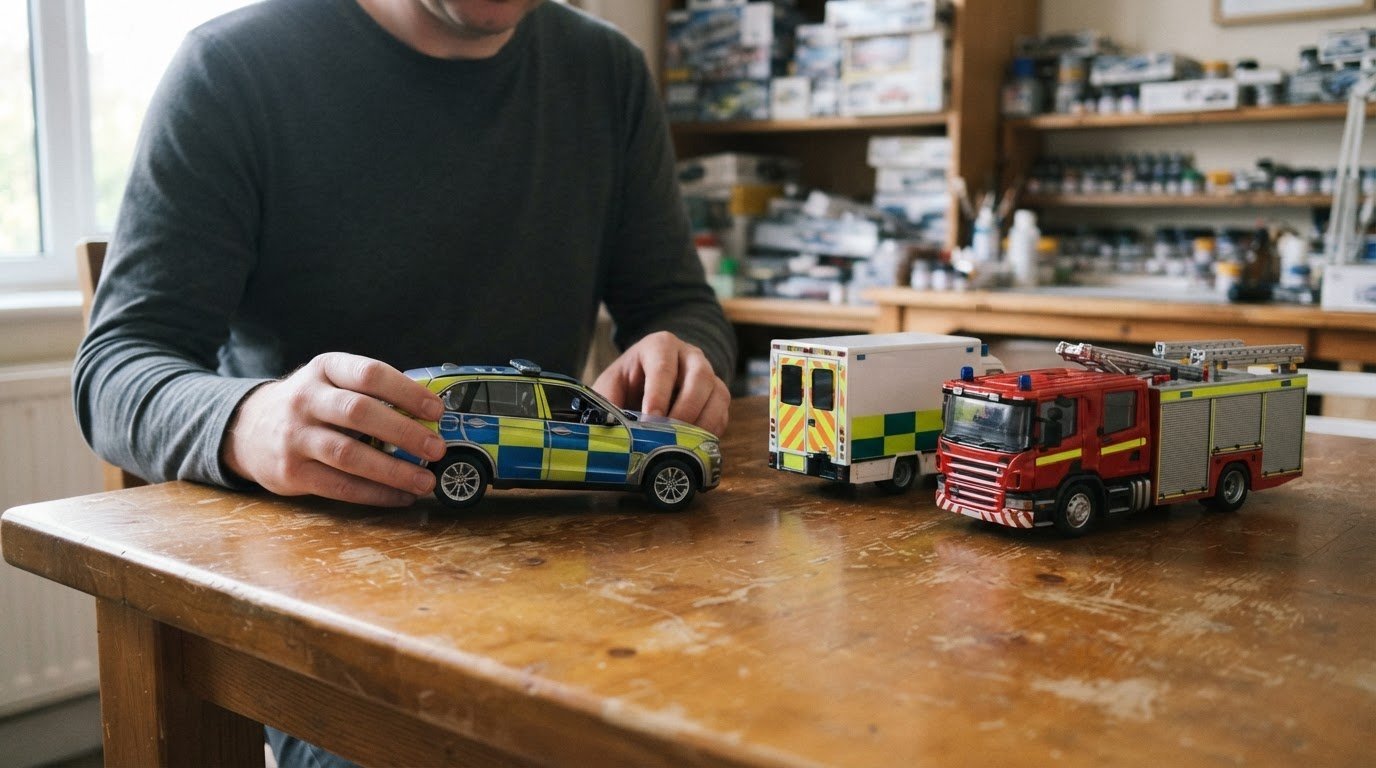
A model’s livery can be as distinctive as its shape. Emergency vehicle diecast models include releases from Bburago and Corgi, with examples in 1:76, 1:43, 1:24 and 1:18 scales. Police, fire and ambulance markings bring different character to a display, whether you’re drawn to a familiar service vehicle or building a varied collection.
Choosing a model involves more than finding a scale that suits your shelf. The maker, vehicle type and livery all shape a model’s appeal, while prices vary between listings. Here at Diecast Cartel, this guide looks at brands and examples of emergency vehicles, from fire engines to police cars and ambulances, and explains how their liveries and formats differ. It also offers a practical way to compare listings and choose models that suit your collecting interests.
Key Takeaways
- Compare brands and scales to find models that suit your display and collecting interests.
- Explore police, fire and ambulance liveries to choose the look and vehicle type that appeal to you.
- Compare listed prices carefully, including sale prices and postage where shown.
- Consider age and safety information when choosing a model, especially if it will be handled by a younger collector.
Brands of collectable vehicles
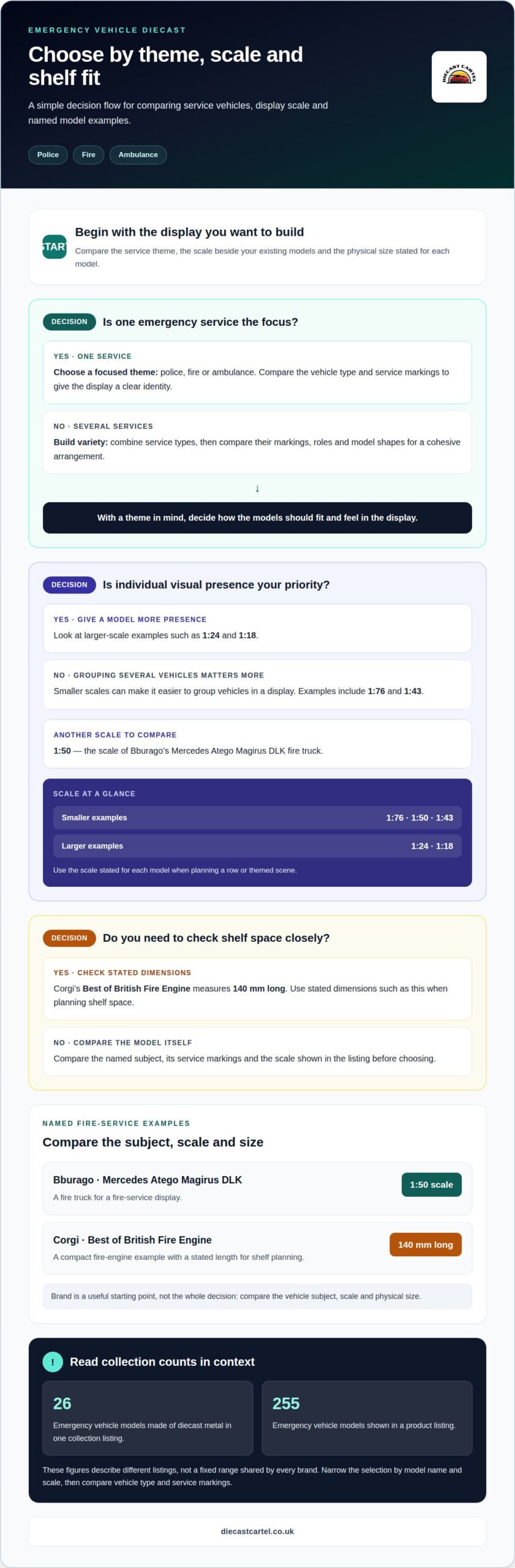
Bburago and Corgi provide two brand examples for emergency vehicle collectors. Bburago’s Mercedes Atego Magirus DLK fire truck is a 1:50-scale collectible. Corgi’s Best of British Fire Engine measures 140 mm long. These models offer different ways to bring fire service vehicles into a display, from a larger appliance to a compact, measured model.
Scale helps you judge how a model might fit beside other vehicles. Emergency vehicle collections include examples in 1:76, 1:43, 1:24 and 1:18 scales. The 1:50 Bburago fire truck adds another option. Smaller scales can make it easier to group several vehicles in a display, while larger scales give an individual model more visual presence. Compare the scale shown for each model before planning a row or themed scene.
Collection counts depend on what a listing includes. One collection lists 26 emergency vehicle models made of diecast metal, while a product listing shows 255 emergency vehicle models. These figures describe different listings, rather than a fixed range shared by every brand. Use the specific model name and scale to narrow the selection, then compare the vehicle type and service markings.
Use this simple approach to choose a brand and model:
- Pick a service theme, such as fire, police or ambulance vehicles.
- Choose a scale that works with your existing models and available display space.
- Compare named examples, such as Bburago’s Mercedes Atego Magirus DLK and Corgi’s Best of British Fire Engine.
- Check the model’s stated dimensions, like Corgi’s 140 mm length, when planning shelf space.
Brand is a useful starting point, but it need not make the decision for you. A Bburago fire truck and a Corgi fire engine may suit your display for different reasons. Compare the subject, scale and physical size before choosing.
Police, fire and ambulance liveries
Service markings distinguish a model’s role and help set the theme of a display. British police, fire and ambulance models include cars, vans and larger response vehicles.
Police liveries
Police models range from patrol cars to motorway support vehicles. A Ford Transit Mk1 representing the South Wales Police Motorway Patrol is shown as registered in 1968/69. Its period and role make it distinct from a police car such as the Ford Escort Mexico British Police model. Look at the force markings and vehicle type together: they help establish whether a model suits a historic display or a broader service collection.
Fire liveries
Fire service liveries appear on both appliances and smaller support vehicles. The Bburago Mercedes Atego Magirus DLK represents a fire truck, while the Corgi Best of British Fire Engine offers a different subject. The Corgi model measures 140 mm long. Consider the vehicle’s silhouette as well as its markings: a fire engine can become a display’s centrepiece, while a van or tender adds variety.
Ambulance liveries bring another recognisable service identity. The Ford Galaxy London Ambulance Service duty officer vehicle represents a vehicle in service in 2012. Its car format differs from a conventional ambulance, giving collectors another way to represent the work surrounding emergency response. For a UK-focused display, the London service markings provide a clear local reference.
Use these details to shape a cohesive arrangement:
- Choose a service theme: focus on one emergency role or combine several.
- Vary vehicle types: pair a police car with a motorway patrol van or fire appliance.
- Look for specific markings: force and service names help give each model context.
A consistent livery creates a unified display, while contrasting vehicles add variety. Choose a mix by comparing the markings, service role and model shape.
Product prices
Listed prices vary across emergency vehicle diecast models, from lower-priced examples to vintage collectibles. For ambulance models, a market snapshot places typical prices between £12 and £18, with a median of about £16. That range provides a useful point of comparison, not a set price for every model.
Individual listings show how much the figures can vary. These examples also show why it is important to distinguish a current sale price from an original listed price.
Other listings sit higher.
For a fair price comparison, read the full listing rather than relying on the headline figure. Check whether postage is included, whether the price shown is a sale price, and whether the models being compared are the same vehicle and scale.
- Compare like with like: match the model name and scale.
- Separate sale prices: note the original and reduced figures, as with the Mercedes-Benz ambulance.
- Account for postage: distinguish item-only prices from totals that include delivery.
Treat each figure as specific to its listing, then weigh the model’s subject and scale against your collecting priorities.
What safety or age warnings apply to emergency vehicle diecast models?
Age guidance and safety warnings differ between individual models, so assess each product separately. Read the wording on its packaging or product information before choosing it for a younger collector. A model intended for display should not automatically be treated as a plaything. The scale alone, such as 1:24 or 1:76, doesn’t tell you who it suits.
Start with the age guidance for the specific model. Read any accompanying warnings and handling information rather than judging by the vehicle’s familiar shape. A miniature police car may look like a toy, but its appearance alone does not establish its intended use. If you are buying for a child, include the stated guidance in your decision.
Examine the model and its presentation. Check whether the product information describes it as a collectible, and note any handling or display instructions. Where practical, keep the original packaging with the model so the product-specific guidance remains available. If it is a gift, pass that information on to the recipient.
- Read first: use the age guidance and warnings given for the exact model.
- Consider the recipient: distinguish a display collectible from an item chosen for play.
- Keep information together: retain packaging or product details with the model.
- Review each addition: a different vehicle or release can carry different guidance.
These steps are useful across scales and vehicle types. A 1:18 police car and a smaller fire appliance shouldn’t be assumed to share the same age guidance simply because both are diecast. The product-specific wording is the useful point of reference for deciding who the model suits and how it should be handled.
Once you’ve considered the guidance, explore diecast models and trucks to find a display piece that fits your collection.
Diecast Cartel: 1:24 scale Diecast models and trucks
Diecast Cartel is a natural next step if you’re exploring scale models for a collection or display. Its 1:24 scale diecast models and trucks can suit collectors drawn to larger vehicle replicas, whilst 1:18 scale model cars offer another scale to consider.
The range also includes diecast trucks and tractors, alongside 1:22 scale remote control construction vehicles. These options let you broaden a display beyond emergency services with different vehicle types and formats. If your priority is a specific police, fire or ambulance livery, focus on finding a model that matches that interest; if you’re building a wider vehicle collection, these categories provide other directions to explore.
Contact Diecast Cartel to discuss its diecast models and trucks.
Choose the next direction for your collection
Choose your next model with the direction of your collection in mind. You could build a unified display or leave room for an unexpected piece that changes its character. With emergency vehicle diecast models, the pleasure lies in choosing something meaningful to you, not simply filling another space on a shelf.
Consider what you want your display to show over time. A clear theme can guide future choices, while a varied collection leaves room for changing interests. Either approach can be rewarding. Let your collection reflect the details you enjoy, rather than someone else’s idea of what belongs together.
As your interests develop, Diecast Cartel’s model vehicles offer more directions to explore. If you’d like to discuss a future addition to your collection, contact Diecast Cartel. Keep following the subjects that make you proud to display each model. Your next favourite could give the whole collection a fresh sense of direction.
Frequently Asked Questions
What types of emergency service models can collectors find in the UK?
UK collectors can find miniature police cars, fire engines, fire service vans and ambulances. Emergency vehicle diecast models also include specialist trucks and duty officer vehicles, bringing different response roles into a display. For a focused collection, begin with one service and contrast vehicle shapes, such as a patrol car beside a fire tender van.
Which brands offer emergency services diecast models?
Bburago and Corgi are among the brands represented by emergency service models. Bburago’s Mercedes Atego Magirus DLK is a fire truck, while Corgi offers fire service vehicles such as the Bedford CA AFS tender van. Compare the subjects in each range: vehicle type and livery can matter as much as the maker.
What scales can I choose for these models?
Examples are available in 1:18, 1:24, 1:32, 1:43, 1:50, 1:64 and 1:76 scales. A smaller scale can help when shelf space is limited; larger models can make individual vehicles more prominent. If you plan to display models together, check each scale before choosing, as similar emergency vehicles can take up noticeably different amounts of space.
What affects the cost of an emergency service model in the UK?
Prices vary by listing and model, and may depend on whether postage is included. A listing may show a sale price alongside an original price, so distinguish the current amount from the previous one. Compare similar vehicles at the same scale, then consider the total including delivery rather than judging by the headline figure. This gives you a clearer basis for choosing within your collecting budget.
Which models depict UK police, fire and ambulance vehicles?
UK subjects include the Ford Escort Mexico British Police model, the Bburago Mercedes Atego Magirus DLK fire truck and the Ford Galaxy London Ambulance Service duty officer vehicle. These emergency vehicle diecast models represent different services and vehicle roles. They can anchor a British-themed display or sit alongside other emergency subjects to show the variety of vehicles used by response services.
Where can I buy emergency vehicle diecast models in the UK?
Diecast Cartel offers 1:24-scale diecast models and trucks; contact it to discuss its range. Compare individual listings for the model, scale and any postage costs.
