
Diecast Guides
Electric RC Car Maintenance Checks for Brakes, Battery and Cleaning
Nov
Even with regenerative braking, it is sensible to include the mechanical brakes in your regular checks. An electric RC car maintenance checklist should include brake, battery and general condition checks, making it easier to spot small issues before your next run.
It’s easy to focus on the battery and the fun of getting back on the track, but a simple routine helps you care for the whole car. You’ll learn what to look for when checking battery health and warranty thresholds, how to set a useful baseline during the first month, and how to maintain and clean your RC car without overlooking its warranty terms.
This checklist covers brakes, tyres, shocks, gears, bearings and post-run cleaning. Whether you’re caring for your first RC car or adding to a collection, a consistent routine helps you keep track of its condition.
Key Takeaways
- Use a charger suited to your battery type and unplug the battery when it’s fully charged.
- Set a first-month baseline by inspecting the car’s condition, including its shocks, and note any changes over time.
- Inspect tyres before each run and follow the warranty terms when carrying out DIY maintenance.
- Clean dirt and debris from the car after each run, then apply a thin layer of lubricant to gears and bearings.
Battery warranty thresholds and health checks
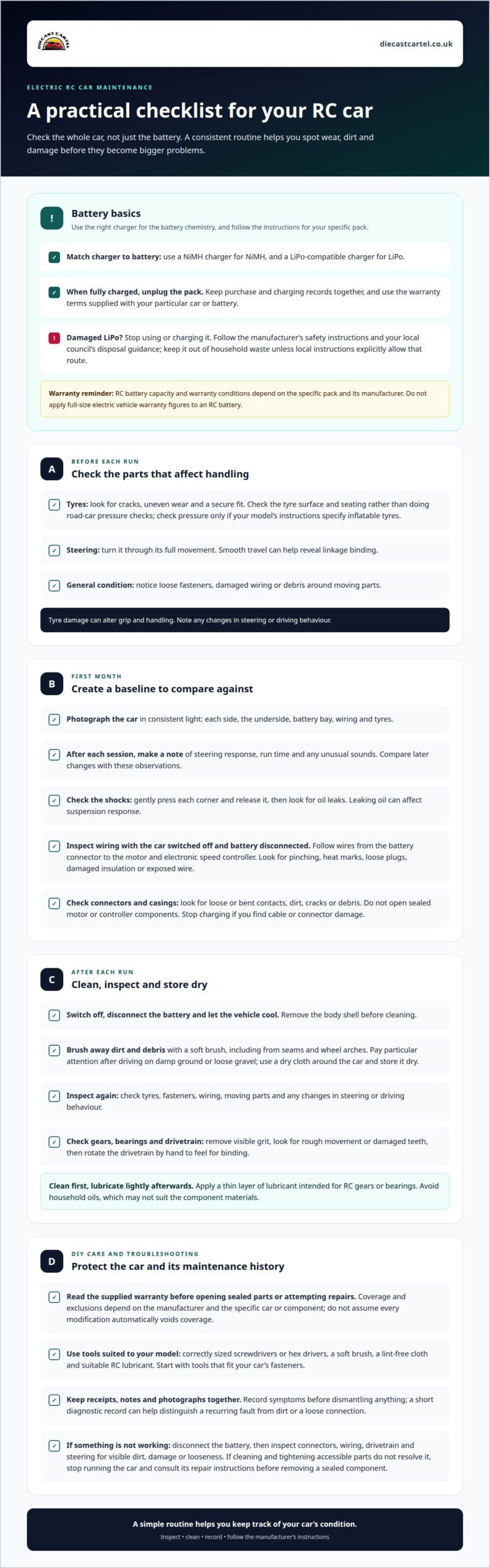
For an RC car, match the charger to the battery chemistry: use a NiMH charger for NiMH and a LiPo-compatible charger for LiPo. Unplug the pack when it’s fully charged. This simple routine helps avoid overcharging, but it doesn’t establish a warranty threshold. For coverage, use the warranty terms supplied with your particular RC car or battery, and keep purchase and charging records together.
Don’t apply full-size electric vehicle warranty figures to an RC pack. Most electric vehicle manufacturers commonly set a battery capacity warranty threshold at 70% of original capacity; EV battery warranties are commonly 8 years or 100,000-150,000 miles, depending on manufacturer and market. Those figures concern electric vehicles, not RC cars. RC battery capacity and warranty conditions depend on the specific pack and its manufacturer.
For storage lasting more than two weeks, an EV battery guidance recommends keeping it at 50-60% state of charge. An RC pack’s storage charge depends on its chemistry, so follow the battery manufacturer’s instructions rather than applying an EV percentage. For a damaged LiPo, stop using or charging it and follow the manufacturer’s safety instructions and your local council’s disposal guidance. Keep it out of household waste unless local instructions explicitly allow that route.
A 12V auxiliary battery belongs to a full-size vehicle, not typically an RC car. A healthy, fully charged 12V auxiliary battery should read between 12.6V and 12.8V; A low reading may indicate that the auxiliary battery needs attention. Electric vehicles also need routine checks of washer fluid and brake fluid. Check battery coolant according to the exact vehicle manufacturer’s schedule, as maintenance requirements vary by model. These checks are separate from RC battery care.
First-month baseline inspection after purchase
During the first month, create a baseline so you can distinguish normal wear from later changes. Photograph each side, the underside, battery bay, wiring and tyres in consistent light. After each session, note steering response, run time and any unusual sounds. Unlike a combustion engine, an electric RC car relies on its motor, battery and electronic speed controller working together.
Start each inspection with the car switched off and the battery disconnected. Check the charging port, cable and connectors for looseness, bent contacts, dirt, cracked insulation or exposed wire. Look for strain where the cable meets each connector, and stop charging if you see damage. Keep connectors dry and clear of debris, as a poor connection can interrupt charging or power. Match replacement cables to the connector and battery voltage specified by the manufacturer.
How do you inspect RC car wiring, connectors, motor and electronic speed controller? With the battery disconnected, follow each wire from the battery connector to the motor and speed controller. Look for pinching, heat marks, loose plugs or damaged insulation. Check the motor and controller casing for cracks or debris without opening sealed components.
- Turn the steering through its full movement and watch for binding, because smooth travel helps reveal linkage problems.
- Press each corner gently and release it; inspect shocks for oil leaks, since leaking oil can affect suspension response.
- Check tyres for cracks, uneven wear and secure fit, as damage can alter grip and handling.
- After each run, remove the battery, let the vehicle cool and store it dry, so dirt or trapped moisture doesn’t linger.
RC cars don’t use road-car tyre pressure checks; inspect the tyre surface and seating instead. If your first-month notes show a battery needs replacing, explore rechargeable batteries for RC toys for your vehicle.
DIY maintenance and warranty considerations
DIY care can catch wear early, but warranty terms depend on the manufacturer and the specific RC car or component. Read the supplied warranty before opening sealed parts or attempting a repair, and keep purchase details and maintenance notes together. Avoid assuming that every modification automatically voids coverage; the written terms explain what work is covered and which exclusions apply.
For routine care, gather tools suited to your model: correctly sized screwdrivers or hex drivers, a soft brush, a lint-free cloth and lubricant intended for RC gears or bearings. UK costs vary with tool quality, supplies and what you already own. Start with tools that fit your car’s fasteners; specialist items are only needed for particular repairs. Avoid household oils, which may not suit the component materials.
How do you maintain RC car bearings, gears and drivetrain? After cleaning, remove visible grit, check for rough movement or damaged teeth, then apply a thin layer of suitable lubricant to gears and bearings. With the battery disconnected, rotate the drivetrain by hand to feel for binding.
Inspect tyres for cracks or uneven wear before each run, and check the car again afterwards. Look for loose fasteners, damaged wiring, debris around moving parts, or changes in steering and driving behaviour. Note symptoms before dismantling anything; a short diagnostic record can help distinguish a recurring fault from dirt or a loose connection. Check tyre pressure only if your model’s instructions specify inflatable tyres.
How do you troubleshoot common electric RC car maintenance problems? Disconnect the battery first, then inspect connectors, wiring, drivetrain and steering for visible dirt, damage or looseness. If cleaning and tightening accessible parts don’t resolve the issue, stop running the car and consult its repair instructions before removing a sealed component.
- Clean first, then lubricate lightly to avoid trapping grit in moving parts.
- Keep receipts, notes and photographs together to support a clear maintenance history.
Interior and exterior cleaning
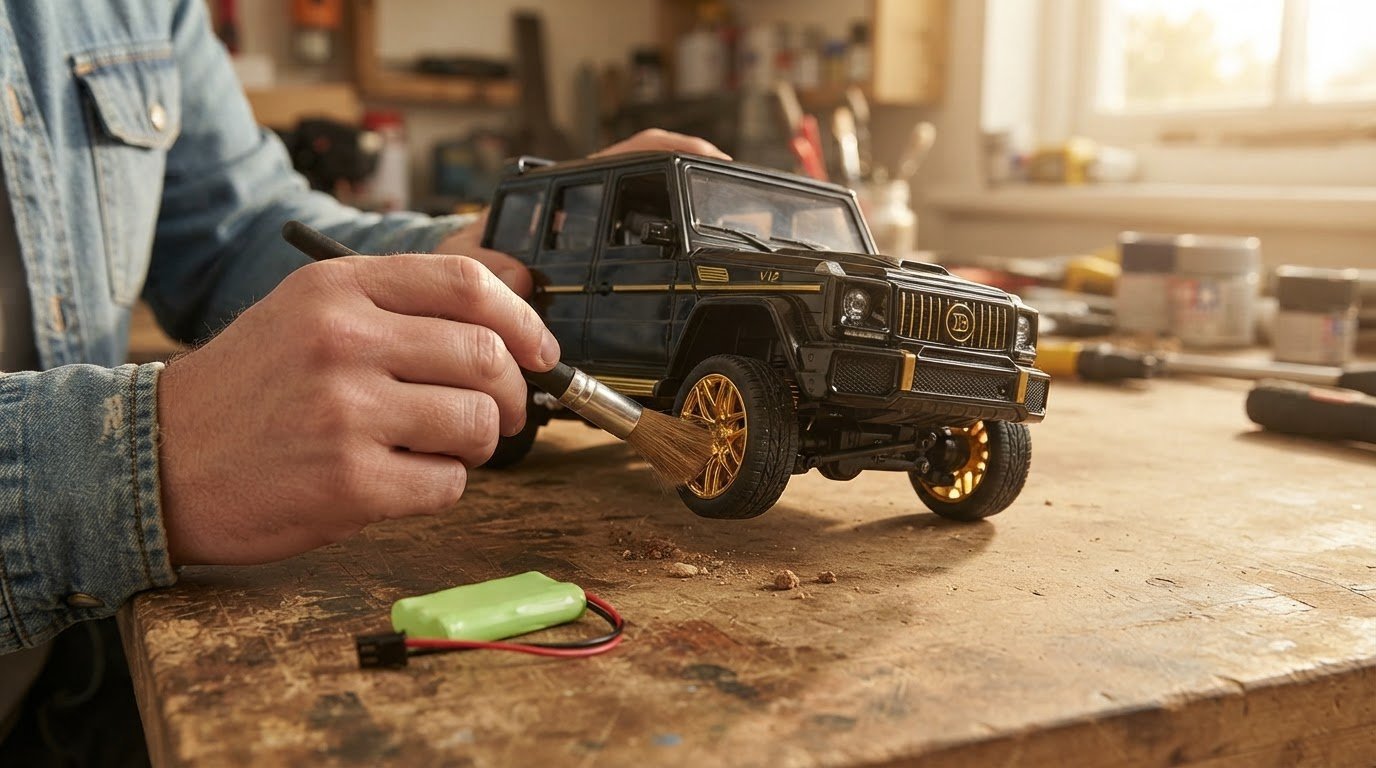
Clean the RC car after each run, especially after driving on damp ground or loose gravel. Switch it off, disconnect the battery and remove the body shell before brushing away surface dirt. A soft brush lifts dust from seams and wheel arches without grinding it into the finish. Use a dry cloth around the receiver, motor and electronic speed controller, keeping moisture away from electrical components.
For the chassis, work from cleaner areas towards the muddiest. Use a small brush to clear packed grit around suspension arms and other moving parts, then wipe accessible surfaces with a lightly damp cloth. Don’t soak the vehicle or spray cleaner into connectors. Loosen dried mud gently rather than scraping hard, which can mark plastic or damage cable insulation. Let every cleaned part dry fully before reconnecting the battery.
Clean the body separately with a soft cloth and mild soap solution, then rinse the cloth and wipe away residue. Avoid abrasive pads and strong solvents, which can dull paint or damage decals. Check the shell’s clips and mounting points when refitting it; replace a cracked clip before the next run. Store the dry vehicle in a clean, sheltered place away from damp and loose dust.
Cleaning is also a good time to notice anything new: trapped debris, scuffs, loose body clips or dirt obstructing a moving part. Remove grit before it works further into the mechanism. For full-size electric vehicles, regenerative braking reduces brake-pad wear, but it doesn’t replace mechanical brake inspections or routine servicing. That’s a separate vehicle-maintenance routine, not a reason to apply car products to an RC model.
Need another vehicle for the collection? Explore remote control cars and trucks and choose a model to enjoy and care for with your established cleaning routine.
Diecast Cartel
Diecast Cartel offers remote control vehicles for enthusiasts who enjoy maintaining and adding to a collection. A regular care routine helps keep your model ready for its next run, while choosing another vehicle can bring a fresh project to the hobby.
Explore options across 1:24 scale diecast models and trucks, diecast trucks and tractors, 1:18 scale model cars and a 1:24 remote control forklift. Whether you’re drawn to collecting detailed models or operating a remote control vehicle, choose something that suits your interests and the space you have to enjoy it.
For questions about the range or help choosing a model, contact Diecast Cartel.
Make your next run part of the journey
Good care can become more than a routine. Keep a simple record of how your car handles, what you enjoy driving and which details you want to improve. Over time, those notes can help guide your next choice, whether you’re adding another RC vehicle or growing a collection of detailed models.
Diecast Cartel offers 1:24 scale diecast models and trucks, diecast trucks and tractors, and 1:18 scale model cars. If you’re considering what to explore next, contact Diecast Cartel for RC advice. Your electric RC car maintenance checklist is a useful starting point for keeping the hobby hands-on and rewarding. Keep learning, keep enjoying each run, and let your collection grow at your own pace.
Frequently Asked Questions
Can I skip brake checks if I use regenerative braking?
No. Regenerative braking doesn’t remove the need to inspect an electric car’s mechanical brakes. It can reduce brake-pad wear, but the braking system still needs attention. For an RC model, check the manufacturer’s instructions to identify its braking setup, then inspect its brakes for visible damage or binding. Don’t assume an electric drivetrain means there are no mechanical braking parts to maintain.
What should be included in a routine electric RC car maintenance checklist?
Include the battery and its connections, tyres, wheels, steering, suspension, wiring, motor, speed controller, drivetrain and body shell. An electric RC car maintenance checklist is most useful when it records what you checked and any changes you noticed. For example, note a new vibration after a run, then look for wheel looseness or debris before the next outing.
How often should you clean and inspect an electric RC car?
Inspect and clean the car after every run to remove dirt and debris. Give it extra attention after driving on wet ground or through mud, as residue can collect around the chassis and moving parts. Before the next session, check for anything missed during the post-run inspection, such as a loose wheel or debris around the drivetrain.
How do you clean an electric RC car after running in mud or wet conditions?
Switch the car off, disconnect its battery and remove the body shell before cleaning. Gently brush away dried mud, then use a cloth to wipe the chassis and body. Avoid soaking the vehicle or directing water at electrical components and connectors. Let the car dry completely before reconnecting the battery or storing it, and check the chassis for mud caught around moving parts.
How do you check and maintain RC car tyres, wheels, and suspension?
Before each run, look for tyre cracks, uneven wear and a secure fit on each wheel. Turn the wheels by hand to notice scraping or looseness, then check accessible fasteners. Press each corner and release it to assess suspension movement, and inspect shocks for oil leaks. If a shock is leaking, follow the car’s instructions for refilling it rather than guessing the oil or procedure.
How should LiPo batteries be charged, stored, and inspected safely?
Use a charger designed for LiPo batteries and unplug the pack once fully charged. Before charging, inspect the battery casing, leads and connectors for visible damage; don’t use a pack that appears damaged. For storage, follow the battery manufacturer’s instructions for the specific pack rather than applying a full-size electric vehicle’s storage guidance. Keep the charger and battery away from loose debris.
