
Diecast Guides
How to Store Diecast Models for Long-Term Care
Nov
A crowded shelf can put a treasured diecast model at greater risk than a well-planned storage box. If you’re deciding how to store diecast models long term, focus on the essentials: choose a dry, stable place away from direct sunlight, and keep loose models from touching one another.
It’s natural to want your favourites on display, where you can enjoy their paintwork and details. Thoughtful storage protects the rest of your collection from dust, knocks and changing conditions, while keeping models easy to find when you want to bring them out again.
This guide explains how to protect loose models, choose a suitable storage location and organise your collection by scale, theme or era. You’ll also find practical tips for supporting boxes, labelling stored models and rotating pieces onto display, so caring for your collection feels like part of the hobby rather than a chore.
Key Takeaways
- Prepare models carefully before storage to help protect delicate paintwork, tyres and decals.
- Give loose cars individual protection and choose containers that won’t press against their finishes.
- Choose a dry, steady storage spot away from direct sunlight, damp and chemical fumes.
- Organise your collection by scale, theme or era so stored models are easier to find and rotate onto display.
1. How should I store diecast cars long-term?
Before putting a diecast car away, remove loose dust with a clean, soft brush or microfibre cloth. Work carefully around mirrors, aerials, wheels and other small details, which can bend or catch during cleaning. Where possible, hold the model by its base instead of gripping painted panels or decals. Gentle preparation is a useful first step when storing diecast models long term.
For marks on sensitive surfaces, use a lightly damp cloth with distilled water. Don’t pour water onto the model or let moisture collect around seams, wheel axles or plastic details. Wipe with a clean, dry cloth afterwards, then leave the car until it is completely dry before storing it. Pay particular attention to small openings where moisture could go unnoticed.
Keep cleaning gentle. Wiping a dusty model repeatedly can leave fine scratches in glossy paintwork, so lift loose particles with a soft brush first. Don’t disassemble fragile parts just to reach dust, and never force a stiff door, bonnet or other moving feature: pressure can cause breakage or wear. A light touch helps protect the details collectors enjoy inspecting up close.
Inspect cars when you retrieve or rotate them, and again before putting them away. Look for fresh dust, dampness, loose parts or marks from packaging. These checks give you a chance to spot a problem before it affects the finish.
Choose a dark storage spot, as sunlight and other strong light can fade paint and tampo printing or yellow white plastic. Keep models away from chemical vapours, including fresh paint, cigarette smoke, aerosol sprays and strong cleaning products. These may affect delicate finishes even when the metal body looks sturdy.
Display a small rotating selection of favourites and store the rest clean and dry. This limits unnecessary handling while still letting you enjoy the collection. Before sealing a box, remove shipping straps, tape, rubber bands and stickers that could press against paint and leave marks over time. A little care now helps keep each model ready for its next display.
2. Protecting loose models with individual containers
Loose cars need to be kept apart: contact between models can scuff paint, snap mirrors or damage wheels. A slotted tray gives each car its own space, saves room and makes it easier to rotate pieces onto display. Leave clearance for projecting details instead of forcing a model into a narrow slot.
For longer storage, choose acid-free boxes or containers made from polypropylene or polyethylene. Avoid cheap soft PVC, which can release vapours and haze model finishes over time. Foam not designed for collectibles can also break down, stick to paint or leave residue, so don’t use it as a tight-fitting liner.
Bubble wrap is useful for a move or temporary transport, but avoid wrapping a car tightly in it for years. Pressure against paint and small details can cause damage. For a short move, wrap each piece separately and use a sturdy box that stops models knocking together.
Dust-resistant, closed display cases are another option for models you want to see while reducing exposure to dust, dirt and accidental bumps. Keep cases away from direct sunlight, as UV and strong light can fade paint and tampo printing or yellow white plastic. A shaded position helps, while UV-filtering window film or blinds can reduce exposure in a bright room.
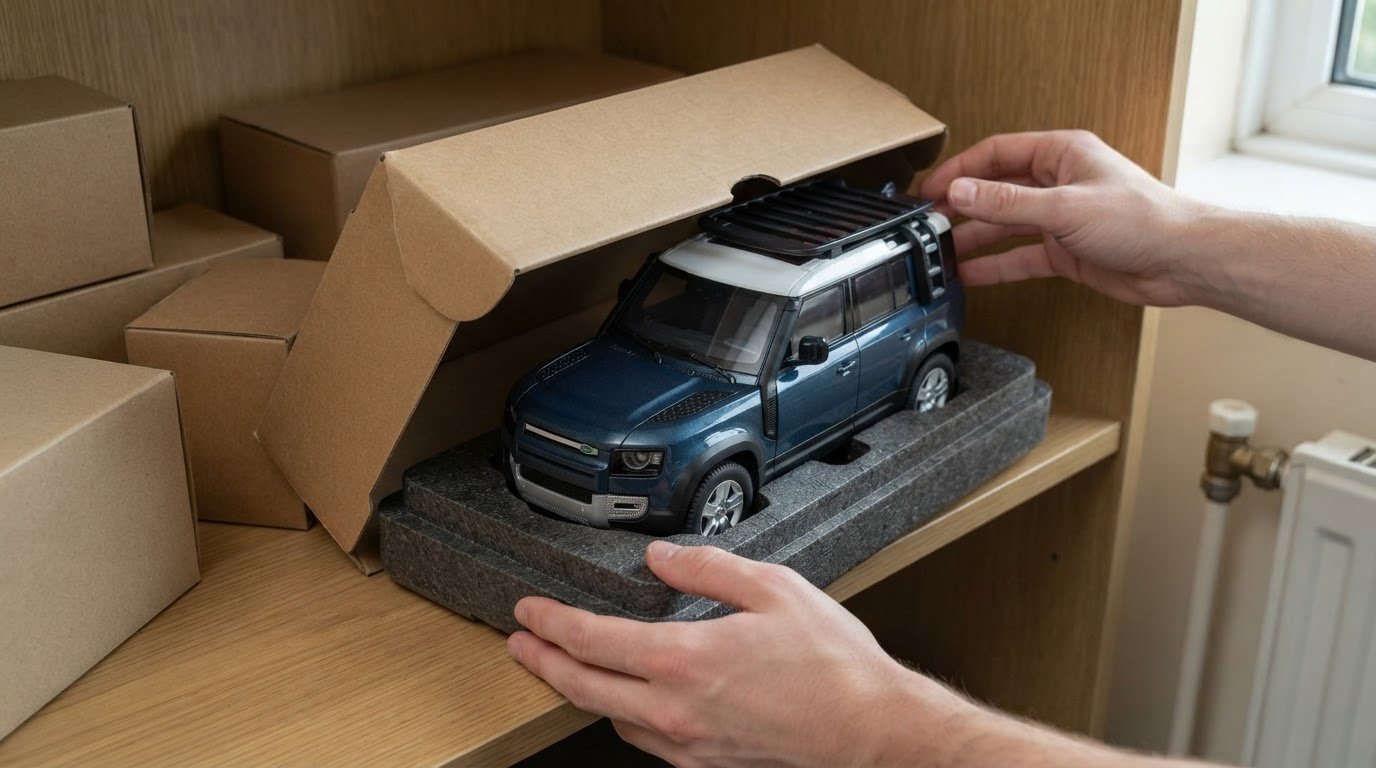
For boxed pieces, use a lidded storage bin and support each model’s packaging. Cardboard can trap moisture and attract pests, so don’t rely on loose cardboard boxes alone. Label the outside clearly with details such as the car’s make, theme or scale. You’ll be able to find a particular model without opening every container or disturbing the rest of your collection.
Choose protection that fits the model, not just the available space. A delicate mirror or wing may need more clearance than the body suggests. Separating each car, blocking light and keeping dust out provide practical protection without hiding every favourite from view.

3. Choosing a dry, temperature-stable storage location
A room inside the home is usually a better choice than an attic, garage, shed or unfinished basement. These spaces can expose a collection to temperature swings, moisture, dust and UV light. Keep models away from windowsills, radiators and other places where sunlight or changing conditions reach them directly.
Aim for a dry, steady environment. For long-term storage, keep the space below approximately 24 °C and relative humidity at approximately 50%. A dehumidifier can help in a room that feels damp, but avoid making the space extremely dry, as older plastic parts can become more brittle over time.
Diecast models can develop corrosion or paint damage in storage. High humidity, temperature fluctuations and chemical exposure may contribute to oxidation or white corrosion on NZG zinc die-cast models. Keep models dry, in stable conditions and away from chemical vapours.
Light matters, too. Direct sunlight and UV light can fade paint and decals or yellow white plastic. If you display models in a bright room, use blinds or shades to limit exposure. Choose LED rather than halogen lighting for display areas, and position lights so they don’t shine directly onto the models.
For boxed models, keep each box flat and properly supported instead of standing it on an edge or letting it sag. Carded cars need a rigid, level surface to keep the card straight and prevent the blister from being crushed. Don’t stack heavy cartons on top, as pressure can bend packaging or damage plastic blisters.
Choose storage containers that suit both the room and the models. Lidded archival-quality bins can keep boxed pieces organised, while silica-gel packs can help manage moisture around them. Keep containers off floors where leaks could reach them, and away from fresh paint, aerosol sprays and strong cleaning products. A quick visual check during a collection rotation can reveal dampness or shifting boxes early.
4. Arranging models by scale, theme or era
Start by grouping models by scale. Keeping 1:18 and 1:43 cars on separate shelves helps each scale read clearly, rather than making both appear smaller beside one another. A 1:12 model also needs a different storage setup from a compact 1:43 collection, so give larger pieces their own space instead of squeezing them into a smaller-scale arrangement.
Within each scale, choose an organisation system that suits the stories behind your collection. Group models by marque, vehicle type, colour or era, then use the same categories on box or shelf labels. For example, bring racing cars from different decades together on a motorsport shelf, with road cars grouped separately by manufacturer.
Wall grids can organise models by brand or category, while floating shelves make it easy to arrange cars by theme, colour or scale. Keep each group on a stable surface with enough room to place or lift models without brushing neighbouring pieces. A consistent layout also makes gaps easier to spot as your collection grows.
For stored models, use matching labels on containers and a simple catalogue that records each car’s scale, theme and location. This helps you find a particular model without opening multiple boxes or disturbing others. Note its condition when putting it away and check the record when rotating it onto display. Knowing what you last observed makes changes easier to notice.
Choose a layout you can maintain. If humidity or light varies around the room, keep the most delicate pieces in the steadiest area rather than arranging every model solely for appearance. Store less frequently displayed cars nearby by category, then rotate favourites into the display group. This gives each model a place while keeping the arrangement practical to update.
Diecast Cartel: 1:24 scale Diecast models and trucks
Once your storage plan is in place, choosing a model that fits your collection is the natural next step. Diecast Cartel offers 1:24 scale diecast models and trucks, alongside 1:18 scale model cars and diecast trucks and tractors.
These display models can add a new subject or scale to a shelf you’ve organised by theme or era. If you’re interested in a model with remote control, the range also includes a 1:24 remote control forklift. It’s a different kind of addition from a static display piece, so consider how you want to enjoy and store it.
Whether you’re expanding a favourite category or choosing a new centrepiece, match the model to your available display space and storage setup. To discuss a suitable addition for your collection, contact Diecast Cartel.
Make your collection care part of the hobby
Your collection reflects the vehicles, memories and details you’ve chosen to keep. Let its care evolve alongside it. When new pieces arrive or your interests shift, adjust your display and storage plan to suit the way you enjoy collecting.
Choose one small change to make today, such as setting aside space for a future theme or noting which models you’d like to display next. This keeps your collection personal instead of turning its upkeep into a rigid routine. A little intention can make each model easier to enjoy, whether it’s on display or stored for another time.
Finding your own approach to how to store diecast models long term is part of building a collection you’ll enjoy returning to. If you’re ready to add a new model to that journey, contact Diecast Cartel today. Keep collecting what you love, and give every favourite a place in the story.
Frequently Asked Questions
How should I store diecast cars long-term?
Keep each car clean and dry, protect it from strong light and secure it against knocks. Before putting a model away, make a simple inventory entry with its make, scale, packaging and storage location. A photo can help you recognise a particular variant without handling it. Store models you enjoy seeing separately from those kept mainly in their original packaging.
Does storing diecast in the garage damage it?
A garage can expose diecast cars to heat changes, damp, dust and fumes, making it a poor choice for long-term storage. Paint, decals, tyres and packaging may be affected even if the metal body appears unchanged. Keep models away from fuel, solvents and household chemicals, and choose an indoor cupboard or room with steadier conditions instead.
What containers are safe for diecast?
Acid-free boxes and lidded polypropylene or polyethylene bins are suitable choices. Avoid soft PVC containers, which may release vapours, and don’t place unidentified foam against painted surfaces. For carded models, use a flat, rigid container that supports the card without pressing on its blister. Keep loose cars apart so delicate parts cannot catch on another model.
Why is caring for model vehicles important?
Care helps preserve the details that make a model rewarding to collect, from its paint and decals to small plastic fittings. It also makes a collection easier to enjoy and manage: clear labels or an organised display help you find a favourite without rummaging through other pieces. Good habits matter whether a model is a keepsake or part of a growing collection.
What temperature and humidity are best for storing diecast cars?
Aim for a stable storage space below approximately 24 °C, with relative humidity around 50%. Avoid rooms that swing between hot and cold, or stay damp. If a collection room feels moist, a dehumidifier can help manage the environment. Very dry conditions can also affect older plastic parts, so focus on avoiding extremes rather than creating an unusually dry space.
Should diecast models be stored in their original boxes or display cases?
Use original packaging for models you won’t display regularly, especially carded cars whose blisters need support. A display case suits models you want to see while limiting dust and accidental knocks. Choose one that fits the model’s scale and dimensions, as a case made for one scale may not fit another neatly. Keep both packaging and cases away from direct sunlight.
