
Diecast Guides
Creative Ways to Display Model Cars: Ideas for a Collection That Tells a Story

Oct
What if your model-car display could tell a story, not just keep the collection in one place? Creative ways to display model cars can turn a crowded shelf into a personal showcase. Limited space and concerns about dust, sunlight and handling can make it tricky to arrange your favourites, but a few practical choices can help.
You don’t need to show every model at once. A clear theme and breathing room can make a collection feel considered, even on a small shelf. Choose an arrangement that suits your space, the sizes of your models and the stories you want to share.
This guide covers ways to group cars by era, colour or motoring theme, make better use of shelves and compact displays, and use lighting to bring details into focus. You’ll also find practical ways to care for models while keeping them easy to enjoy, whether you collect 1:18 or 1:24 scale diecast cars, or a mix of both. Start with a few considered choices, then adjust the layout as your collection evolves.
Key Takeaways
- Choose a story or theme before arranging your models so the display has a clear point of view.
- Try creative ways to display model cars, from a colour-led shelf to a miniature scene that suits your collection.
- Compare shelving, cabinets and wall displays by how much space they use, how exposed models are to dust and how easily you can rearrange them.
- Plan around scale and viewing angles so each model is visible without making the display feel crowded.
- Begin with a focal model and pieces you already own, then refine the arrangement as your collection grows.
Creative ways to display model cars: start with a story
A collection can grow one exciting find at a time until a shelf feels more like storage than a display. You may not need more space or more models. Instead, make each car easy to see and give the group a focus. A clear connection between the vehicles helps viewers understand what makes the collection yours.
That story might be a shared era, a favourite vehicle type or another detail you enjoy. A little background on the model car hobby can also spark ideas for a display with a sense of history. Try grouping the same cars in two ways: first in an unplanned row, then by one shared feature. The second arrangement gives the eye a reason to pause and explore.
Choose a model-car display theme that feels personal
Start with a connection you already enjoy: a particular era, body style, colour palette, manufacturer or motoring memory. Even a small selection can look intentional when its models share a clear thread. For example, a few cars in similar colours can create a visual rhythm without taking up much space.
You can combine themes if there’s a detail that ties them together. Cars from different eras might sit well together if they share a body style or colour. If the link isn’t immediately clear, give each theme its own section rather than crowding everything into one display.
Decide what viewers should notice first
Choose one focal model, perhaps a favourite car or a piece with a distinctive shape or paintwork. Place it where it naturally catches the eye, then arrange supporting cars around it. Leave enough space for the focal model to stand out, and make sure nearby vehicles add context rather than competing for attention.
Before settling on the layout, take a photograph from the position where you usually view the display. A phone photo can make a crowded cluster or awkward gap easier to spot. Move a car or two, take another look, and keep refining until the arrangement feels balanced and tells the story you intended.
Six creative model-car display ideas, from themed shelves to miniature scenes
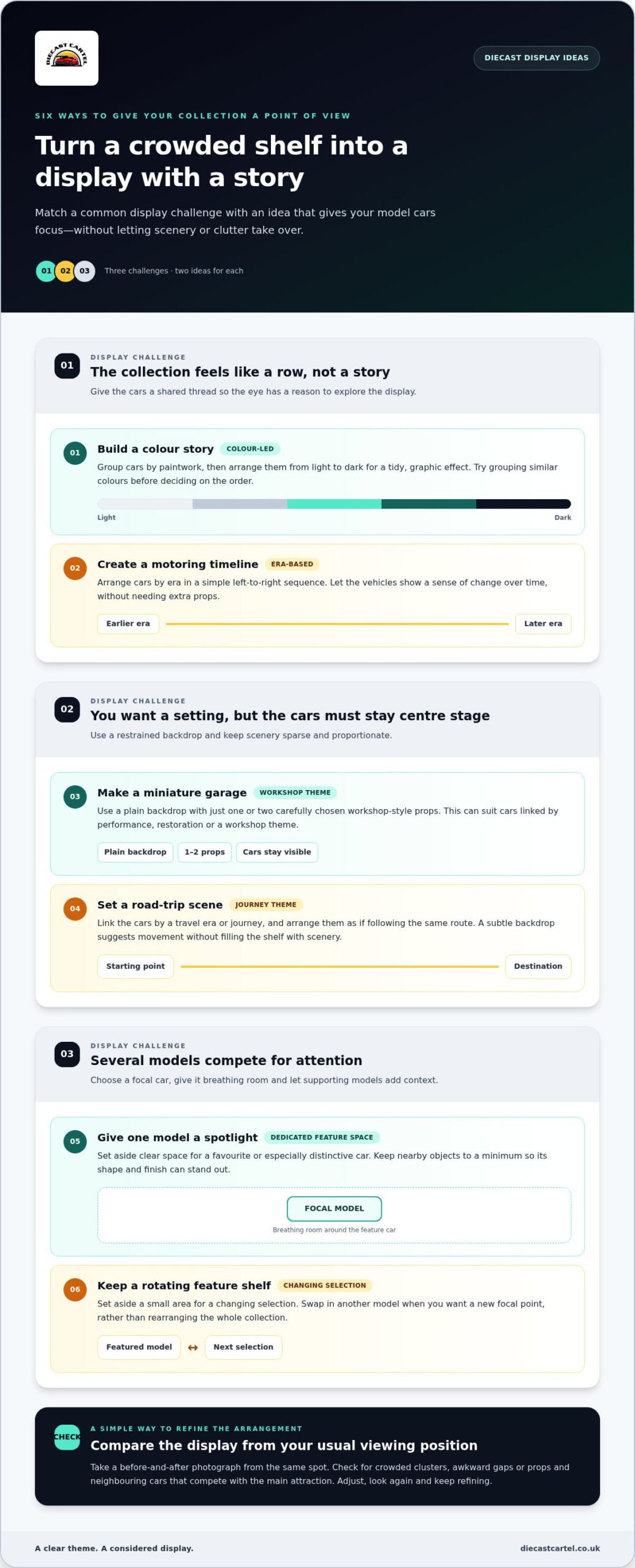
A strong display doesn’t need elaborate scenery. The best creative ways to display model cars keep the vehicles as the stars and give the eye a clear route through the collection. Try one of these approaches with models you already own, then adjust it to suit your space.
Build a themed shelf or a motoring timeline
A row grouped by colour or vehicle type is easy to read, while an era-based line-up can suggest a motoring timeline without extra props. A diorama is a miniature scene arranged around a subject, using scenery to suggest a setting or moment. Keep any added details secondary to the cars.
- Colour story: Arrange paintwork from light to dark for a tidy, graphic effect. This suits a varied collection and is easy to test by grouping similar colours together before choosing the order.
- Motoring timeline: Arrange cars by era to show a sense of change over time. Begin with a simple left-to-right sequence and let the vehicles carry the story.
Create a miniature garage or road-trip scene
A restrained backdrop can suggest a setting without stealing attention. Keep scenery sparse and proportionate, and check that the cars remain visible from your usual viewing angle.
- Garage scene: A plain backdrop and a few carefully chosen workshop-style details can make a group of cars feel at home in a miniature garage. Try this with vehicles linked by a performance, restoration or workshop theme, using just one or two props.
- Road-trip scene: A simple route or destination theme brings a sense of movement to the display. It can suit cars linked by a travel era or journey. Arrange them as if following the same route, and use a subtle backdrop rather than filling the shelf with scenery.
Give a standout model its own spotlight
Not every car needs to share a shelf. A dedicated feature space gives a favourite or especially distinctive model room to command attention. A rotating feature shelf also lets you bring different cars forward over time.
- Single-model spotlight: Clear space around one model draws attention to its shape and finish. Choose a car you’d like to appreciate more closely and keep nearby objects to a minimum.
- Rotating feature shelf: Set aside a small area for a changing selection. Swap in a different model when you want a new focal point, rather than rearranging the whole collection.
For any of these ideas, take a before-and-after photograph from the same viewing position. It’s a quick way to judge balance and see whether props or neighbouring models are competing with the main attraction. If a new theme inspires your next addition, browse 1:18 and 1:24 diecast models that could complement the story you’re building.
Choose a model-car display format that suits your space and collection
The right display format depends on your room, how many models you want to show and how you like to enjoy them. Open shelves make a collection easy to scan, while cabinets put a barrier between models and everyday dust. Wall-mounted displays use vertical space, and a dedicated feature area gives a smaller selection room to shine. Compare the trade-offs before choosing a setup.
| Format | Visibility | Dust exposure | Space used | Ease of rearranging |
|---|---|---|---|---|
| Open shelving | Clear, direct view | Higher | Uses wall or floor space, depending on the unit | Usually straightforward |
| Enclosed cabinet | Models remain visible behind doors | Lower than open shelving | Uses floor or wall space | May take more effort |
| Wall-mounted display | Models are easy to see at the chosen height | Generally exposed | Uses wall space | Can be less convenient to change |
| Dedicated feature area | Draws attention to a select group | Depends on the setup | Uses a small surface or section of a room | Easy to refresh if kept simple |
Use shelves and cabinets to make a collection easier to browse
An open shelf gives models an uninterrupted view and makes it simple to change the line-up. An enclosed cabinet creates a more contained presentation and can help limit dust settling on the cars, although accessing and rearranging them may take longer. With either option, group related vehicles and leave breathing room around a focal model. If the room allows, place frequently viewed cars at a comfortable eye level.
Scale matters, too. 1:18 models occupy more display room than 1:24 models, so account for their footprint before planning a shelf or cabinet. If larger American cars are part of your collection, the 1:18 scale classic American cars guide offers relevant collecting context as you plan your display.
Make wall space and small surfaces work harder
A wall-mounted display may suit a room where floor space is limited, while a small surface can become a rotating feature area for a few favourite models. Rather than squeezing in every car, select a changing group and store the rest safely elsewhere. This keeps the display considered and gives each featured model a chance to be noticed.
Measure the available area before placing models, and check the furniture specifications for suitable weight capacity and dimensions. This is especially useful when combining different scales or planning around larger models. Choose a format that works for your collection now and leaves room for it to change.
Arrange model cars with scale, lighting and preservation in mind
A display can look carefully planned and still be awkward to view or difficult to dust. Work through the setup in order: measure the display area, group the models, test their spacing, check the view from where you’ll usually stand or sit, then make sure the final arrangement is stable. This helps you spot tight gaps and blocked views before every car is in place.
Scale affects the layout. A 1:18 model takes up more space than a 1:24 model, so mixing both on one shelf may call for extra room around the larger cars. For another example of planning around scale and vehicle type, browse this 1:24 scale diecast truck collector’s guide.
Arrange cars by scale, height and viewing angle
Grouping similarly sized models can give a shelf a more orderly rhythm, particularly if your collection includes different scales or vehicle types. If you prefer to mix them, try a staggered arrangement: position taller or larger models so they won’t hide cars behind them from your main viewing angle. Leave enough room to lift each model out and return it without bumping its neighbours. Once everything is in place, check that the display is stable and no model sits precariously near an edge.
Protect the display from dust, sunlight and unnecessary handling
Dust can settle on exposed models, so gentle, regular cleaning helps keep the display presentable. Follow the care guidance for each model, and handle it carefully when removing or repositioning it. Choose a spot away from likely knocks, such as a busy route through the room, and avoid placing the collection in direct sunlight. UV exposure can contribute to fading over time, though the effect can vary with the model and its surroundings.
Plan lighting that highlights rather than overwhelms
Balanced lighting can bring out body lines and paintwork without making the display brighter than the rest of the room. Aim for an even view across the models rather than a strong beam that leaves some cars in shadow. Check the arrangement in daylight and under your usual evening lighting, as reflections or dark patches may change how details appear. Treat lighting as a finishing touch, not a substitute for clear spacing and a good viewing angle.
Ready to build a display around a new favourite? Explore 1:18 and 1:24 scale diecast models and consider how each could fit your collection’s theme and available space.
Bring your creative model-car display together one model at a time
You don’t need to solve the whole display at once. Start with the cars you already own, find a story that connects them and let the arrangement develop as you go. Creative ways to display model cars work best when they reflect what you enjoy collecting, rather than relying on extra props or new furniture to make an impression.
Use a simple four-step display-planning checklist
- Choose the story. Pick a theme or visual detail that links the models, such as their era, vehicle type or colour.
- Select a focal model. Choose the car you’d like viewers to notice first, then check that your display area can accommodate it and its supporting models.
- Arrange and assess. Group the cars, view the arrangement from your usual position and adjust the spacing so one model doesn’t hide another.
- Review and record. Check that the lighting feels balanced and the models are positioned with care. Photograph the finished display to judge its overall balance and remember a layout you like.
Keep the first attempt simple. A thoughtful arrangement of existing models can show you what, if anything, the display needs next. For ideas on choosing your next collecting direction, explore this guide to starting a die-cast collection.
Let the display evolve with your collection
A display doesn’t have to stay fixed. As your favourites change or your collection grows, revisit the theme, move the focal car or rotate a few featured models. Keep the broader collection organised and give the changing selection enough space to be enjoyed. Small adjustments can refresh the story without requiring a complete rearrangement.
There’s no single right way to display a collection. Some enthusiasts enjoy a neat line-up, while others prefer a scene or a changing feature shelf. What matters is that the models are easy to appreciate and the arrangement feels like yours. For more inspiration as your collection takes shape, explore Diecast Cartel’s model cars and imagine the stories your next favourite might add.
Make your next display a story worth sharing
A memorable collection display doesn’t need to fill a room. Choose a personal theme, give one model a clear focal place and arrange the others so each remains easy to appreciate. Creative ways to display model cars can be simple: thoughtful spacing, suitable lighting and sensible care can make a shelf feel polished while keeping the models enjoyable to view.
Start with the cars you already own, then refine the layout as your collection and interests change. A rotating feature or a fresh grouping can bring new life to familiar favourites without making the display feel fixed.
Diecast Cartel is a UK-based online retailer specialising in 1:18 and 1:24 scale diecast models, including model cars, trucks and tractors. Explore the model car range and find a new favourite to feature in your display.
Frequently Asked Questions
What is the best way to display model cars at home?
The best way is to choose a display that suits your space, collection and viewing habits. Start with a theme, such as a shared era or vehicle type, then select one model to act as the focal point. Arrange the others so they’re easy to see, with enough room to handle them carefully. Creative ways to display model cars can be simple: a thoughtfully organised shelf can tell a story without elaborate scenery.
How can I display model cars without a display cabinet?
You can display model cars on a stable open shelf, bookcase or suitable wall-mounted surface. Group related vehicles and leave space around distinctive models so their shapes and details remain visible. Open displays are more exposed to dust, so plan for gentle, regular cleaning and avoid placing models where they’re likely to be knocked. Check that the furniture is suitable for the models’ weight and dimensions before arranging them.
How do you make a model-car display look less cluttered?
Show fewer models at once and give the remaining cars a clear theme. Group vehicles by a shared detail, such as colour, era or type, rather than lining up every model together. Leave gaps around focal pieces and check the view from where you usually look at the display. You can rotate featured cars and keep the rest of your collection organised elsewhere.
Can you mix different scales in a model-car display?
Yes, different scales can share a display if you plan for their varying sizes. For example, 1:18 models take up more space than 1:24 models, so allow for their larger footprint and avoid placing them where they block smaller cars. Grouping similar scales can create a tidy look, while a staggered arrangement can work if every model remains visible. Test the layout before settling on a final position.
How do you display model cars in a small space?
In a small space, show a selected group rather than trying to fit your whole collection into one area. Use available wall space where appropriate, or dedicate a compact shelf or surface to a rotating selection of favourite models. A consistent theme helps a small display feel deliberate, while clear spacing keeps it from looking crowded. As your collection changes, swap models in and out instead of adding more to an already full shelf.
How do you protect model cars while displaying them?
Position displayed models away from direct sunlight, busy walkways and places where they could be knocked. UV exposure can contribute to fading over time, although effects vary, so choose a spot that isn’t regularly in direct sun. Dust models gently and avoid unnecessary handling; follow any care guidance supplied with each model. An enclosed display can help limit dust, but it’s still sensible to check and clean models periodically.
What can I use to make a model-car display look like a scene?
A simple backdrop and a few carefully chosen props can suggest a garage, road or other setting. Keep scenery proportionate to the cars and use only details that support the story, such as a plain background or a small route marker. Leave the models as the main attraction, with enough open space to see their details. Try arranging the cars first, then add scenery sparingly and remove anything that competes for attention.
