
Diecast Guides
Ultimate All-Terrain Remote Control Car Guide 2026

Sep
A high top speed is completely useless if your vehicle gets defeated by a two-inch patch of damp clover. We’ve all felt that sting of disappointment when a supposedly rugged all-terrain remote control car turns out to be little more than a glorified living-room toy that stutters on gravel and dies on grass. You want a machine that mirrors your own ambition; a vehicle that tackles the British elements with grit and leaves you feeling like a proper curator of high-performance engineering rather than someone just playing with a plastic gadget.
It’s understandable to feel overwhelmed by technical jargon regarding brushless motors or 1:16 scales when all you really want is a reliable weekend of fun. This guide promises to clear the air, showing you exactly how to choose a vehicle that masters mud and gravel whilst providing years of genuine hobbyist enjoyment. We’ll explore the vital synergy between ground clearance and tyre tread, plus we’ll share the secrets to maintaining your car for the long haul. By the end, you’ll have the confidence to select a model that isn’t just a purchase, but a prized addition to your growing collection.
Key Takeaways
- Master the technical essentials of suspension and tyre tread to ensure your vehicle handles mud and gravel with ease.
- Discover why the 1:16 scale offers the ideal balance of rugged outdoor power and portability for your next woodland adventure.
- Learn simple post-run cleaning and lubrication techniques to protect your all-terrain remote control car from mechanical wear whilst operating amongst grit and dust.
- Gain the confidence to choose a vehicle that provides years of hobbyist enjoyment by looking past confusing jargon and focusing on performance specs.
- Explore how specialist 1:22 scale construction vehicles can add a new layer of realism and technical challenge to your off-road collection.
Why Every Enthusiast Needs an All-Terrain Remote Control Car
Owning an all-terrain remote control car isn’t just about raw speed; it’s about the sheer thrill of conquering the unknown. For many of us, the journey began with a simple plastic model that struggled to cross a gravel driveway. As we look back at the history of radio-controlled cars, we see a clear evolution from fragile toys to the rugged, high-performance machines we celebrate today. These vehicles represent a shift from mere playthings to serious engineering projects that demand respect and skill.
The year 2026 stands as a landmark for the hobby. Recent leaps in motor efficiency and battery density mean that even compact models now pack the punch once reserved for massive, expensive rigs. High-capacity rechargeable batteries now provide the sustained power needed for long woodland treks. Brushless motor technology has become more accessible, offering the high-torque performance required to churn through mud and thick grass without overheating. It’s a fantastic time to dive in.
Breaking Free from the Pavement
British gardens are often a challenge for standard RC vehicles. A typical lawn or a patch of damp gravel can bring a basic model to a grinding halt within seconds. An all-terrain remote control car changes the game entirely by offering the ground clearance and grip needed for year-round exploration. Whether it’s a frosty January morning or a muddy autumn afternoon, these vehicles are built to endure the unique challenges of the UK landscape. This versatility means your hobby isn’t restricted to the summer months or the local car park. You gain the freedom to explore woodland paths and uneven trails whenever the mood strikes.
The Joy of Hobbyist Off-Roading
There is a profound sense of pride that comes with mastering a difficult trail. It’s about more than just pulling a trigger; it’s about understanding how your vehicle reacts to different surfaces. You’ll learn to make micro-adjustments to keep the chassis level and the tyres biting into the soil. This connection builds a deep appreciation for the mechanical engineering under the shell. Amongst the UK community, this shared passion fosters a welcoming environment where collectors exchange tips on maintenance and performance. Starting a collection is an invitation to join a group of peers who value durability and technical skill. It’s a rewarding, lifelong pursuit.
The Anatomy of a High-Performance All-Terrain RC Vehicle
It isn’t just about what’s under the shell; it’s about how every component talks to the next. Understanding the fundamental mechanics of how RC cars work is the first step toward appreciating the technical brilliance of a modern all-terrain remote control car. Whilst many beginners focus solely on top speed, true enthusiasts know that the magic happens in the suspension travel and the grip of the rubber. Think of the chassis as the backbone that protects your delicate electronics from the harsh realities of the British outdoors.
Suspension and Ground Clearance Explained
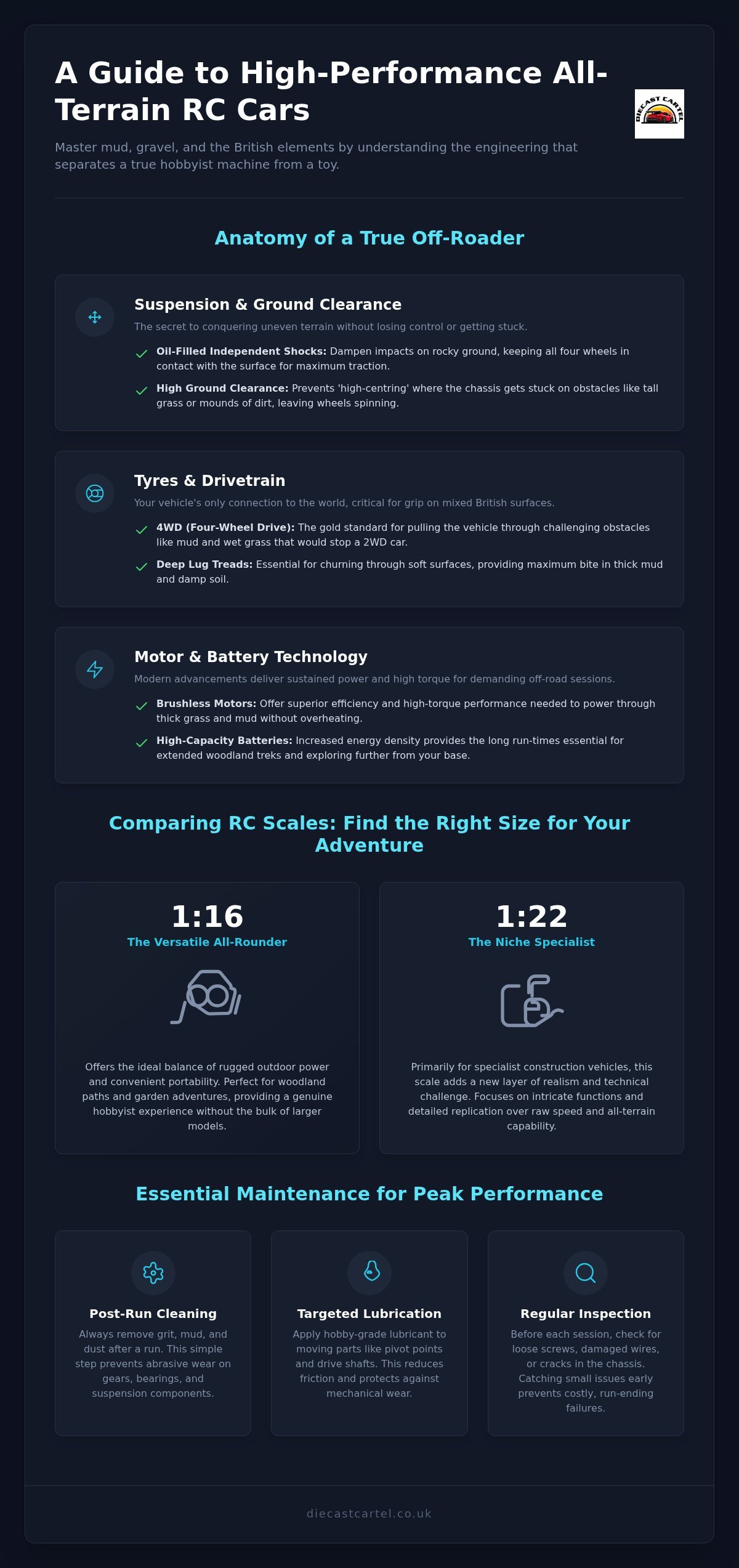
Rocky ground is unforgiving. If your vehicle has a rigid setup, it’ll bounce off every pebble and lose traction instantly. This is why oil-filled independent shocks are vital. They don’t just spring back; they dampen the impact, keeping all four wheels in contact with the ground whilst jumping or navigating ruts. Independent suspension allows each wheel to move vertically without affecting the others, which is a massive advantage on uneven woodland paths.
Ground clearance is equally critical. It’s the secret to avoiding high-centring, a frustrating situation where the belly of the car gets stuck on tall grass or a mound of dirt, leaving the wheels spinning helplessly in the air. For garden use, you’ll want a chassis that sits high enough to clear damp clover but remains low enough to maintain a stable centre of gravity. Finding this balance is what separates a hobby-grade machine from a basic toy.
Tyre Treads and Grip for Mixed Surfaces
Tyres are your only point of contact with the world. In the UK, we often deal with mixed surfaces in a single run, starting on a gravel path and ending in a muddy patch of grass. A 4WD (Four-Wheel Drive) system is the gold standard here, as it pulls the vehicle through obstacles that would leave a 2WD car stranded. The softness of the rubber compound also matters; softer rubber provides better grip on cold, hard gravel, whilst firmer compounds last longer on abrasive surfaces.
- Deep Lugs: Essential for churning through mud and thick grass by biting into the soft surface.
- Paddle Tyres: Specifically designed for sand or very loose soil, though less versatile for general garden use.
- Block Patterns: The best all-rounder for gravel, dirt, and short grass.
Protecting these mechanical parts is just as important as the performance itself. Reinforced chassis materials help shield the motor and receiver from debris. When it comes to the British weather, remember that water-resistant isn’t the same as waterproof. Most hobby-grade cars can handle a damp lawn, but you should avoid submerging them in deep puddles. If you’re looking to start your journey with a vehicle that gets these basics right, you can browse a curated range of 1:16 and 1:24 remote control cars to see these technical features in action.
Comparing RC Scales: Finding the Right Size for Your Adventure
Choosing the right scale is a pivotal moment for any collector. These ratios, like 1:16 or 1:24, represent the size of the model relative to its full-sized counterpart. A 1:16 all-terrain remote control car is significantly more substantial than a 1:24 version, which fundamentally changes how it interacts with the environment. Whilst some might argue that bigger is always better, seasoned enthusiasts know that the right size depends entirely on where you plan to drive. Are you looking for a backyard basher or a detailed desk-side companion?
1:16 Vs 1:24 Scale: Which is Better for Off-Roading?
The 1:16 scale is often considered the Goldilocks zone for UK gardens. These vehicles are large enough to handle typical garden grass and uneven gravel without getting stuck, yet they remain portable enough to toss into a backpack for a trip to the local woods. They offer a commanding presence on the trail that smaller models sometimes lack. In contrast, the 1:24 scale is a masterpiece of compact engineering. These models are perfect for those with limited outdoor space or for rainy days when you want to set up a technical obstacle course in the living room. They offer incredible detail, making them a favourite amongst those who value the aesthetic side of the hobby as much as the performance. Selecting the right scale is about matching the machine to your personal playground.
Power and Efficiency: Brushed vs Brushless Motors
Your motor choice is the heart of your experience. Brushed motors are the traditional entry point; they are reliable, cost-effective, and provide a smooth power delivery that helps beginners learn the ropes. However, if you’re looking for maximum torque and high-speed runs, brushless motors are the way forward for any high-performance all-terrain remote control car. These motors are more efficient and require less maintenance because they have fewer moving parts that wear down over time.
Organisations like ROAR Racing set the standards for these power systems in competitive environments, highlighting just how much technical depth this hobby offers. Your choice here also dictates your battery requirements. High-performance brushless systems often require high-capacity rechargeable batteries to maintain peak speeds, which can reach up to 35 km/h in mid-scale 4WD models. This synergy between the motor and the power source is what allows a hobbyist vehicle to outperform any standard toy found on the high street.
Maintaining Your RC Car for Peak All-Terrain Performance
An all-terrain remote control car is built for punishment, but it isn’t indestructible. Think of your vehicle as a precision-engineered machine that requires regular attention to stay in top form. Neglecting basic care leads to seized bearings, sluggish motors, and shortened battery life. By following a simple routine, you can ensure your car remains a source of pride for years to come. Maintenance isn’t just a chore; it’s a way to truly understand the mechanical nuances of your machine.
Cleaning and Dusting After a Muddy Run
Don’t wait for the mud to dry completely before you start cleaning. Maintaining an all-terrain remote control car isn’t just about aesthetics; it’s about mechanical survival. Use a canister of compressed air to blast grit away from the motor vents and sensitive electronics. For the more stubborn clumps of dirt lodged in the suspension, a soft-bristled paintbrush works wonders. It’s vital that you never use a high-pressure garden hose. The force can bypass seals and trap moisture inside the drivetrain, leading to internal rust that’s incredibly difficult to fix. Whilst you’re cleaning, take a moment to check for loose screws. The vibrations from rough terrain can slowly back out fasteners, so a quick tighten now prevents a lost wheel later.
Maximising Battery Life and Charging Safety
Your battery is the lifeblood of your hobby. Investing in high-quality rechargeable batteries for RC toys provides the steady voltage needed for those demanding climbs. To protect the chemistry of your cells, you must allow the battery to cool down to room temperature after a run before you begin the recharging process. This simple step prevents overheating and significantly extends the overall lifespan of the pack. If you want to dive deeper into the technical side of power management, we’ve put together a comprehensive look at how to charge RC car batteries safely.
Lubrication and Storage
Dust and grit act like sandpaper on moving parts. A tiny amount of dry lubricant on the exposed gears and axles keeps the drivetrain moving amongst the debris without attracting more dirt. When the British winter arrives and you decide to store your model, keep it in a dry, temperature-controlled room. Avoid damp garages where moisture can settle on the circuit boards and cause corrosion over time. If you need to refresh your kit for the next season, you can find specialist car accessories and spare batteries to keep your vehicle ready for the next adventure.
Choosing Your Next Adventure: Diecast Cartel’s Specialist Range
Finding the right machine is a deeply personal journey for any collector. At Diecast Cartel, we’ve moved away from the generic, mass-produced plastic shells found in high-street shops. Instead, we’ve curated a specialist range that prioritises mechanical realism and tactile quality. Whether you are looking for a 1:16 beast to conquer the back garden or a detailed 1:24 model for a technical indoor course, your next all-terrain remote control car should feel like a true engineering achievement. We treat our customers as fellow enthusiasts, ensuring every vehicle in our collection meets the standards of a serious hobbyist.
Heavy-Duty Construction Vehicles as All-Terrain Powerhouses
Whilst many people associate off-roading with high-speed buggies, there is a different, more tactical thrill to be found in 1:22 scale construction machinery. These vehicles offer a unique all-terrain experience focused on raw torque and precision movements rather than simple velocity. Imagine the satisfaction of navigating a 1:24 remote control forklift or a heavy-duty excavator across a miniature worksite made of actual gravel and soil. The grip and power delivery of these machines allow them to churn through obstacles that would leave a lighter car spinning its wheels. For those who value the mechanical complexity of the hobby, exploring RC construction vehicles with metal parts UK opens up an entirely new way to interact with the outdoors. It’s a slower, more deliberate form of mastery that rewards patience and technical skill.
Building a Collection with Diecast Cartel
Your journey doesn’t have to stop with a single purchase. Many of our peers in the UK community find joy in the diversity of their collections, moving from the rugged utility of 1:24 trucks to the sleek lines of 1:18 scale model cars. This variety allows you to appreciate the different design philosophies behind each scale and motor type. We’re committed to supporting this growth by stocking not just the vehicles, but also the essential high-capacity rechargeable batteries and accessories needed to keep them running perfectly. If you’re just starting out and feel a bit overwhelmed by the choices, our how to start a diecast collection guide is the perfect place to find your feet. We take pride in being a UK-based independent retailer that understands the local landscape; we’re here to help you build a collection you can truly be proud of, one high-performance machine at a time.
Ready to Conquer the Great Outdoors?
Mastering the British elements requires more than just a fast motor; it’s about the technical synergy of independent suspension and high-grip tyre treads. Whether you’ve settled on the rugged versatility of a 1:16 scale model or the intricate realism of a 1:24 crawler, you’re now equipped with the knowledge to choose an all-terrain remote control car that truly performs. Remember that the longevity of your collection depends on consistent maintenance and the use of high-quality power sources.
As a specialist UK retailer, Diecast Cartel is dedicated to supporting your journey with expert advice and a carefully curated range of 1:16 and 1:24 scales. We are also a highly rated rechargeable battery stockist, ensuring your vehicle has the sustained power needed for those long woodland treks. Explore our range of high-performance all-terrain RC vehicles at Diecast Cartel today and find a machine that brings you genuine pride.
The trail is waiting, and there’s no better feeling than watching your vehicle triumph over a difficult path. We’re excited to see where your new hobby takes you.
Frequently Asked Questions
Are all-terrain remote control cars truly waterproof?
Most models are water-resistant, which means they can handle a damp lawn or a light drizzle without immediate failure. However, they are rarely truly waterproof. Submerging your vehicle in deep puddles can force moisture into the motor or receiver, leading to internal corrosion. It’s best to dry your car thoroughly after a damp run and avoid any water deep enough to reach the main chassis electronics.
What is the best scale for an RC car to use in a grass garden?
For a typical British garden with grass and clover, the 1:16 scale is widely considered the best choice. This size provides the necessary ground clearance to navigate over blades of grass that would high-centre a smaller 1:24 model. It strikes a perfect balance between power and portability, allowing you to enjoy a high-performance all-terrain remote control car without needing a massive woodland trail for every run.
How long does a typical RC car battery last on rough terrain?
You can usually expect between 15 and 30 minutes of run time from a single charge, though this varies based on the surface. Driving on thick grass or through heavy mud requires more torque, which drains your rechargeable batteries faster than cruising on flat gravel. Many enthusiasts carry a spare pack to extend their sessions. It’s a simple way to keep the fun going without waiting for a recharge.
Can I use normal AA batteries in my all-terrain RC car?
Standard AA batteries simply don’t provide the high-current discharge required to power a hobby-grade all-terrain remote control car. Whilst your remote transmitter might take AA batteries, the vehicle itself uses specialised rechargeable packs, such as Li-ion or LiPo cells. These provide the necessary punch for high-speed runs and steep climbs. Using the correct high-capacity rechargeable batteries ensures your motor performs at its peak without overheating.
What is the difference between a toy-grade and a hobby-grade RC car?
The primary difference lies in repairability and performance. Toy-grade cars are often disposable with non-replaceable parts, whilst hobby-grade models feature modular components that you can fix or upgrade. Hobby-grade vehicles also offer proportional steering and throttle, giving you much finer control over the machine. This allows for a deeper connection with the hobby as you learn to maintain and preserve your collection for many years of enjoyment.
How fast do all-terrain RC cars go on gravel?
A typical 1:16 or 1:18 scale model can reach speeds of approximately 33 to 36 km/h on loose gravel. You might find that your top speed is slightly lower than on smooth tarmac because the tyres spend more time fighting for grip. However, the thrill of seeing gravel fly as you power through a corner is what makes the off-road experience so rewarding for many collectors and enthusiasts.
Is it difficult to find spare parts for 1:24 scale RC cars?
Finding parts for the 1:24 scale is quite straightforward if you shop with specialist UK retailers. Because this scale is a favourite amongst collectors for its detail and indoor-outdoor versatility, items like tyres, motors, and high-capacity batteries are widely available. We focus on providing these essentials so you can keep your model in top condition. Having a reliable source for accessories makes the hobby much more accessible for newcomers.
Do I need a special licence to drive RC vehicles in UK parks?
You don’t need a national licence to drive a remote control car in the UK, but you must be mindful of local council byelaws. Most public parks allow RC cars provided they aren’t causing a nuisance to other visitors or wildlife. It’s always a good idea to check for any specific signage at the park entrance. Flying RC aircraft or drones is different and often requires CAA registration and a flyer ID.
