
Car Care & Diagnostics
Understanding Car Fault Codes UK: The Enthusiast’s Guide to Home Diagnostics
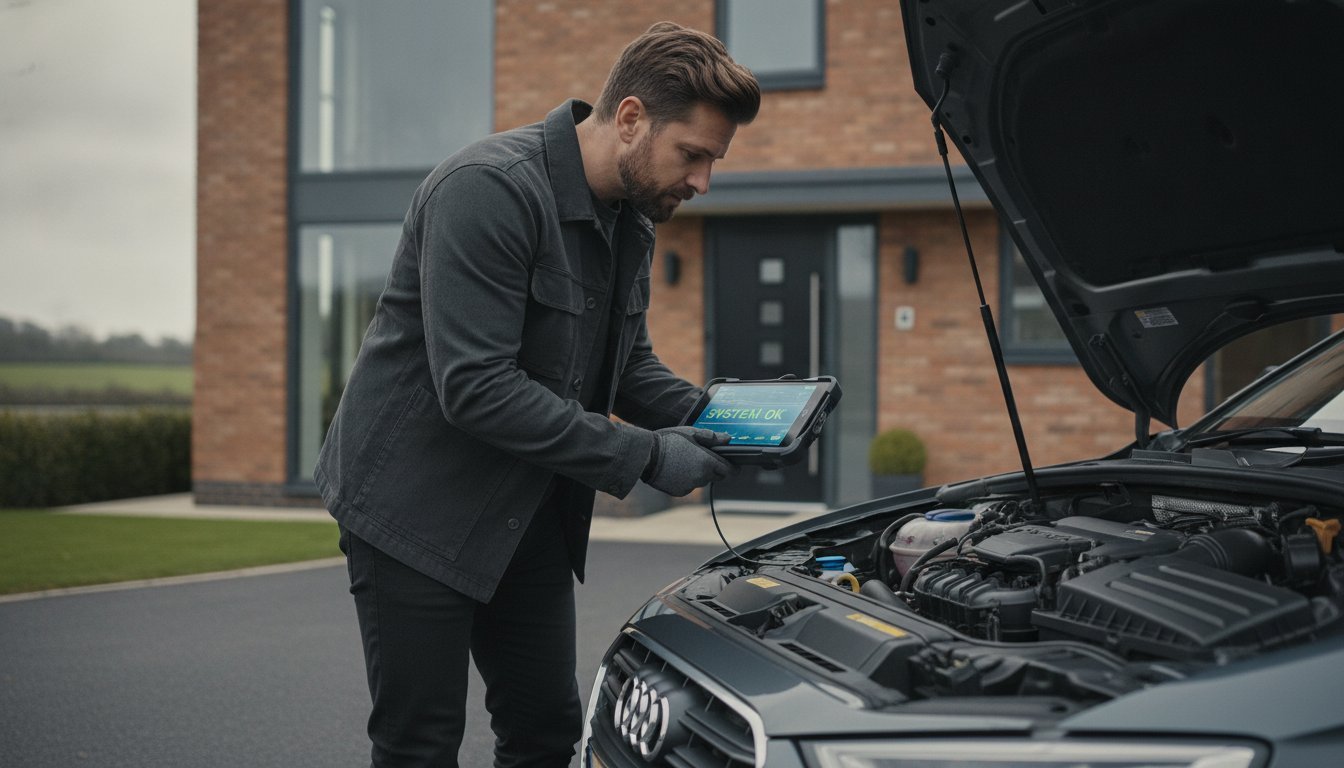
Jul
Imagine you’re out for a weekend drive in your favourite motor when that dreaded amber glow suddenly flickers onto your dashboard. It isn’t just a light; it’s a wave of anxiety about expensive garage bills and the mystery of what’s actually happening under the bonnet. We’ve all been there, staring at a cryptic symbol whilst wondering if the car is about to let us down. Understanding car fault codes UK is the ultimate bridge between being a standard car owner and becoming a true automotive enthusiast who knows their vehicle inside out.
It’s perfectly natural to feel a bit lost when faced with technical jargon, but you don’t need to be a master technician to get to the bottom of the problem. This guide will show you how to master the art of reading and interpreting those digital whispers to save significant time and money on repairs. We’ll walk through how to identify specific faults, clear that stubborn check engine light, and help you decide with confidence if a professional mechanic is actually needed. Let’s turn that dashboard stress into a satisfying DIY win.
Key Takeaways
- Take the guesswork out of dashboard warnings by learning to translate mysterious lights into actionable vehicle data.
- Master the process of understanding car fault codes UK to save money on diagnostic fees and catch potential issues early.
- Learn to decode the five-digit alphanumeric anatomy of a Diagnostic Trouble Code to pinpoint specific system faults with precision.
- Identify the best diagnostic tools for your needs, comparing the reliability of handheld units against the convenience of Bluetooth dongles.
- Build the confidence to decide whether a fault is a simple Saturday afternoon fix or a complex job best left to a professional mechanic.
Understanding Car Fault Codes in the UK: An Enthusiast’s Introduction
There’s a unique thrill in knowing exactly how your machine works. Whether you’re admiring the intricate mechanical detail of a 1:24 scale diecast truck or listening to the idle of your actual daily driver, the passion for precision is the same. For many UK enthusiasts in 2026, understanding car fault codes UK is becoming as much a part of the hobby as a Sunday morning wash and wax. With garage diagnostic fees often reaching £120 just for a “plug-in” check, the shift toward home diagnostics isn’t just about saving money; it’s about taking back control. Mastering the art of understanding car fault codes UK transforms that stressful dashboard amber light from a mystery into a clear set of instructions.
What exactly are OBD and EOBD Systems?
Your car’s On-board diagnostics (OBD) system acts as a silent guardian, constantly monitoring everything from ignition timing to emissions levels. In the UK, we follow the European On-Board Diagnostics (EOBD) standard. While it’s very similar to the American OBD-II, it was specifically mandated for all petrol cars sold in the UK from January 1, 2001, and for diesels from January 1, 2004. Accessing this wealth of data is surprisingly simple. You just need to locate the 16-pin diagnostic port, which is usually tucked away in the driver’s footwell or behind a panel in the centre console. Once connected, the car’s brain shares its secrets in the form of specific codes.
Why Your Check Engine Light Isn’t Always a Reason to Panic
Seeing that “Check Engine” light doesn’t mean your engine is about to expire. Often, it’s just an “intermittent” glitch caused by a sensor briefly reading out of range. Our British weather, with its damp mornings and sudden temperature drops, can be particularly hard on sensitive electronics. By reading the codes yourself, you can distinguish between a “hard” fault that needs immediate attention and a ghost in the machine that just needs clearing. There’s a real sense of empowerment in walking into a garage already knowing which sensor has failed. It ensures you’re never blinded by technical jargon or unnecessary parts replacements whilst keeping your pride and joy in peak condition.
Deciphering the Code: The 5-Digit Anatomy of a DTC
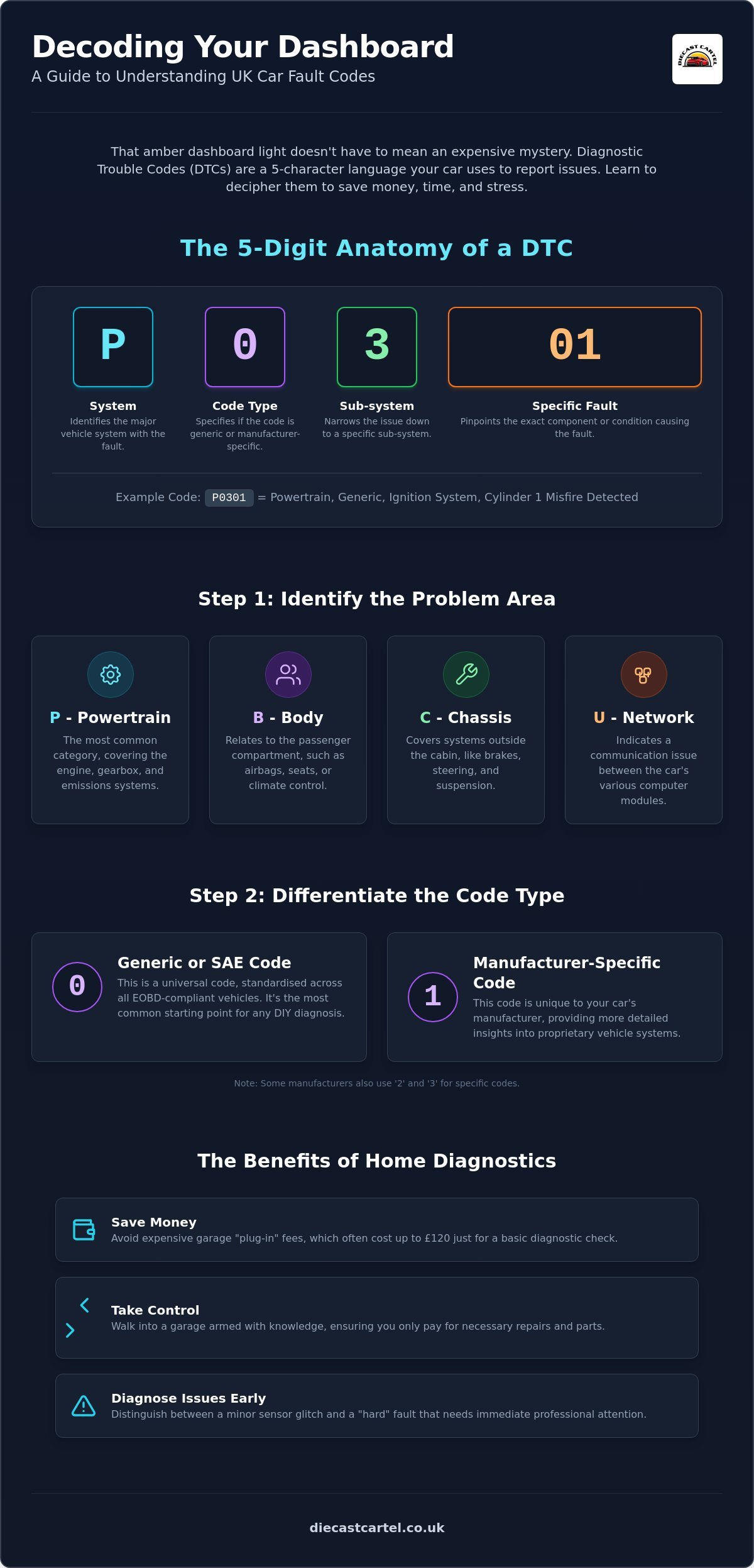
Every vehicle has a story to tell, and the Diagnostic Trouble Code (DTC) is the universal language it uses to communicate with us. A DTC is a five-character alphanumeric string used for vehicle health reporting. Whilst it might look like a random jumble of letters and numbers at first glance, there is a strict logic behind every character. For any enthusiast, understanding car fault codes UK starts with breaking this string down into its component parts to reveal exactly what your car’s sensors are seeing. By 2026, manufacturer-specific code libraries have become incredibly detailed, yet the fundamental “Generic” codes remain the most reliable starting point for any successful home repair.
When you perform a car diagnostic test, your scanner acts as a translator. It pulls these codes from the car’s memory, giving you a clear path to follow. Generic codes (starting with P0) are standardised across all EOBD-compliant vehicles, making them the bread and butter of the DIY mechanic. However, if you’re dealing with a more modern or high-performance machine, you’ll likely encounter manufacturer-specific codes that offer deeper, bespoke insights into your vehicle’s unique systems. If you’re looking to dive into your own vehicle’s data, having the right OBD diagnostic tools in your garage is the first step toward mastering this digital language.
The First Letter: Identifying the Problem Area
The very first character of the code tells you which major system is reporting an issue. Think of it as the “neighbourhood” where the fault lives. There are four main categories you’ll encounter:
- P (Powertrain): This is the most common prefix, covering the engine, gearbox, and emissions systems.
- B (Body): These codes relate to the interior of the car, such as airbags, power windows, or climate control.
- C (Chassis): This identifies issues with mechanical systems outside the engine, including brakes, steering, and suspension.
- U (Network): These codes indicate a communication failure between the car’s various on-board computers.
The Numbers: Differentiating Generic from Manufacturer Specific
The digits that follow the letter provide the granular detail needed for understanding car fault codes UK with precision. The second character is a simple binary: a ‘0’ denotes a standardised EOBD code, whilst a ‘1’ indicates a manufacturer-specific code. This distinction is vital because a ‘P1’ code on a BMW might mean something entirely different on a Ford. The third digit narrows the search even further by pinpointing the specific subsystem, such as fuel metering, ignition systems, or auxiliary emissions controls. Finally, the last two digits identify the exact nature of the failure, such as a circuit being open or a sensor reading being out of its expected range.
Selecting the Right Car Diagnostic Tool for UK Drivers
Choosing the right hardware is just as important as knowing the theory behind the codes. For many in our community, mastering the art of understanding car fault codes UK becomes a much smoother process when you aren’t fighting with a temperamental connection. Whether you’re looking for a quick dashboard reset or a deep dive into your vehicle’s performance, the tool you choose will define your diagnostic experience. Having OBD2 scanners explained by experts is a great starting point, but the final choice often comes down to your specific goals and the environment you work in.
Whilst Bluetooth smartphone dongles are incredibly popular for their portability, many UK enthusiasts still prefer the rugged, dedicated reliability of a handheld stand-alone unit. There’s a certain tactile satisfaction in using a tool designed for one job, especially when you’re working in a cold UK garage where touchscreen sensitivity can be a bit hit-and-miss. A dedicated unit won’t drain your phone battery or lose connection just as you’re about to pinpoint a tricky sensor fault. If you’re ready to add a professional-grade tool to your collection, our OBD2 reader UK buy online guide offers detailed reviews to help you find the perfect match.
Basic Scanners vs. Advanced Diagnostic Systems
A basic £20 code reader is a fantastic entry point for a beginner. It’ll read and clear generic engine codes with ease, which is often all you need to get back on the road. However, as your passion grows, you might find yourself wanting more. Advanced systems offer bi-directional control, allowing you to actually command the car’s computer to perform specific tests, such as cycling an ABS pump or testing an fuel injector. In 2026, features like high screen resolution and “freeze frame” data are no longer luxuries; they’re essential for seeing exactly what was happening in the engine at the moment the fault occurred. For a comprehensive breakdown of the top-rated units available right now, our guide to the best OBD2 scanner for car enthusiasts UK covers everything from entry-level readers to professional-grade systems supporting modern CAN FD protocols.
Compatibility and Connectivity Considerations
Compatibility is the foundation of any diagnostic work. You must ensure your tool supports all UK-standard protocols, including CAN and ISO, to communicate effectively with your vehicle. Wired connections remain the gold standard for stability, but high-end wireless models have come a long way. Another critical factor is the ability to perform firmware updates. Manufacturers are constantly refining software for 2025 and 2026 vehicle models, and an outdated scanner will quickly struggle with newer systems. Staying current ensures that the journey of understanding car fault codes UK remains a rewarding and accurate pursuit for years to come.
How to Read and Clear Car Fault Codes at Home
Once you’ve selected your hardware, the real fun begins. Connecting your diagnostic tool is a ritual every enthusiast should master, but it requires a methodical approach to ensure you’re getting accurate data. Before you even touch the diagnostic port, make sure your car is parked safely with the handbrake firmly on. For most standard scans, you’ll need the ignition in the “ON” position (where the dash lights up) but with the engine off. This allows the various control modules to communicate without the electrical noise of a running motor. Understanding car fault codes UK becomes much simpler when you start with a stable electrical environment.
The golden rule of home diagnostics is simple: never clear a code until you’ve recorded it. It’s tempting to hit “Erase” the moment a code appears, but doing so wipes away the breadcrumbs you need for a permanent fix. Always take a photo of the screen or use your scanner’s log feature first. If you’re looking for a reliable device to start building your own repair logs, you can find high-quality OBD diagnostic tools that make this process seamless. Once your session is complete, navigate back to the main menu and turn off the ignition before gently unplugging the tool from the diagnostic port.
Step-by-Step: Connecting and Scanning
Locating the 16-pin port can sometimes feel like a treasure hunt. Whilst many UK models like Fords and Volkswagens place it directly under the steering column, others amongst the Vauxhall or BMW ranges might hide it behind a trim panel near the handbrake or inside the centre console. Once plugged in, navigate the menu to “Read Codes.” You’ll often see three distinct types of data:
- Stored Codes: These are confirmed faults that have triggered the check engine light.
- Pending Codes: The computer has spotted an anomaly but is waiting for it to happen again before sounding the alarm.
- Permanent Codes: These are serious emissions-related faults that cannot be cleared manually; the car’s computer must “see” the fix itself during a drive cycle.
Using Freeze Frame Data to Solve Intermittent Issues
Freeze frame data is the secret weapon for any serious hobbyist. It provides a digital snapshot of exactly what was happening the moment the fault occurred. By analysing engine RPM, coolant temperature, and vehicle speed at the time of failure, you can spot patterns that a simple code won’t reveal. For example, if a misfire code only triggers whilst the engine is at 3,000 RPM and at a specific temperature, you can narrow your search to specific components rather than blindly firing the “parts cannon” at the problem. This level of detail is what truly separates a casual owner from someone who has mastered understanding car fault codes UK.
Beyond the Code: Moving from Diagnosis to Action
You have captured the data and translated the digital whispers of your car’s brain. Now comes the most critical part of the journey: deciding what to do with that information. For many of us, understanding car fault codes UK is about more than just avoiding a bill; it’s about the pride that comes from maintaining a machine to a high standard. A well-maintained daily driver is very much like a perfectly curated diecast collection. Both require a keen eye for detail, a bit of patience, and a deep appreciation for the mechanical artistry involved. Whether it’s a “DIY Saturday” spent swapping a faulty oxygen sensor or a “Garage Monday” for more complex work, your diagnostic tool has already put you in the driving seat.
If you encounter a rare or cryptic code that your scanner doesn’t fully explain, don’t forget the power of the community. UK-based enthusiast forums and online groups are fantastic resources where fellow owners share their own battles with specific fault codes. Often, a code that seems unique has been solved by someone else amongst the thousands of active hobbyists online. However, there is one non-negotiable rule regarding safety. If your Engine Management Light is flashing rather than staying steady, you must stop driving immediately. A flashing light usually indicates a severe misfire that can cause permanent, expensive damage to your catalytic converter within minutes.
When to Consult a Professional Mechanic
There are times when the best tool in your garage is your phone to call a professional. “Red Flag” codes related to safety systems, such as ABS, Airbags (SRS), or Braking, should always be handled by a qualified technician. Some modern vehicles also use secure gateways that require specialised dealer-level software to perform certain resets or calibrations after a part is replaced; for high-performance American vehicles, N2 Speed provides the expert PCM and TCM unlocking services needed for custom calibration. The beauty of understanding car fault codes UK before you arrive at the garage is that it levels the playing field. Walking in with a printed diagnostic report shows the mechanic you’ve done your homework, which often leads to a more transparent conversation and a fairer price for the repair.
In some instances, the diagnostics might suggest that the vehicle is beyond reasonable repair. For those considering their options, Cash For Junk Cars Michigan is an excellent example of a service that specialises in helping owners move on from damaged vehicles quickly and efficiently.
Maintaining Your Diagnostic Tool for Longevity
Your diagnostic scanner is a precision instrument and deserves the same care you’d give to your vehicle itself. Store it in a padded case away from the dampness and temperature swings of a typical UK garage to protect its sensitive internal electronics. If your tool has an internal power source, remember to keep it charged. Much like RC hobby batteries, these cells can degrade if left completely flat for months on end. Finally, consider keeping a physical or digital logbook of your car’s historical fault data. This “medical history” for your car is invaluable for spotting long-term trends and can even add value to the vehicle when the time eventually comes to sell it to another enthusiast.
Take Charge of Your Automotive Journey
You now have the knowledge to turn that mysterious dashboard glow into a clear, actionable plan. By mastering the anatomy of a DTC and choosing a reliable scanner, you’ve moved from being a passenger to a true curator of your car’s mechanical health. Always remember that recording your data before clearing any lights is the secret to avoiding repeat issues and ensuring your pride and joy stays in peak condition. Mastering the art of understanding car fault codes UK isn’t just about avoiding a garage visit; it’s about the deep satisfaction that comes from truly knowing your machine. Whether you’re troubleshooting a daily driver or a weekend classic, you’re now equipped to make informed decisions about every repair.
As an independent British retailer with a genuine passion for mechanics, we’re here to support your journey. Explore our range of enthusiast-grade OBD diagnostic tools, where you’ll find expertly selected tools for the UK hobbyist with fast UK-wide shipping. There’s nothing quite like the feeling of a successful home fix, so grab your scanner and get to know what’s really happening under the bonnet. Happy motoring!
Frequently Asked Questions
Can a car fault code reader damage my vehicle’s computer?
No, a high-quality scanner won’t damage your vehicle’s Engine Control Unit (ECU). These tools are designed to read data rather than overwrite critical operating software. As long as you follow the correct ignition sequence and use a reputable tool, your car’s electronics remain perfectly safe whilst you explore the data.
Will clearing a fault code actually fix the underlying problem?
Clearing a fault code doesn’t fix the physical problem; it simply resets the Malfunction Indicator Lamp (MIL). Think of it like silencing a smoke alarm without putting out the fire. The code is a symptom of an underlying issue that usually requires a mechanical or electrical repair to resolve permanently.
Why does my check engine light come back on after I have cleared it?
Your check engine light returns because the car’s computer has re-detected the fault during its internal self-test cycle. Once you clear a code, the ECU begins monitoring various sensors as you drive. If the original mechanical issue hasn’t been repaired, the sensors will quickly spot the anomaly again and trigger the light to protect the engine from damage.
Do car diagnostic tools work on all UK car brands like Ford, Vauxhall, and BMW?
Yes, diagnostic tools are highly compatible with the vast majority of UK vehicles. Since petrol cars from 2001 and diesels from 2004 must follow EOBD standards, your scanner will work across brands like Ford, Vauxhall, and BMW. Understanding car fault codes UK across different makes is simple because the core emissions protocols are standardised.
Can I use an OBD2 scanner to check if my car will pass its MOT?
You can use a scanner to check for “ready monitors” and emissions codes that would cause an automatic MOT failure. Whilst it won’t check for mechanical issues like worn tyres or frayed wiper blades, it’s a brilliant way to ensure your engine management system is healthy before you head to the testing centre.
What is the difference between a generic P0420 code and a manufacturer-specific one?
A generic P0420 code is a standardised emissions fault that means the same thing on any car, whereas a manufacturer-specific code provides bespoke data unique to your brand. Generic codes start with a ‘0’ and cover basic powertrain issues. Codes starting with a ‘1’ delve into the specific engineering quirks of your particular vehicle.
Is it illegal to clear fault codes before selling a car in the UK?
It isn’t strictly illegal to clear a code, but hiding a known fault from a buyer can lead to legal trouble under the Consumer Rights Act. Honesty is always the best policy amongst enthusiasts. Providing a full diagnostic history can actually build trust and show that you’ve been proactive in understanding car fault codes UK during your ownership.
How much should I expect to pay for a reliable car diagnostic tool in 2026?
The cost of a reliable tool varies depending on whether you want a basic code reader or a professional-grade system with live data. In 2026, entry-level units are very affordable for the casual hobbyist. More advanced systems for deep-dive diagnostics represent a larger but worthwhile investment for the dedicated home mechanic who wants full control over their vehicle’s health.
